

Home » Die Casting Mould & Moulding Tools » Wire Nail Gripping Die
Wire Nail Gripping Die
(78 products available)The wire nail gripping die shapes and holds nails during wire nail production. As a component in the nail-making machine, the die is a component with an essential function. It helps provide precision and consistency in the produced nails. Straightened wire is put into the machine and kept tight by these two dies when it is turned on. The fixing die has a very well-made hole on one end that bends the wire and holds it in place firmly. An hammer mechanism hits one end of the wire to make the nail head while it is being clamped. The nail is then cut to the length that was chosen, and the other end is cut into a point. The nail is then taken out of the dies, and the whole process starts over. To make nails of different sizes, you need wire nail holding dies. They make sure that the process is accurate, quick, and makes good nails. Wire nail holding dies are needed to make nails of different sizes. They make sure that the process is precise, efficient, and produces high-quality nails. Read more
Wire Nail Gripping Die Products, Price, Specifications & Features

Wire Nail Header Punch
₹ 1,000
Get Best Price| Density : 14.35 kg/cm3 |
| Material : Carbide and Steel |
| Model : Wire Nail Header Punch |


₹ 7,000

₹ 1,350


Silver Stainless Steel Wire Nail Gripping Die
₹ 850
Get Best Price| Color : Silver |
| Inner Diameter : 4 mm |
| Material : Stainless Steel |
| Outer Diameter : 10 mm |
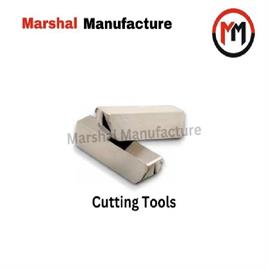
Wire Nail Cutting Tools
₹ 699 700 0.00% Off
Get Best Price| Color : Silver |
| Delivery : 1 days |
| Design : for Wire nail making machine |
| Grade : 0.4 - 0.5 |



Share Your Requirements
For a Quick response, Please fill up the details below.
Related Videos


Stainless Steel Polished Wire Nail Gripping Die
₹ 900
Get Best Price| Color : Silver |
| Corrosion Proof : Yes |
| Inner Diameter : 48mm |
| Material : Stainless Steel |

Fine Finish Nail Gripping Die
₹ 1,450
Get Best Price| Features : Durable,Dimensionally stable,Fine finish |
| Finish : Customize |
| Recommended Order Quantity : 10 Piece |
| Surface Finishing : Fine finish |

₹ 850
Top Wire Nail Gripping Die Manufacturer and Supplier
Frequently Asked Questions about Wire Nail Gripping Die
What materials are used to make a wire nail gripping die
The wire nail gripping die is a basic tool in nail manufacturing machines - it holds the wire firmly as the machine forms the nail. The wire nail gripping die uses high speed steel, tungsten carbide, or tool steel. High-speed steel offers a balance of hardness and toughness, so it serves well for small to medium production runs. For fast, large scale production, tungsten carbide is the preferred material. It has great hardness plus resists wear, so it withstands high pressure and heat without changing shape. The die's outer case is often steel. This provides structural strength also supports the inside mold. Especially tungsten carbide, holds value for its long life and resistance to abrasion - this cuts down how often one replaces or services the die. The material selections allow the gripping die to operate well; they help it keep precision as well as produce good nails all the time, even in hard factory settings.
What are wire nails good for?
Wire nails serve a broad purpose in construction, woodworking along with various projects at home. Their material is steel wire, which holds wood and other materials together firmly. Carpenters use wire nails to join boards, frames as well as panels when they build furniture plus other wood structures like fences, sheds in addition to crates. The packaging industry also commonly uses these nails for wooden boxes and pallets. A major benefit of wire nails is that they come in various sizes also lengths, so they fit both small and large tasks. A hammer drives them into wood with ease, as well as they hold fast, so the wood does not crack. Because a machine produces many of them, wire nails generally cost less than other nail types. This price makes them a good option for big projects. In all, a wire nail is a practical fastener for many applications, whether for a professional or a person who does work themselves.
Is wire nail business profitable in India?
The wire nail business in India commonly yields money. Demand for nails from construction, furniture along with packaging remains steady. The market for wire nails gets bigger. Experts say it will reach ₹7,800 crore by 2025 and grow at about 8 % each year. Starting this business needs little money, often around ₹5 lakhs. This lets new business owners enter the field. Wire rods, the main raw material, cost little. The way one makes nails is simple. Even one machine produces up to 500 kilograms of nails each day. A business in this sector acquires money. A kilogram of wire nails costs about 53 rupees to produce. The market price is around 75 rupees per kilogram, so the net profit after costs is about 17 rupees per kilogram. With steady output, a small unit collects over ₹2 lakh monthly. An owner expands the business when they add more machines. Government actions which help local manufacturing also raise profits. Through considered plans and good selling, the wire nail business offers a chance for regular income and growth in India.
What is the price of nail wire roll?
A nail wire roll in India has a price that varies with the material, thickness along with seller. But the cost typically stays between ₹50 and ₹80 per kilogram. Mild steel nail wire rolls are common for nail production. Their prices settle around ₹53 to ₹60 per kilogram. A 10 gauge mild steel nail wire roll, for example, typically costs ₹53 to ₹60 per kilogram. An 18 gauge wire roll may cost about ₹52 per kilogram. Stainless steel nail wire rolls cost more. Prices can reach ₹80 per kilogram, because the steel fights rust and corrosion. Some sellers also provide specialized or galvanized nail wire rolls - these may cost a bit more, depending on the surface coating and grade. The price also changes with the amount ordered, the place as well as how raw material costs move in the market. Broadly speaking, for most regular uses in nail production, buyers pay about ₹50 to ₹60 per kilogram for mild steel nail wire rolls in the Indian market today.
How many nails are in a 500g pack?
A 500g package of nails contains a certain number of nails. This count depends on their size and type. Smaller nails, such as 1-inch or 25mm wire nails, weigh less. A 500g package holds more of these nails than it holds larger ones, like 2-inch or 50mm nails. A 500-gram box of one inch (25mm) wire nails often contains about 600 to 700 nails. If the nails measure 1.5 inches (38mm), the same 500-gram box may hold about 350 to 400 nails. For larger two inch (50mm) nails, the box contains only about 200 to 250 nails. The actual number also differs a little. This happens because of the nail’s thickness, which people call its gauge. The maker’s stated details also matter. When a person buys nails, he or she should look at the box or ask the seller for a rough count. That action helps the person obtain the correct number of nails for a project.
What are wire nails called?
Wire nails typically bear the name "wire nails." They also have other names, which change based on their use and location. Some individuals call them "common nails" as they see wide use in general building work, carpentry along with woodwork. In hardware stores, people may refer to them as "iron nails" or "steel nails" because they usually come from steel wire. A "panel pin" means a small, thin wire nail. Workers often use panel pins in delicate woodwork or to attach thin boards. Wire nails differ from "cut nails." Cut nails come from a steel plate, not from drawn wire. A round, smooth shank defines wire nails. This shape allows workers to drive them into wood without trouble, and it holds well. Different sizes plus thicknesses of wire nails suit various jobs. People use them for furniture and for building structures. The usefulness and strength of wire nails mean they are a popular type of nail.
What size is a 10 gauge nail?
A 10 gauge nail describes its width, not its span. In the wire gauge system, a 10 gauge nail measures about 3.4 millimeters across, which is roughly 0.134 inches. The length of a 10 gauge nail changes, as workers produce these nails in various lengths for many uses, but the gauge always tells how thick the nail is. Ten gauge nails appear quite thick, so they fit demanding jobs such as framing; they join large wood pieces, or work in building projects where more holding power helps. You find 10 gauge nails in lengths from 1.5 inches (about 38mm) up to 4 inches (about 100mm) or longer, a factor of the work. When you pick nails for a project, consider both the gauge and the length, so they fit the materials and the needed hold. The 10 gauge size sells well for jobs that ask for a solid, dependable nail which does not bend under force.
How thick are wire nails?
Wire nails vary in thickness. People measure the thickness by a nail's gauge or its diameter. A nail's thickness often spans about 1 millimeter to 6 millimeters. This range depends on what someone plans to do with the nail. For instance, small wire nails work for light carpentry or for attaching thin boards - these nails can be as thin as 1 to 1.5 millimeters around. Medium wire nails are common for general woodworking and for fixing things around the house; they often measure between 2 and 3 millimeters across. Larger wire nails connect thick wood pieces or help with heavy construction. Their diameter can be 4 millimeters or more. The gauge number lowers as a nail grows thicker. A 16 gauge nail measures less than a 10 gauge nail. Selecting a thickness depends on how much strength is necessary - it also depends on what material someone plans to join. Thicker nails hold more firmly. They also bend less readily. But thinner nails work better for delicate tasks because they help avoid splitting the wood.
How many 4 inch nails per kg?
The number of 4-inch nails in a kilogram depends on their thickness, also known as gauge. A standard 4-inch wire nail measures about 4 millimeters across. You find around 45 to 55 pieces of 4-inch (100mm) wire nails in a kilogram. Thicker nails weigh more, so fewer nails come in each kilogram. Slightly thinner nails increase the piece count. This estimate changes with the exact diameter and the nail's head design, because some nails are heavier because of their shape. Manufacturers sometimes print a specific count per kilogram on the package. The data helps you when you calculate a project total. When you purchase nails in bulk for construction or carpentry, the approximate number per kilogram helps you plan - it also lets you buy the right quantity, so you have enough nails for the job. You avoid many left over. Always ask a supplier for the exact count, which depends on the nails you purchase.
How many types of wire nails are there?
Many kinds of wire nails serve particular jobs in building, carpentry along with woodworking. The plain wire nail is the most common kind - it has a round, smooth shaft and serves general purposes, such as joining wood and putting together furniture. A panel pin is a small, thin wire nail - it suits fine work, as workers use it to attach thin boards or moldings. The concrete nail comes from hardened steel. It is thick and tough, so a worker can drive it into concrete or masonry surfaces. Lost head nails, also called finish nails, have a small head. Workers can easily hide it below the wood's surface. So these nails work well for finishing where looks matter. Ring shank nails also appear - they have ridges along the shaft that hold things more tightly. People often use them in flooring or decking. Other types include wire brads, which are very thin and serve light joinery. Galvanized wire nails have a coating to prevent rust, which makes them good for outdoor use. A person picks a wire nail based on the job, the material as well as whether holding power, appearance, or rust resistance matters most.
What are nail sizes?
Nail sizes relate to how long and thick nails are. This information matters when a person selects the correct nail for a task. A nail’s length measures in inches or millimeters. Ordinary sizes go from small nails, about half an inch long, to large nails, four inches or more. A nail’s thickness uses its gauge or diameter for measurement. The gauge system works the other way. A lower gauge number means a thicker nail. For instance, a 10 gauge nail is thicker than a 16 gauge nail. Nails often use their length and gauge in a description, such as “2-inch, 12 gauge wire nail.” Some countries also use the “penny” system - this system mostly applies to common nails. The size displays as 2d, 6d, 10d along with so on. The “d” stands for “penny.” The correct nail size depends on the material a person joins and the required holding power. Thin nails apply to delicate work. Thicker nails apply to heavy construction and framing. Picking the right nail size helps secure a hold without harming the material.
Related Product Types
Electric Socket Mold | Wheel Brake Mold | Mould Components | Bushing Mould | Insulator Mould | Terminal Block Mould | Footwear Mould | Cavity Mould | Crate Mould | Plastic Cooling Fan Mould | Elbow Mould | Chalk Making Mould | Glass Cavity Block | Diya Moulds | Wheel Metal Die | Tundish Board | Ventilation Rubber Mould | Roto Mould Die | Road Barrier Mould | Cooler Mild Steel Mould | Planter Roto Mould | Cast Iron Ingot Mold | Plastic Die Mould | Suppository Moulds | PVC Paver Moulds | Moulding Machine | Concrete Tile Molds | Door Frame Mould | Paver Mold | Cube Moulds | Vaccum Forming Mould | Thermoforming Mould | Cylindrical Mould | Moulds | Trash Bin Mold | Traffic Cone Mould | Moulding Couplers | SS Brick Mould | MS Brick Mould | Spray Dryers | Cover Block Moulds | Drain Mould | Kerb Stone Mould | FRP Mold | Moulding Inserts | Plunger Tip | Copper Mould Tubes | Lipstick Mould | Silicone Paver Mold | Rubber Paver Mould | Rubber Tile Mold | Paving Block Moulds | Paver Tile Moulds | PVC Cover Block | Injection Molding | Silicone Resin Mould | Plastic Molding | Metal Die Casting | Precision Mould | Hemming Die | Silicone Mould | PVC Cube Mould | Beam Mould | Prism Mould | PVC Rubber Mould | Curb Stone Mould | Die Mould | Bread Mould | Steel Molds | Chapati Cutting Die | Pvc Puri Cutting Die | Concrete Block Die | Ring Mould | Detergent Cake Die | Cooling Mould | Water Tank Mold | PET Bottle Molds | Scrubber Die | Masala Die | Chair Mould | Garden Bench Mold | Injection Mould | Aluminum Mold | Mild Steel Paver Mould | Sheet Metal Die | EPS Mould | Aluminium Die Casting Parts | Moulding Boxes | Tablet Dies | Plastic Injection Mold | Casting Mold | Automotive Moulding | Stainless Steel Blood Test Die | Spoon Mould | Centrifugal Casting | CLC Block Mould | Bronze Casting | Brass Casting | Gunmetal Casting | Tap Die Set | Pipe Fitting Mould | Plastic Bucket Moulds | Blow Moulds | Chequered Tile Moulds | Industrial Molds
Related Categories
Industrial Belts & V Belts | Water Treatment & Purification Plant | Liquid Packaging Machinery | Pumps, Pumping Machines & Spares | Printing Machinery & Equipment | Wrapping & Banding Machines | Moulding Machine | Conveyor Systems & Components | Industrial Mixing Machine | Industrial Coolers, Blowers & Fans | Industrial Valves & Valve Fittings | Dryers & Evaporators | Process Tanks & Chemical Reactors | Fast Food & Beverages Machinery | Mechanical Parts & Spares | Pollution Control Devices & Machines | Filter Assemblies and Spare Parts | Oil Mill & Oil Extraction Machinery | Pharmaceutical Machinery & Equipment | PVC, LDPE, HDPE & Plastic Sheets | Brakes & Braking Systems | Strapping & Sealing Machines | Woodworking Tools & Machines | Packaging Machines & Goods | Machines & Equipments | Testing & Measuring Equipments | Chemical Plants & Machinery | Plastic Work & Processing Machines | Filters & Filtration Systems | Paper Work & Making Machine | Industrial Mixers & Homogenizers | Chemicals, Dyes & Allied Products | Footwear Machinery | Separators, Strainers & Purifiers | Hand & Machine Tools | Crusher, Shredder & Presses | Fruit & Vegetable Processing Machine | Storage Tanks, Drums & Containers | Lab Instrument | Bakery & Dairy Machinery | Rubber, Rubber Processing Machinery | Industrial Chemicals | Material Handling Machines & Systems | Milling & Grinding Tools | Cutting Machines & Equipment | Bar, Neodymium & Permanent Magnets | Hydraulic & Pneumatic Machines | Soap & Sanitizer Dispenser | Machine & Precision Tools | Extraction Plants and Extruders | Protective Packing Materials | Industrial & Engineering Goods | Air Compressors, Accessories & Parts | Drilling Bits, Collets and Chucks | CNC Machines & Lathe Machine | PVC, FRP, HDPE & Other Plastic Pipes | Surface Coating & Paint Equipment | Drilling & Boring Equipment | Wire Drawing & Cabling Machines | Filling Machines & Plants | Chemical Reactors and Process Tanks | Casting, Moulding & Forging Machines | Industrial Air Conditioner & Devices | Industrial Furnaces & Ovens | Gearbox, Axle, Sprocket & Gear Parts | Oxygen & Nitrogen Gas Plants | Meat & Seafood Processing Equipments | Bending & Metalwork Machines | Weight Bowl & Weighting Scale | Musical Equipment & Accessories | Incinerator | Laser Marking & engraving Machine / System | Sewing,Knitting & Embroidery Machine | Welding Equipments & Machinery | Apparel & Textile Machinery | Boilers & Boiler Parts | Used Machinery & Tools | Binding and Pressing Machines | Closing & Sealing Machines | Jewellery Making Tools & Machines | Cutting Tools & Milling Cutter | Hydraulic & Pneumatic Cylinders | Packaging Caps & Seals

