

Home » Sensors & Transducers » Flange Force Transducer » Compression Miniature Flange Force Transducer, Capacity: 100 kg


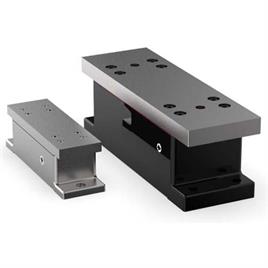
Compression Miniature Flange Force Transducer, Capacity: 100 kg
₹ 8,505 Get Latest Price
Product Specifications
| material | Alloy Steel |
| Type | Compression |
| Force Type | Compression |
| Capacity | 100 kg |
| Ingress Protection | IP67 |
| Output Sensitivity(FS) | 2.0 +/- 0.2 mV/V |
| Force Type | Compression |
| Ingress Protection | IP67 |
GST No - 24APGPC2288D1ZA | Member since 2024
SHED 45, R.K.INDUSTRIAL ESTATE, BHUVALDI ROAD, Kathwada, Ahmedabad, Ahmedabad, Gujarat, 382430
Looking for the latest Compression Miniature Flange Force Transducer, Capacity: 100 kg price in Ahmedabad? SHIVAY SENSOR, one of Ahmedabad's best Compression Miniature. Read More...
Product Details
Understanding Flange Force Transducers 🛠️
A flange force transducer, often simply called a flange load cell or bolt force transducer, is a specialized type of force sensor designed to measure the compressive or tensile forces exerted within a bolted joint, particularly those found in flanged connections. These devices are crucial in a wide array of industrial applications where the precise monitoring of bolt preload, joint integrity, or applied force is paramount for safety, efficiency, and structural reliability. Unlike conventional load cells that measure force applied directly to their sensing element, flange force transducers are typically installed under the head of a bolt or nut, or integrated directly into a washer-like structure, allowing them to measure the axial force in the bolt itself or the clamping force across the flange.
Working Principle: The Heart of Measurement
The fundamental working principle of most flange force transducers relies on the strain gauge technology. A strain gauge is a passive electrical transducer that converts mechanical strain (deformation) into an electrical signal. When a force is applied to the transducer, its precisely machined metallic body, known as the sensing element or spring element, deforms elastically. This deformation, even if microscopic, causes a change in the electrical resistance of the strain gauges bonded to its surface.
Typically, multiple strain gauges are arranged in a Wheatstone bridge configuration. This electrical circuit is highly sensitive to small changes in resistance and provides a stable and accurate output signal (usually in millivolts, mV) proportional to the applied force. As the force on the flange transducer increases, the sensing element deforms, causing some strain gauges to stretch (increasing resistance) and others to compress (decreasing resistance). The Wheatstone bridge converts these resistance changes into a differential voltage signal. This raw signal is then amplified and conditioned by associated electronics (like an amplifier or data acquisition system) to provide a usable output, such as 0-10V, 4-20mA, or a digital signal, which can be easily interpreted and recorded.
The design of the sensing element is critical. It must be robust enough to withstand the expected forces while being sensitive enough to deform predictably and repeatedly within its elastic limit. Materials like high-strength stainless steel or alloy steel are commonly used due to their excellent mechanical properties and resistance to corrosion.
Key Features and Design Considerations
Flange force transducers are engineered with several key features to ensure their performance and durability in demanding industrial environments:
Robust Construction: Built to withstand harsh industrial conditions, including high temperatures, corrosive environments, and significant mechanical stress. The housing often provides protection against dust, moisture, and electromagnetic interference.
Compact Design: They are designed to fit within the limited space available in bolted flange connections without significantly altering the joint geometry. Common forms include annular (ring-type) load cells or washer-type load cells, which have a central bore for the bolt to pass through.
High Accuracy and Repeatability: Essential for critical applications, these transducers offer high precision in force measurement, ensuring consistent and reliable readings over time and repeated loading cycles.
High Overload Protection: Designed to safely handle forces exceeding their rated capacity, preventing damage to the sensor during unexpected load spikes.
Temperature Compensation: Strain gauges are sensitive to temperature changes. High-quality transducers incorporate internal temperature compensation circuits to minimize measurement errors caused by thermal expansion or contraction of the sensing element.
Sealing and Environmental Protection: Many are sealed to IP (Ingress Protection) ratings, making them suitable for outdoor or wet environments.
Material Compatibility: Chosen materials often include stainless steel for corrosion resistance, especially in chemical, marine, or food processing industries.
The design often involves a central hole for the bolt and an outer diameter that matches the flange or washer dimensions. The active sensing area is carefully designed to ensure uniform stress distribution and accurate measurement of the axial force.
Types of Flange Force Transducers
While the core principle remains strain gauge-based, variations exist to suit specific applications:
Washer-Type Load Cells: These are perhaps the most common, designed to be placed directly under the bolt head or nut. They are thin, annular sensors that measure the compressive force exerted by the tightened bolt.
Bolt-On Strain Gauges: In some cases, strain gauges can be directly bonded to the bolt shank itself, though this is less common for permanent installations and more for research or specialized monitoring. Flange transducers offer a more robust and repeatable solution.
Integrated Flange Sensors: Some advanced systems integrate the force sensing directly into a custom flange or a specialized washer, offering a more compact and sometimes more accurate solution for specific applications.
Wireless Flange Transducers: For applications requiring remote monitoring or where cabling is impractical, wireless versions are available, transmitting data via radio frequency.
High-Temperature Transducers: Designed with specialized materials and electronics to operate reliably in elevated temperature environments, such as those found in power plants or furnaces.
Applications: Where They Make a Difference
Flange force transducers are indispensable in industries where the integrity of bolted joints is critical. Their applications span a broad spectrum:
Pipeline and Pressure Vessel Monitoring: Measuring the clamping force in pipeline flanges and pressure vessel connections to prevent leaks, ensure structural integrity, and monitor stress levels due to internal pressure or thermal expansion.
Wind Turbine Blade Monitoring: Used to measure the bolt preload in the critical bolted connections of wind turbine blades and towers, ensuring their stability and preventing catastrophic failures.
Bridge and Structural Monitoring: Employed in large civil engineering structures to monitor the tension in critical bolts, providing early warnings of potential structural issues.
Press and Machine Tool Monitoring: Measuring the clamping force in presses, injection molding machines, and other machine tools to ensure consistent product quality and prevent damage to the machinery.
Automotive and Aerospace Testing: Used in R&D and quality control for testing bolted assemblies, engine components, and structural elements to validate designs and ensure safety.
Construction Equipment: Monitoring bolt forces in heavy machinery, cranes, and other construction equipment to ensure safe operation and prevent component failure.
Bolt Tensioning and Preload Control: Providing real-time feedback during bolt tightening procedures, allowing operators to achieve precise and consistent preload values, which is crucial for joint reliability.
Research and Development: Used in laboratories to study the behavior of bolted joints under various loading conditions, fatigue analysis, and material testing.
Advantages of Using Flange Force Transducers
The adoption of flange force transducers offers numerous benefits:
Enhanced Safety: By providing real-time data on bolt preload, they help prevent joint failures, leaks, and structural collapses, significantly improving operational safety.
Improved Reliability and Longevity: Accurate preload ensures that bolted joints perform optimally, reducing wear and tear, preventing loosening, and extending the lifespan of equipment and structures.
Optimized Performance: Allows for precise control over clamping forces, leading to better sealing, reduced vibration, and improved overall system performance.
Predictive Maintenance: Continuous monitoring enables the detection of preload loss over time, facilitating proactive maintenance and preventing costly unplanned downtime.
Quality Control: Ensures consistent assembly processes, leading to higher product quality and reduced manufacturing defects.
Cost Savings: Prevents expensive failures, reduces maintenance costs, and extends asset life, leading to significant long-term economic benefits.
Data-Driven Decision Making: Provides quantitative data that can be used for analysis, optimization, and compliance with industry standards.
Considerations for Selection and Installation
Choosing the right flange force transducer involves several critical factors:
Force Range: The maximum and minimum forces to be measured must be within the transducer's rated capacity.
Accuracy Requirements: The required precision of the measurement will dictate the transducer's class of accuracy.
Environmental Conditions: Temperature range, humidity, presence of corrosive agents, and potential for shock or vibration must be considered.
Physical Dimensions: The transducer must fit the existing bolt and flange geometry. This includes the inner diameter (for the bolt), outer diameter, and thickness.
Output Signal: Compatibility with existing data acquisition systems (e.g., mV/V, 0-10V, 4-20mA, digital).
Material: Compatibility with the application's environment (e.g., stainless steel for corrosive environments).
Installation Method: Ease of installation and whether it can be retrofitted or requires a new design. Proper installation is paramount; the transducer must be seated correctly and the surfaces must be clean and flat to ensure accurate readings. Over-tightening during installation can damage the transducer.
Calibration and Maintenance
Like all precision measuring instruments, flange force transducers require regular calibration to maintain their accuracy. Calibration involves comparing the transducer's output against known, traceable force standards. This process ensures that the transducer provides accurate readings throughout its operational life. The frequency of calibration depends on the application's criticality, usage intensity, and environmental conditions.
Maintenance typically involves periodic inspection for physical damage, corrosion, or cable integrity. Ensuring that the transducer and its connections are clean and free from debris is also important for reliable operation. While robust, these devices are precision instruments and should be handled with care.
Conclusion
Flange force transducers are vital components in modern industrial infrastructure, providing the means to accurately measure and monitor the critical forces within bolted joints. Their ability to deliver precise, real-time data on bolt preload and clamping forces significantly enhances safety, improves reliability, and optimizes the performance of countless mechanical systems. From preventing leaks in pipelines to ensuring the structural integrity of wind turbines, these sophisticated sensors play an indispensable role in maintaining the operational excellence and safety of industrial assets worldwide. As industries continue to demand higher levels of precision and reliability, the importance of flange force transducers will only continue to grow.

SHED 45, R.K.INDUSTRIAL ESTATE, BHUVALDI ROAD, Kathwada, Ahmedabad, Ahmedabad, Gujarat, 382430
Send your enquiry to supplier
Related Products
Customer Reviews
Submit your Reviews
Best Selling Products from Shivay Sensor

₹ 1,111
| Accuracy Class : OIML R60 C3 |
| Application : Level Measurement |
| Ingress Protection : IP66 |
| Material : Alloy Steel |

Tank Weighing System, Capacity: 20kg To 200ton
₹ 20,505
| Accuracy : 0.01% FS |
| Automation Grade : Automatic |
| Capacity : 20Kg to 200Ton |
| Display Type : Segment red |

7 Segment Load Cell Indicator, For Industrial
₹ 6,800
| Brand : Shivay Sensor |
| Display Type : 7 Segment |
| Material : Mild Steel |
| Power : 230VAC |

Compression Square Drive Torque Sensor
₹
15,700
22,100
| Brand : Shivay Sensor |
| Material : Stainless Steel |
| Safe Torque : 150% |
| Sensitivity : 2 mv/v |

Flange Reaction Static Torque Sensor
₹
16,800
22,500
| Cable : Dia 6mm, length 2mtr |
| Country of Origin : Made in India |
| Material : Stainless Steel |
| Overload : 150% |

₹ 51,000
| Cable : Dia 6mm, Length 2 mtr |
| Country of Origin : Made in India |
| Material : Stainless Steel |
| Overload : 150% |

Compression Reaction Torque Sensor
₹ 26,505
| Brand : Shivay Sensor |
| Grade : 304 |
| Load Capacity : 100 Kg |
| Material : Stainless Steel |
₹ 17,600
| Material : Alloy Steel |
| Modal : S-PB |
| Operating Temperature : upto 60C |
| Thickness : 50 |

₹ 15,500
| Country of Origin : Made in India |
| Load capacity : 10 tons to 50 tons |
| Material : Alloy Steel |
| Output : 2mv/v |

Compression Overhead Crane Load Cell
₹ 21,500
| Grade : 304 |
| Load capacity : 1 Ton |
| Material : Stainless Steel |
| Packaging Type : Box |

