

Home » Sensors & Transducers » Load Cell » Pillow Block Load Cell


Pillow Block Load Cell
₹ 17,600 Get Latest Price
Product Specifications
| Modal | S-PB |
| Material | Alloy Steel |
| Thickness | 50 |
| Operating Temperature | upto 60C |
| Shape | Rectangle |
| Combined Error | 0.03 |
| Usage/Application | WEB Tension Testing |
GST No - 24APGPC2288D1ZA | Member since 2024
SHED 45, R.K.INDUSTRIAL ESTATE, BHUVALDI ROAD, Kathwada, Ahmedabad, Ahmedabad, Gujarat, 382430
In industrial and mechanical engineering, a pillow block load cell is a specialized type of load cell designed to measure the forces exerted on pillow block bearings. It Read More...
Product Details
The Pillow Block Load Cell: An Integrated Approach to Industrial Force Measurement
In the complex world of industrial automation and control, the precise measurement of force is a fundamental requirement. From weighing materials on a conveyor belt to maintaining the perfect tension on a web of paper, engineers rely on specialized sensors known as load cells. A standard load cell, however, often requires custom mounting hardware to interface with a machine's structure, a process that can be cumbersome and introduce potential errors. This is where the pillow block load cell emerges as an elegant and highly efficient solution. By intelligently combining a force-sensing transducer with a standard pillow block bearing housing, this device provides a robust, integrated, and easy-to-install component that simplifies the design and maintenance of countless industrial systems. This essay will delve into the core principles of the pillow block load cell, exploring its construction, operating mechanisms, diverse applications, and the distinct advantages it offers over traditional measurement setups.
At its core, a pillow block load cell is a sophisticated fusion of two distinct mechanical components. The first is the pillow block, a familiar piece of machinery designed to support a rotating shaft. Typically cast from iron or steel, the pillow block features a mounting base that bolts directly to a surface, and a bore that holds a self-aligning bearing. This simple yet critical component provides structural support and ensures smooth, low-friction rotation. The second component is the load cell itself, a transducer that converts mechanical force into a measurable electrical signal. Traditional load cells come in many forms, but they all operate on the principle of strain measurement. Internally, a load cell contains one or more strain gauges, which are small, electrically resistive sensors bonded to the load cell's body. When force is applied to the load cell, it deforms ever so slightly, causing the strain gauges to stretch or compress. This physical deformation changes the electrical resistance of the gauges in a predictable manner. The genius of the pillow block load cell lies in the fact that it is not simply a load cell bolted to a pillow block; rather, the pillow block's housing is the load cell's body, designed with a specific geometry to deform in a controlled way under load.
The operating principle of the pillow block load cell is directly tied to its use of strain gauges arranged in a Wheatstone bridge circuit. A Wheatstone bridge is an electrical circuit used to measure a small change in resistance. In this configuration, four strain gauges are connected in a diamond-like pattern and an excitation voltage is applied across two opposing corners of the bridge. When no load is applied to the load cell, the bridge is balanced, and the output voltage across the other two corners is zero. As force is applied to the rotating shaft supported by the bearing, the pillow block housing deforms. This deformation causes two of the strain gauges to stretch and increase in resistance, while the other two compress and decrease in resistance. This change unbalances the Wheatstone bridge, producing a proportional output voltage that can be measured and amplified. This small, millivolt-level signal is then sent to a signal conditioner and, ultimately, to a display or a control system, providing a real-time, highly accurate reading of the applied force. The linear relationship between the applied force and the output voltage is what allows the device to be precisely calibrated, ensuring reliable measurements for critical industrial processes.
The design and construction of a pillow block load cell prioritize durability and accuracy. The housing is typically made from robust materials like stainless or tool steel, chosen not only for their strength but also for their predictable and consistent elastic properties. The internal strain gauges are sealed and protected from the harsh industrial environment by an elastomer or metal enclosure, preventing damage from moisture, dust, or chemicals. The device is also engineered to isolate the load cell from side loads and moments, ensuring that it primarily measures the intended force vector (e.g., vertical compression or horizontal tension). This is achieved through clever mechanical design, such as self-aligning bearings that prevent binding and ensure the force is transmitted cleanly to the sensing element. Different manufacturers may integrate various types of load cell technology into the pillow block design, such as single-point, S-type, or bending beam sensors, each optimized for specific applications and load ranges. The result is a self-contained, compact unit that is easy to mount and offers a single point of connection for both mechanical support and electrical measurement.
The applications for pillow block load cells are vast and crucial to many industries where continuous monitoring of force is essential. One of the most common applications is in web tension control within industries like paper, film, foil, and textiles. On a paper mill line, for example, a pillow block load cell is installed on the idler rollers. As the paper web passes over the roller, the load cell measures the force exerted by the tension of the moving web. This data is then fed back to a control system that can automatically adjust the speed of motors or the braking force on unwinding rolls, ensuring the web maintains a consistent tension to prevent tears, wrinkles, or other defects. Another significant application is in conveyor belt weighing systems. By installing a series of pillow block load cells under the rollers of a conveyor, the weight of the material being transported can be continuously monitored and totaled. This is vital for inventory management, billing, and process control in mining, agriculture, and bulk material handling. The simplicity of the integrated design makes it an ideal choice for these large-scale, heavy-duty applications where installation and maintenance need to be as straightforward as possible.
The advantages of using an integrated pillow block load cell are clear when compared to a traditional setup. The primary benefit is the ease of installation and reduced complexity. Instead of mounting a separate load cell, aligning it, and then fabricating a custom bracket to support the bearing, a single pillow block load cell can be bolted into place. This saves time, reduces the chance of installation error, and minimizes the overall mechanical footprint. The integrated design also provides a more robust and protected measurement system. The load cell's sensing element is housed within the strong pillow block body, shielding it from potential impact damage or environmental exposure. Furthermore, because the entire unit is a purpose-built sensor, it is designed for optimal performance and accuracy from the start, often eliminating the need for complex and time-consuming field calibration. The unified design inherently improves the linearity and repeatability of the force measurement, leading to more reliable and consistent data. While there are a wide range of factors to consider, such as the specific load capacity and environmental conditions, the pillow block load cell consistently proves to be an efficient and reliable choice for demanding industrial environments.
In conclusion, the pillow block load cell is a testament to intelligent and integrated engineering design. By merging the structural function of a pillow block with the precise sensing capabilities of a load cell, it provides a simple, robust, and highly accurate solution for a wide variety of industrial force measurement needs. From controlling tension in high-speed manufacturing lines to weighing tons of material on a conveyor, this device streamlines installation, enhances reliability, and ensures a more efficient and controlled process. Its use of strain gauge technology, a durable unified housing, and a straightforward electrical interface makes it an indispensable component in modern automation. As industries continue to demand greater precision and efficiency, the role of specialized and integrated sensors like the pillow block load cell will only become more prominent.

SHED 45, R.K.INDUSTRIAL ESTATE, BHUVALDI ROAD, Kathwada, Ahmedabad, Ahmedabad, Gujarat, 382430
Send your enquiry to supplier
Related Products

S Type Load Cell, 0.1-10,000 Kg
₹ 5,000
| Capacity : 10,000 Kg |
| Capacity : 300 Ton |
| Compensated Temperature Range : -10 to +40 Deg C |
| Features : Rust resistance |

₹ 10,000
| Material : Stainless Steel |

5 W Aien Loading Cell Lifting Limiter
₹ 13,500
| Availability : In Stock |
| Display Mode : 4 Digit Nixie Tube Display |
| Load capacity : 10 Ton |
| Operating Humidity : 95% |

Stainless Steel Square Half Bridge Experiments Body Scale Load Cell Sensor
| IP Rating : IpP65 |
| Material : Stainless Steel |
| Packaging Type : Box |
| Shape : Square |
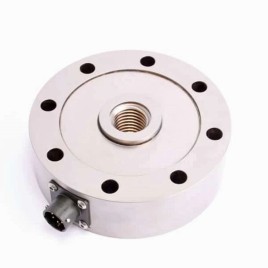
Pancake Load Cell 500 Kg to 5 Ton
₹ 12,480
| Application : Tensile Testing Machine |
| Features : High Accuracy & Precision |
| Ingress Protection : IP64 |
| Material : Alloy Steel |

Web Tension Control Load Cell Sensor, For Industrial, Load Capacity: 40 Kg
₹ 8,200
| Country of Origin : Made in India |
| Input Resistance : 420 +- 15 Ohms |
| IP Rating : IP68 |
| Load Capacity : 40 kg |

Zemic Magpowr TSU Under Pillow Block Load Cell
₹ 700
| Application : Automobiles Test Facilities |
| Brand : Zemic |
| Delivery Time : with in working days |
| Ingress Protection : IP40 |
Maxcess India Automation Private Limited, Mumbai, Maharashtra

ADI 70610 Weighbridge Load Cells, 10 Ton-30 Ton
₹ 27,000
| Input Resistance : 770 +/- 20 Ohm |
| Maximum Excitation Voltage : 15V DC |
| Output Resistance : 770 +/- 7 Ohm |
| Recommended Excitation Voltage : 10 to 12V DC |


₹ 10,000
| Brand : TEI |
| Condition : New |
| Display Type : Digital |
| Grade : Manual |
Customer Reviews
Submit your Reviews
Best Selling Products from Shivay Sensor

Compression Miniature Flange Force Transducer, Capacity: 100 kg
₹ 8,505
| Capacity : 100 kg |
| Force Type : Compression |
| material : Alloy Steel |
| Type : Compression |

₹ 1,111
| Accuracy Class : OIML R60 C3 |
| Application : Level Measurement |
| Ingress Protection : IP66 |
| Material : Alloy Steel |

Tank Weighing System, Capacity: 20kg To 200ton
₹ 20,505
| Accuracy : 0.01% FS |
| Automation Grade : Automatic |
| Capacity : 20Kg to 200Ton |
| Display Type : Segment red |

7 Segment Load Cell Indicator, For Industrial
₹ 6,800
| Brand : Shivay Sensor |
| Display Type : 7 Segment |
| Material : Mild Steel |
| Power : 230VAC |

Compression Square Drive Torque Sensor
₹
15,700
22,100
| Brand : Shivay Sensor |
| Material : Stainless Steel |
| Safe Torque : 150% |
| Sensitivity : 2 mv/v |

Flange Reaction Static Torque Sensor
₹
16,800
22,500
| Cable : Dia 6mm, length 2mtr |
| Country of Origin : Made in India |
| Material : Stainless Steel |
| Overload : 150% |

₹ 51,000
| Cable : Dia 6mm, Length 2 mtr |
| Country of Origin : Made in India |
| Material : Stainless Steel |
| Overload : 150% |

Compression Reaction Torque Sensor
₹ 26,505
| Brand : Shivay Sensor |
| Grade : 304 |
| Load Capacity : 100 Kg |
| Material : Stainless Steel |

₹ 15,500
| Country of Origin : Made in India |
| Load capacity : 10 tons to 50 tons |
| Material : Alloy Steel |
| Output : 2mv/v |

Compression Overhead Crane Load Cell
₹ 21,500
| Grade : 304 |
| Load capacity : 1 Ton |
| Material : Stainless Steel |
| Packaging Type : Box |

