

Home » Electronics Components and Supplies » Reflow Oven
Reflow Oven
(27 products available)A high-performance Reflow Oven is essential for consistent SMT soldering in commercial electronics production and industrial assembly lines. Designed for precise temperature profiling and uniform heating, it helps improve throughput, reduce defects, and support lead-free processes. Trusted Reflow Oven manufacturers, suppliers, dealers, and wholesalers provide reliable models with advanced controls, energy-efficient operation, and strong after-sales service. Compare service providers to secure quality equipment at competitive prices. Read more
Reflow Oven Products, Price, Specifications & Features
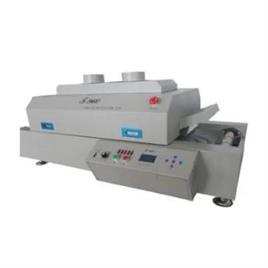
Reflow Oven T-960
₹ 1,35,000
Get Best Price| Brand : Indoe |
| Condition : New |
| Machine Type : Semi-Automatic |
| Model Name/Number : T-960 |


₹ 48,000

₹ 63,000

Model Name/Number: REFT022 Table Top SMT Reflow Oven, Automatic
₹ 95,000
Get Best Price| Automation Grade : Automatic |
| Brand : Ravindra Electronics |
| Country of Origin : Made in India |
| Input Voltage : 230V |

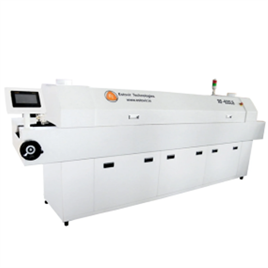
Reflow Oven Conveyorized – 6 Zone
₹ 6,90,000
Get Best Price| Dimensions : 3,800 mm × 900 mm × 1,650 mm |
| Heating Zone Length : 2,400 mm |
| Heating Zone : 6 Top + 6 Bottom |
| Weight : 1,400 kg |


Smt Reflow Oven
₹ 4,50,000
Get Best Price| Availability : In Stock |
| Dimensions : (3500*700*1300) mm |
| Heating Time : Approx. 15 min |
| Operating Power : 5 KW |


Share Your Requirements
For a Quick response, Please fill up the details below.
Related Videos

Reflow Oven
₹ 1,25,000
Get Best Price| Input Voltage : 440V |
| Input Voltage : 440V |
| Model Name/Number : MODEL - YMS-FC-5500-TT |
| model : Reflow Oven |
Gurgaon, Haryana


Reflow Oven T962
₹ 35,000
Get Best Price| Automation Grade : Automatic |
| Availability : In Stock |
| Condition : New |
| Country of Origin : Made in India |


₹ 35,000

₹ 54,000

Reflow Oven T962 With IR Heating (300mm Conveyor Width, 350°C Max Temp)
₹ 25,500
Get Best Price| Air supply : No air |
| Availability : In Stock |
| Control type : PID |
| Conveyor speed : 300 mm/min |


₹ 35,000

Mini Reflow Oven, Automatic
₹ 15,000
Get Best Price| Automation Grade : Automatic |
| Brand : VHRC |
| Country of Origin : Made in India |
| Display Type : Digital |

Desktop Reflow Oven
| Availability : In Stock |
| Cooling zone number : 2 natural air cooling |
| Country of Origin : Made in India |
| Heat method : Hot Wind |

₹ 3,50,000

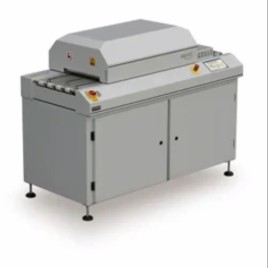
Digital Reflow Ovens
₹ 13,000
Get Best Price| Availability : In Stock |
| Brand : Kerone |
| Dimensions : 150*90*65cm |
| Display : Digital |

Model Name/Number: ERO-500 Conveyor Reflow Oven, 14.5 kW
₹ 9,00,000
Get Best Price| Air-Flow Direction : Horizontal Air Flow |
| Automation Grade : Automatic |
| Brands : ERO |
| Conveyor : Edge Conveyor |
Top Reflow Oven Manufacturer and Supplier
Frequently Asked Questions about Reflow Oven
What is a reflow oven?
A reflow oven is a key piece of equipment in the electronics assembly industry that enables reflow soldering of surface, mount components to printed circuit boards (PCBs). It applies heat to the PCB, which has been coated with solder paste, following a controlled temperature profile to the melting of the paste and, consequently, to the creation of electrical and mechanical joints that are both strong and reliable between the components and the pads. The process is carried out in a tunnel, like chamber with a conveyor belt and different zones for preheating (to activate the flux), soaking (heat is evenly distributed), reflow (the solder is melted at a temperature of 220260C), and cooling (the solder solidifies). Thus, it guarantees uniform soldering, and the components are not harmed. Reflow ovens, which are used in SMT assembly lines, can be batch (for small, scale) or inline conveyor types and are equipped with convection heating for accuracy in temperature control. They are indispensable means of mass productions of, e.g., smartphones, automotive electronics, and consumer devices, in that they, inter alia, provide production rates and quality that manual soldering can hardly match.
What is the cost of reflow oven machine?
Reflow oven machines in India have varied prices ranging from 30, 000 to 60 lakh, determined by their type, number of zones, and capacity. Tabletop or desktop models primarily used for prototyping and small PCB assembly are available from 30, 000 to 1.5 lakh. These are perfect for startups or labs. The price of 46 zone conveyor SMT reflow ovens with a mid, range specification varies between 2.5 and 12 lakh. Such equipment is appropriate for a semi, industrial level of electronics manufacturing. The cost of 812 high, end industrial units with nitrogen and advanced controls may be between 20 and 60 lakh or even more. These are among the large PCB assemblers' most sophisticated and technologically advanced machines. Besides, Chinese brand imports like VD or Jaguar are relatively economical (315 lakh), whereas, a high, end model from Heller or BTU can cost you more than 30 lakh. The stated price is inclusive of GST but exclusive of the installation cost, which is around 50, 000 or more, and shipping. A second, hand oven may cost less by 4050%, but it must be checked thoroughly before buying.
How hot is a reflow oven?
A reflow oven achieves the operation by following a controlled temperature profile across different zones. Peak temperatures usually go up to 220260C when the reflow stage is carried out to melt the solder paste on PCBs. The preheating zones are gradually increased from ambient (25C) to 150180C at 13C/s in order to activate the flux and avoid thermal shock. Soaking is done at 180220C for even heat distribution. The reflow zone reaches the highest point210230C for leaded solder (melting at 183C) or 235260C for lead, free (melting at 217220C)for 3090 seconds above liquidus. Cooling zones are, therefore, dropped quickly to 100C or below at 26C/s for the joints to be solidified without any defects. The oven setpoints can be beyond 260C internally for the control, but the surface of the PCB stays within the limits so as not to cause component damage. Profiles are in accordance with IPC/JEDEC standards for SMT soldering to be reliable.
How to use a reflow oven?
A reflow oven is an essential piece of equipment in electronics manufacturing that helps to solder surface, mount components on PCBs by using a controlled heating process. The process begins with the preparation of the PCB: solder paste is applied to the pads through a stencil, and components are placed using a pick, and, place machine. The assembled board is thereafter positioned on the conveyor belt or tray of the oven. The temperature profile is defined via the control panel and generally comprises the stages: preheat (150, 180C), soak (180, 220C), reflow (220, 260C), and cool (rapid drop to ambient). An oven that has been preheated and whose zones are stable is a condition that must be met without fail. The board is moved through the zones at the right speed (e.g., 0.51.5 m/min for inline ovens). Thermocouples are used to monitor the profile. Solder joints are inspected for defects such as bridges or cold solder by AOI or X, ray after the board has been removed. If necessary, flux residues are cleaned and then the PCB is tested electrically.
How many types of reflow ovens are there?
Reflow ovens are available in several main types, each suitable for different production scales and requirements in the electronics manufacturing industry. Batch or tabletop ovens are small enough to be used for prototyping and small runs, and are capable of handling a single PCB that is loaded manually. Conveyorised ovens, which are the most common, use a belt to move boards through multi, zone tunnels for high-volume SMT lines. Infrared (IR) ovens heat a single side of the board by radiation from ceramic elements, thus allowing a very fast warmup, but the heating is less uniform. Convection ovens take care of the temperature by circulating the hot air with fans and are thus very precise and giving even temperature control and are therefore the best option for sensitive components. Nitrogen reflow ovens introduce inert gas to eliminate the possibility of oxidation hence the joints will be cleaner in lead, free soldering. Hybrid ovens have the ability to switch from IR to convection or vice versa, as well as combining the two technologies at the same time, thus making them very versatile. Vacuum reflow ovens ensure that the voids are removed from the solder for the highest reliability applications such as aerospace and medical. The selection depends on throughput, board size, and profile precision.
What is a convection reflow oven used for?
A convection reflow oven is essentially the electronics manufacturing industry's answer to precision in surface-mount technology (SMT) soldering of components to printed circuit boards (PCBs). With the aid of fans, it continuously circulates hot air to achieve uniform heating of the entire board during the reflow process, which is the actual melting of the solder paste resulting in the formation of reliable electrical joints. The use of this technique is outstanding in the large-scale production of consumer electronics like smartphones and laptops, automotive ECUs, telecommunications gear, and medical devices, to name a few, where the consistency of temperature is what keeps defects such as cold joints or component damage at bay. Compared to infrared ovens, convection ovens provide improved profile control for lead and lead-free solder and are therefore better suited for use on dense boards. Convection ovens also allow for multi-zone (preheat, soak, re-flow (220260C), cool) operations, resulting in ideal results for those manufacturing products that need to be miniaturised and dependable. In addition, they also provide excellent temperature profile control.
Which convection reflow oven is best for printed circuit board assembly?
Convection reflow ovens are the best choice for PCB assembly as they provide better temperature uniformity by forced hot air circulation, which is the main reason why they are far better than IR ovens for complex boards. For the majority of uses, the BTU Pyramax series with up to 12 zones, nitrogen compatibility, and very accurate profile control for the high-volume production of smartphones and automotive electronics is a product that really stands out. It can very well reflow large boards (457x457 mm max) up to 220260C peaks. The Heller 1936 MK7 is a very good option for a mid, to, high throughput plant. It features multi-zone convection, vacuum options to eliminate voids, and an energy, efficient designjust what is needed for lead-free soldering in telecom or medical devices. The Rehm VXC Vacuum is a perfect solution for high-reliability requirements such as aerospace by integrating convection with a vacuum for the creation of defect-free joints on densely populated assemblies. The best decision largely depends on your scale: BTU for volume and Heller for versatility. Dont forget to preselect the number of zones (8+), conveyor speed, and IPC, compliant profiling.
What safety precautions are needed for operating a reflow oven?
To operate a reflow oven safely and effectively there are strict safety precautions to follow due to the high temperatures (up to 260ºC), electrical hazards, fumes and moving parts. Operators must always use PPE such as heat resistant gloves, safety goggles, flame retardant clothing and respirators to protect themselves from burns, flux vapour and fibre inhalation from insulation. There must also be adequate ventilation with exhaust systems that will remove the toxic fumes from reflow ovens; it is prohibited to operate reflow ovens in any enclosed area. Procedures for Lockout/Tagout must be followed prior to performing maintenance or cleaning of reflow ovens by turning them off, disconnecting from the electrical source and allowing them to cool to room temperature (less than 40ºC) to prevent shocks and burns to employees. In addition, operators should keep the work area tidy and unobstructed and they must ensure that the path to emergency stop switches plus to Class E fire extinguishers remains open at all times. They also need training on the correct temperature profiles and must never disable an alarm. Furthermore, operators should perform weekly cleanings of the reflow oven to remove any flux build-up that may occur when the oven is cool, and use approved solvents for cleaning. Only qualified personnel should have access to reflow ovens, and warning signs should be posted throughout the area.
How to calculate reflow oven cycle time?
The formula to determine the reflow cycle time for the PCA assembly process is ::: Cycle Time (sec) = (Heated Tunnel Length / Conveyor Speed) * 60, with the process dwell time taken into account. First of all, you have to determine - how much dwell time is necessary in the total seconds in the heated zones. Definitely, you have to add the time for the preheat phase (90150s), the soak phase (60120s), and the reflow phase (3090s), thus ensuring the time above the liquidus temperature between 172560C and 4590s. A total time required for the 4, min profile would be to aim for 240 total seconds. The heated length of the oven, for example, at 310m, needs to be determined from the specifications. You have to determine the conveyor speed, with cm/min speed determined by throughput as follows: Speed = (Board Length Boards/min Load Factor) / Dwell Time. For example, with the board length at 20 cm, the Boards per minute at 3, and the Load Factor at 0.8, and the dwell time at 4 min, the Speed becomes at 30 cm per minute. You have to check with the thermocouples, wherein the cycled time needs to be the same as the profile.
Related Product Types
Antistatic Wrist Strap | Borescope | Optical Interferometers | Three Phase Line Choke | High Power Laser Diodes | Helium Neon Lasers | Dynamic Braking Resistor | Multi Line Laser | Waveguide Components | Variable Attenuator | Stabilizer Repairing Service | Carbon Potentiometer | DC Link Chokes | ESD PCB Tray | Mini Prism | Vision Inspection System | Desoldering Pump | Soldering Accessories | ESD Wrist Bands | PCB Carriers | Desoldering Wick | Automatic Voltage Stabilizer | Servokon Voltage Stabilizers | Manual Voltage Stabilizer | Wall Mount Voltage Stabilizer | PCB Relays | Electromechanical Sensor Positioner | Operator Interface Terminals | Used Hand Edger | Liquid Solder Flux | Digital Potentiometer | Glass Prism | Sliding Rheostat | Desoldering Station | Right Angle Prism | Soldering Paste | LED Module | Washing Machine Capacitor | Servo Stabilizer | Integrated Circuits | Compact Band Filter | LED Bulb PCB | Neutral Grounding Resistors | NPN Transistor | Haze Meter | Laser Diode Module | Laser Mirrors | Alochol-Enchanced Flux Remover | Flux Removers | Wire Wound Resistors | DC Shunts | Gunn Diode | Decade Box | Electronic Timers | Nd YAG Lasers | Dip Soldering Machine | Wave Soldering Machine | Meter Bridge | Polarization Analyzers | Breadboards | Electronic Amplifier | Periscope | STMicroelectronics Microcontroller | Electronic Components | PCB Assembly | Voltage Regulators IC | SMD Transistor | PNP Transistor | PIC Microcontroller | Atmel Microcontroller | Microcontroller | IGBT Transistors | High speed optocoupler | Schottky Diode | Thin Film Resistor | SMD Diode | Fast Recovery Diode | TVS Diodes | Honeywell Pressure Sensors | Industrial Robotic Automations | Active Harmonic Filter | Capacitor Clamp | Photodiode | Arduino Shield | Soldering Bits | Tin Lead Solder Wires | Loading Rheostat | LED Chip | MOV | Autocollimator | Automatic Voltage Regulator | Chip Resistors | Thyristor Power Regulator | Programmable Controllers | Mask Aligner | Humidity Transducers | High Voltage Resistors | Marine GPS | Laser Tracker | Film Densitometer | Ultrasonic Probe | Film Capacitors | High Voltage Capacitors | Electrolytic Capacitors | PCB Assembly Jig | PN Junction Diode Apparatus | Hall Effect Sensors | Excimer Lasers | Fixed Capacitors | GIC Level Controllers | Surface Mount Adhesive | Ceramic Capacitors | Solder Dross Recovery Machine | Bluetooth Module | RF Module | XBEE Modules | Speaker Cable | Electronic Modules | Power MOSFET Module | Soil Moisture Sensor | Flex Sensor | Force Sensors | Reflection Densitometer | NTC Thermistor | ESD Tapes | ESD Dispenser Bottle | Fume Filters | Home Automation System | High Voltage Diode | Drum Coil Inductor | Tibcon Capacitor | Battery Discharge Resistor | Obstacle Sensor | Motor Driver IC | Camera Slider | Rectifier Diodes | Carbon Film Resistor | Speed Sensors | Carbon Monoxide Sensor | Line Following Sensor | Lead Free Solder Wire | Solder Mask Ink | Mini GPS | Vibration Monitoring System | Static Discharge Palmplate | Thermal Imaging Sensor | Microstrip Splitter | Flux Dispensers | Laser Belt Alignment | Laser Alignment Tools | Thermal Wire Stripper | Densitometer | Directional Couplers | EMI Shield | Laser Transmitter | Malde Capacitor | Rheostats | SMD Thermistor | Thermistor Probes | Resistance Boxes | ESD Mats | Frequency Division Multiplexer | Etching Machine | PCB Assembly Line Components | DOL Starter | Digital volt amp meter | Liquid Level Controllers | Water Level Controller | Illuminated Magnifier | Reflow Soldering Systems | Soldering Fume Absorber | Automatic Solder Lead Cutting Machine | Soldering Pot | Automatic Soldering Machine | Optical, Laser Instruments & Devices | Optical Time Domain Reflectometers | AC Capacitor | Power Resistors For Generators | Ultrasonic Generator | Static Eliminators | Brushing Machine | 3D White Light Scanner | Fiber Laser Source | Semiconductor Processing Equipment | Laser Process Heads | PCB Machine | Automatic Voltage Controller | Soldering Station | Rework Station | 3D Laser Scanner | Laser Level | Laser Range Finder | Solder Paste Mixer | Co2 Laser Tube | Rotating Laser Systems | Capacitor | Passive Harmonic Filter | BGA Rework Machine | Thyristors | Power Diode | PCB Conformal Coating | Potentiometer | Gold Soldering Powder | Laser Detector | Sub Zero Plate | Solder Sticks | Electronic Power Choke
Related Categories
Laptops & Desktop | Consumer Electronics | Heater, Thermostat & Heating Devices | Smart Door Lock | CCTV, Surveillance Systems and Parts | Biometrics & Access Control Devices | GPS and Navigation Devices | Process Control Systems & Equipments | VFD, PLC, HMI & Control Equipments | Door Lock, Electronic Lock & Latches | Security, Safety System & Service | Computer & IT Solutions | Office Automation Products & Devices | Calibrators & Monitoring Systems | Computer Hardware & Peripherals | Electric Circuit Components & Spares | Indoor Lights & Lighting Accessories | Inverters, UPS and Converters | Domestic Fans, AC & Coolers | Electrical & Electronic Test Devices | Sensors & Transducers

