

Home » Electronics Components and Supplies » Ultrasonic Generator
Ultrasonic Generator
(46 products available)An ultrasonic generator is a purpose built electronic unit that turns ordinary mains electricity - 50 Hz or 60 Hz at 110 V to 240 V - into high frequency power in the 15 kHz to 40 kHz band, able to deliver from 500 W up to 5 kW or more. This high frequency energy feeds piezoelectric transducers - the transducers change the electrical signal into rapid mechanical motion and let users clean, weld, cut, sieve or run chemical reactions. Inside the generator a signal oscillator sets the ultrasonic frequency, a power amplifier built with IGBT or MOSFET switches raises voltage and current and an impedance matching circuit with phase-locked-loop feedback locks on to the transducer's resonance even when the load varies. Higher-spec units add digital control that varies amplitude or power between 20 % plus 100 %, sweep the frequency to stop standing waves, set pulse on off ratios and guard against overload, overtemperature and frequency drift while keeping efficiency above 90 %. In industry the generator drives cavitation in liquid to strip contamination from intricate aerospace, medical or electronic parts or it creates frictional heat to weld thermoplastics accurately on automotive lines. The hardware is small, dependable and needs fewer chemicals, shorter cycles and less money than mechanical methods - built in programs for time, energy or travel distance secure repeatable results. Read more
Ultrasonic Generator Products, Price, Specifications & Features

Ultrasonic Frequency Box 15 KHz
₹ 52,000
Get Best Price| Automation Grade : Manual |
| Brand : FFN - UB |
| Country of Origin : Made in India |
| Frequency : 15 KHZ |


Stainless Steel Digital Ultrasonic Box Machine
₹ 15,000
Get Best Price| Brand: SPARS |
| Availability : In Stock |
| Body Material : Stainless steel |
| Brand : SPARS |
| Current Type : 220-240 V | 50 Hz |


Stainless Steel Ultrasonic Generator Box
₹ 40,000
Get Best Price| Brand : KKE |
| Country of Origin : Made in India |
| Material : Stainless Steel |
| Model Name : USM 250 |

15kHz Ultrasonic Generator
₹ 45,000
Get Best Price| Material : steel |
| model : 15kHz Ultrasonic Generator |
| Power : 3200/4100W |
| Size : 390X500X150mm |

₹ 20,000
Share Your Requirements
For a Quick response, Please fill up the details below.
Related Videos
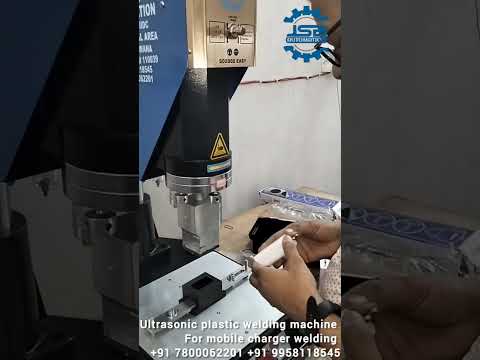

Round Horn 20 KHZ Ultrasonic Box Set
₹ 16,000
Get Best Price| Frequency : 20 kHz |
| Material : Mild Steel |
| Packaging Type : Box |

₹ 28,000

₹ 45,000


Ultrasonic High Frequency generator box
₹ 25,000
Get Best Price| Automation Grade : Automatic |
| Frequency : 15-60khz |
| Power : 800-4200w |
| Size : 300*1000mm |

₹ 25,000

₹ 25,000

₹ 14,000

Ultrasonic Generator Box 15khz 3200Watt
₹ 90,000
Get Best Price| Brand : Sheetal Enterprises |
| Display Type : Singal |
| Frequency : 15Khz |
| Power : 3200watt |


15 KHz Ultrasonic Generator Box
₹ 42,000
Get Best Price| Application : Welding |
| Automation Grade : Automatic |
| Availability : In Stock |
| Control Mode : Analog |


₹ 17,000

₹ 51,000


20kHz Ultrasonic Weld Generator Box
₹ 20,000
Get Best Price| Automation Grade : Automatic |
| Current Rating : 4.2 A |
| Frequency : 20kHz |
| Material : Mild Steel |
₹ 21,000

2000 Watt 20khz Ultrasonic Generator Box
₹ 1,10,000
Get Best Price| model : 2000 Watt 20khz Ultrasonic Generator Box |

₹ 1,30,000

₹ 90,000

₹ 80,000

Ultrasonic generator box
₹ 20,000
Get Best Price| 30*40*42cm : 18 kilograms |
| Frequency : 20Khz |
| Material : Metal |
| Size : 30*40*42 |
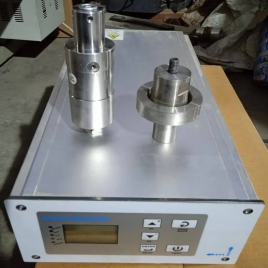
Ultrasonic Generator Box
₹ 2,50,000
Get Best Price| Availability : In Stock |
| Country of Origin : Made in India |
| Frequency : 15 kHz |
| Material : Mild Steel |


Ultrasonic Generator Box Spare
₹ 25,000
Get Best Price| Automation Grade : Automatic |
| Cable Length : 10 INCH |
| Frequency : 18 KHZ |
| Power : 1.5 KW |

18khz ultrasonic generator box
₹ 17,500
Get Best Price| Automation Grade : Automatic |
| Body Material : MS |
| Country of Origin : Made in India |
| Frequency : 18khz |

₹ 17,500

Ultrasonic Generator Module
₹ 30,000
Get Best Price| model : Ultrasonic Generator Module |
| Power Source : As per requirement |
| Voltage : As per requirement |

₹ 60,000

Ultrasonic Generator Box
₹ 40,000
Get Best Price| Automation Grade : Semi-Automatic |
| Display Type : DIGITAL |
| Frequency : 28KHZ |
| Material : TITANIUM |


₹ 48,000

Ultrasonic Welding Generator - 15 Khz, 200 W for Sealing
₹ 2,50,000
Get Best Price| Application : Sealing |
| Automation Grade : Automatic |
| Availability : In Stock |
| Body Material : MS |


₹ 2,50,000
Top Ultrasonic Generator Manufacturer and Supplier
Frequently Asked Questions about Ultrasonic Generator
What is an ultrasonic generator?
An ultrasonic generator is an electronic device that changes normal mains electricity - usually 220 V alternating current at 50 or 60 Hz - into high frequency electrical energy at ultrasonic rates, between 15 kHz and 40 kHz, most often 20 kHz. This high frequency energy is used to drive transducers in jobs like welding, cleaning plus sonication. The generator contains four main sections - a power supply unit, a frequency converter built round a crystal oscillator, an amplifier and an impedance matching circuit. It creates a stable sine or pulsed signal, boosts it to an output of 500 W to 5000 W but also relies on feedback loops that lock the phase so the circuit automatically retunes itself to resonance even when the load changes. This keeps energy transfer efficiency above 90 %. In ultrasonic welding the generator feeds piezoelectric transducers - they change the electrical energy into mechanical vibrations with amplitudes of 50 µm to 150 µm and the heat from those vibrations melts the plastic joint. The unit also provides overload protection, lets the operator set amplitude or power as well as shows values like time or delivered energy on a digital display. Modern designs use switch mode power circuits giving a small, dependable package for factory use.
How does an ultrasonic power generator work?
An ultrasonic power generator takes normal mains electricity at low frequency (50 or 60 Hz, 220 V) and turns it into high frequency electricity (15 - 40 kHz, usually 20 kHz) at high power (500 - 5000 W) so that it can run an ultrasonic transducer. A crystal oscillator produces the basic ultrasonic tone, either as an even sine wave or as pulses. Transistors or IGBTs in a switching stage - either self oscillating or driven from outside - raise the voltage plus current while keeping the wave shape. An impedance matching network, which locks to the phase, tunes itself to the exact resonant frequency of the transducer (within ±50 Hz) and holds the match even when the load shifts during welding or cleaning. Sensors report current, voltage, phase but also temperature back to the control board allowing the unit to run in closed loop modes like time, energy or distance welding. The output leaves through a cable and reaches a piezoelectric stack - the stack moves with an amplitude of 50 - 150 µm as well as generates either cavitation in liquid or frictional melt at the joint. Overload circuits and a digital port protect the hardware or let the operator set and read data safely.
Why do you need an ultrasonic cleaning generator?
Ultrasonic cleaning generators have a single decisive job - they take ordinary mains electricity and turn it into high frequency power - about 20 000 - 40 000 pulses per second. That power feeds the transducers - the transducers vibrate the liquid plus fill it with clouds of tiny bubbles. Each bubble collapses with a sharp snap and the snap produces a microscopic jet strong enough to knock oils, greases, rust flakes but also dust out of threads, blind holes and narrow gaps that no brush, jet or pick could touch.If the generator stops, the vibrations stop as well as the bath becomes nothing more than a tank of detergent. For sectors that demand spotless parts - aircraft maintenance, implantable medical devices, injectors, circuit boards or tablet presses - loss of ultrasound means loss of cleanliness. Modern generators deliver between seventy and ninety-five percent of their input energy as useful sound. The rapid action shortens wash cycles, trims chemical doses or cuts water use. Because the energy arrives as gentle, repeated taps rather than as abrasion, parts survive thousands of cycles with no measurable metal loss staying within the limits set by ASTM, FDA and aerospace specifications. Built-in routines - sweep, pulse also automatic resonance tracking - keep the sound field evenly distributed. The load always works at peak efficiency - operators avoid the long soaks, strong acids and mechanical scrubbing that once damaged delicate surfaces next to drove up costs.
What is the working principle of ultrasonic?
Ultrasonic technology works - producing and using high frequency sound waves that people cannot hear, usually between 20 and 40 kHz. An ultrasonic generator creates electrical signals at those frequencies. A piezoelectric transducer changes the signals into rapid mechanical vibrations. The vibrations travel as pressure waves through a liquid or through air. The waves create zones where pressure rises plus falls in rapid succession. In cleaning, the low pressure part of the wave pulls the liquid apart and forms tiny bubbles. The bubbles collapse violently. The collapse sends out micro jets of liquid that move at roughly 500 metres per second but also also sends out shock waves. The jets and waves knock dirt off surfaces without harming the surface itself. In sensing or welding, the waves bounce off objects following the echo principle. The system measures the time the wave needs to return. It multiplies the time by the speed of sound, about 343 metres per second at twenty degrees Celsius, to find distance. In welding, the vibrations rub the parts together as well as create heat that melts the joint. Because the waves do not need to touch the object directly, the method gives precise results. It reaches deep into materials and tells different materials apart by the way each one resists the wave. For those reasons, industry uses it for cleaning, welding or tests that do not damage the part.
What are the 4 types of ultrasonic waves?
Ultrasonic waves are sorted into four kinds, fixed by how the particles move in relation to the direction the wave travels. Longitudinal or Compressional Waves - the particles move back and forth in the same line the wave moves producing zones where material is squeezed and zones where it is stretched - because they penetrate deeply, they suit inspection of the full volume of a part. Transverse or Shear Waves - the particles swing at right angles to the wave path, which shears the material - they are useful for weld inspection but only travel inside solids. Surface or Rayleigh Waves - they run along the outer face of a solid plus almost all their energy stays within one wavelength of the surface - the particles trace tiny ellipses - the waves reveal cracks that lie just under the surface. Lamb or Plate Waves - those guided waves stay in thin plates whose thickness is close to one wavelength - they mix longitudinal and shear motion and are used to find flaws in sheet material. By using the behaviour of those four wave types, engineers test parts without breaking them, clean surfaces and join pieces by ultrasonic welding.
Why should you buy an ultrasonic generator?
Ultrasonic generators work with a level of efficiency and accuracy that manual or mechanical tools seldom reach. They take normal mains electricity plus change it into high frequency power - between 20 000 and 40 000 cycles per second - while wasting less than ten percent of the energy. The high frequency output drives a piezoelectric transducer - the transducer either shakes a tool or creates countless tiny bubbles that scrub surfaces clean. Because the generator needs little extra energy, few chemicals but also almost no downtime, daily running costs drop. Built-in auto tuning, overload protection and a digital control panel remove most routine maintenance. In cleaning tanks the microscopic bubbles reach every hidden corner flushing away oil, dust as well as residues without scratching or corroding the part. Medical and electronics plants rely on this action to meet strict cleanliness rules. In plastic welding the same high frequency pulses heat or fuse joints within seconds forming bonds that are often stronger than the parent material. Automotive and packaging lines use the speed to raise throughput while the weld quality stays consistent. A well built generator keeps the amplitude steady, records each cycle also signals any drift - the process stays within hygiene and safety limits. The hardware tolerates long runs, adds years to the life of the transducer next to duplicates the same result every time. For plants that need repeatable, non destructive output, the generator offers a clear advantage over older mechanical or thermal methods.
How does a Branson ultrasonic generator function?
A Branson ultrasonic generator - Emerson's GCX or DCX line - turns normal mains power into high frequency electricity, most often 20-40kHz, to run piezoelectric transducers for jobs like cleaning tanks or plastic welders. A timing circuit first sets the exact ultrasonic pitch. An inverter built from power transistors or IGBTs boosts that low level signal into high voltage pulses that can push 500-5000W while the wave shape stays clean. Automatic Frequency Tracking watches the load, the temperature and the liquid depth every moment. It retunes the output to match the exact point at which the transducer vibrates best, within ±100Hz - more than 90 % of the supplied power reaches the work. Sweep mode wobbles the centre frequency back and forth across a band 100-1000Hz wide - this stops standing waves plus spreads the tiny cavitation bubbles evenly through the tank. Power modulation adds short bursts that rise to four times the average level - those strong pulses help when the liquid is viscous or the parts are heavily soiled. Load-regulation circuits hold the amplitude anywhere between 20 % and 100 % of full scale. A digital front panel shows the live numbers and trips protective limits if the head or power stage overloads giving industrial users steady, repeatable results.
What is a 1200W ultrasonic generator?
A 1200-watt ultrasonic generator is a powerful electronic unit that turns normal 110-220 volt alternating current into steady high frequency electric power - usually 20-40 kilohertz and tunable within ±3 kilohertz - delivering up to 1200 watts to run bolt clamped Langevin transducers or probe sonicators. The unit suits industrial plus laboratory work like ultrasonic cleaning, welding, homogenizing and liquid processing. It locks onto the resonant frequency automatically, shows readings on digital displays but also relies on ASIC chips to govern amplitude, power and pulse mode with high precision. Efficiency stays above 90 percent and the system stays on resonance even when the load changes. Many versions cover 26-160 kilohertz, permit soft start as well as stop to be programmed and provide analog monitor outputs of 0-5 volts or 4-20 milliamperes. Measuring roughly 480 by 330 millimetres or weighing about 15 kilograms, the generator removes sub micron dirt, disperses nanoparticles, breaks cells and forms emulsions without harming fragile items and it processes more material in less time than lower power units used in aerospace, medical and electronics production.
Related Product Types
Antistatic Wrist Strap | Borescope | Optical Interferometers | Three Phase Line Choke | High Power Laser Diodes | Helium Neon Lasers | Dynamic Braking Resistor | Multi Line Laser | Waveguide Components | Variable Attenuator | Stabilizer Repairing Service | Carbon Potentiometer | DC Link Chokes | ESD PCB Tray | Mini Prism | Vision Inspection System | Desoldering Pump | Soldering Accessories | ESD Wrist Bands | PCB Carriers | Desoldering Wick | Automatic Voltage Stabilizer | Servokon Voltage Stabilizers | Manual Voltage Stabilizer | Wall Mount Voltage Stabilizer | PCB Relays | Electromechanical Sensor Positioner | Operator Interface Terminals | Used Hand Edger | Liquid Solder Flux | Digital Potentiometer | Glass Prism | Sliding Rheostat | Desoldering Station | Right Angle Prism | Soldering Paste | LED Module | Washing Machine Capacitor | Servo Stabilizer | Integrated Circuits | Compact Band Filter | LED Bulb PCB | Neutral Grounding Resistors | NPN Transistor | Haze Meter | Laser Diode Module | Laser Mirrors | Alochol-Enchanced Flux Remover | Flux Removers | Wire Wound Resistors | DC Shunts | Gunn Diode | Decade Box | Electronic Timers | Nd YAG Lasers | Dip Soldering Machine | Wave Soldering Machine | Meter Bridge | Polarization Analyzers | Breadboards | Electronic Amplifier | Periscope | STMicroelectronics Microcontroller | Electronic Components | PCB Assembly | Voltage Regulators IC | SMD Transistor | PNP Transistor | PIC Microcontroller | Atmel Microcontroller | Microcontroller | IGBT Transistors | High speed optocoupler | Schottky Diode | Thin Film Resistor | SMD Diode | Fast Recovery Diode | TVS Diodes | Honeywell Pressure Sensors | Industrial Robotic Automations | Active Harmonic Filter | Capacitor Clamp | Photodiode | Arduino Shield | Soldering Bits | Tin Lead Solder Wires | Loading Rheostat | LED Chip | MOV | Autocollimator | Automatic Voltage Regulator | Chip Resistors | Thyristor Power Regulator | Programmable Controllers | Mask Aligner | Humidity Transducers | High Voltage Resistors | Marine GPS | Laser Tracker | Film Densitometer | Ultrasonic Probe | Film Capacitors | High Voltage Capacitors | Electrolytic Capacitors | PCB Assembly Jig | PN Junction Diode Apparatus | Hall Effect Sensors | Excimer Lasers | Fixed Capacitors | GIC Level Controllers | Surface Mount Adhesive | Ceramic Capacitors | Solder Dross Recovery Machine | Bluetooth Module | RF Module | XBEE Modules | Speaker Cable | Electronic Modules | Power MOSFET Module | Soil Moisture Sensor | Flex Sensor | Force Sensors | Reflection Densitometer | NTC Thermistor | ESD Tapes | ESD Dispenser Bottle | Fume Filters | Home Automation System | High Voltage Diode | Drum Coil Inductor | Tibcon Capacitor | Battery Discharge Resistor | Obstacle Sensor | Motor Driver IC | Camera Slider | Rectifier Diodes | Carbon Film Resistor | Speed Sensors | Carbon Monoxide Sensor | Line Following Sensor | Lead Free Solder Wire | Solder Mask Ink | Mini GPS | Vibration Monitoring System | Static Discharge Palmplate | Thermal Imaging Sensor | Microstrip Splitter | Flux Dispensers | Laser Belt Alignment | Laser Alignment Tools | Thermal Wire Stripper | Densitometer | Directional Couplers | EMI Shield | Laser Transmitter | Malde Capacitor | Rheostats | SMD Thermistor | Thermistor Probes | Resistance Boxes | ESD Mats | Frequency Division Multiplexer | Etching Machine | PCB Assembly Line Components | DOL Starter | Digital volt amp meter | Liquid Level Controllers | Water Level Controller | Illuminated Magnifier | Reflow Soldering Systems | Soldering Fume Absorber | Automatic Solder Lead Cutting Machine | Soldering Pot | Automatic Soldering Machine | Reflow Oven | Optical, Laser Instruments & Devices | Optical Time Domain Reflectometers | AC Capacitor | Power Resistors For Generators | Static Eliminators | Brushing Machine | 3D White Light Scanner | Fiber Laser Source | Semiconductor Processing Equipment | Laser Process Heads | PCB Machine | Automatic Voltage Controller | Soldering Station | Rework Station | 3D Laser Scanner | Laser Level | Laser Range Finder | Solder Paste Mixer | Co2 Laser Tube | Rotating Laser Systems | Capacitor | Passive Harmonic Filter | BGA Rework Machine | Thyristors | Power Diode | PCB Conformal Coating | Potentiometer | Gold Soldering Powder | Laser Detector | Sub Zero Plate | Solder Sticks | Electronic Power Choke
Related Categories
Laptops & Desktop | Consumer Electronics | Heater, Thermostat & Heating Devices | Smart Door Lock | CCTV, Surveillance Systems and Parts | Biometrics & Access Control Devices | GPS and Navigation Devices | Process Control Systems & Equipments | VFD, PLC, HMI & Control Equipments | Door Lock, Electronic Lock & Latches | Security, Safety System & Service | Computer & IT Solutions | Office Automation Products & Devices | Calibrators & Monitoring Systems | Computer Hardware & Peripherals | Electric Circuit Components & Spares | Indoor Lights & Lighting Accessories | Inverters, UPS and Converters | Domestic Fans, AC & Coolers | Electrical & Electronic Test Devices | Sensors & Transducers

