

Home » Laboratory Equipments » Hot Air Oven
Hot Air Oven
(419 products available)A hot air oven is an essential apparatus used for sterilisation, drying, and heat treatment procedures in industries such as pharmaceuticals, food processing industries, and research institutes. It is an arrangement in which circulating hot air is within the oven to supply the uniform temperature in order to ensure uniform and complete heating of the materials inside. In general, this oven is employed for the sterilisation of glassware, metal instruments, and other thermally stable materials, up to a limit. Hot-air ovens find special applications where controlled and accurate heating conditions are needed. They are extensively used in powder drying and granules and are found essential in research and quality control laboratories. The hot air ovens have stainless-steel construction for the long-lasting capability of corrosion resistance. The interior chamber is preferably made of the best material to ensure the homogeneity of temperature and maximum thermal conductivity. The oven is desirable with an advanced digital control where the user can easily set and monitor with great accuracy preferred temperature and time. Other safety features such as over-temperature protection devices and alarm systems are provided to ensure safe operation. A hot air oven is undoubtedly a suitable and reliable solution for many functions, like sterilizing laboratory instruments, drying samples, and performing other heat treatment processes. Find out the best hot air ovens listed on Aajjo. Read more
Hot Air Oven Products, Price, Specifications & Features

Hot Air Oven
₹ 50,000
Get Best Price| Capacity : 45 litre |
| Country of Origin : Made in India |
| Despatch time after releasing the order : Hot Air Oven |
| Display Resolution : LED |


50-250 Degree Celsius Stainless Steel Hot Air Oven, Size: 18x18x18
₹ 28,500
Get Best Price| Air Circulation : Motorized Recirculation |
| Capacity : Customized |
| Chamber Volume : 100 Litre |
| Display Type : Digital |


Hot Air Oven
₹ 10,000
Get Best Price| Brand: Pakmo |
| Air Circulation : Natural |
| Brand : Pakmo |
| Capacity : 45 liter |
| Controller Type : Digital |


SS Hot Air Oven Manufacturer
| Air Circulation : Forced Air |
| Capacity : 300 L |
| Controller Type : Digital |
| Door Type : Glass Window |


Share Your Requirements
For a Quick response, Please fill up the details below.
Related Videos


Hot Air Oven
₹ 60,000 66,000 9.00% Off
Get Best Price| Despatch time after releasing the order : payment 2 days |
| Fully Automatic Instruments : 1 |
| Road Permit Or Way Form : no |


Laboratory Universal Oven - Panacea, 100 L, Digital PID Control
₹ 30,000
Get Best Price| Country of Origin : Made in India |
| Frequency : 50 Hz |
| Number Of Shelves : 4 |
| Temp. Controller : By Microprocessor Based PID Digital Temperature Indicator cum Controller. |


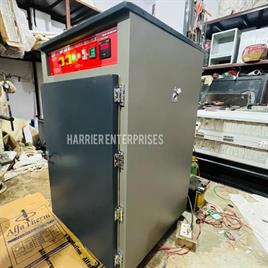
Hot Air Oven
₹ 67,700 67,715 0.00% Off
Get Best Price| Air Circulation : Motorized Recirculation |
| Chamber Volume : 28 |
| Country of Origin : Made in India |
| Display Type : Digital |


₹ 1,19,715

50-250 Degree Celsius Stainless Steel Hot Air Universal Oven, Size: 18x18x18
₹ 35,000
Get Best Price| Material : Stainless Steel |
| Model Name/Number : aarkeylab |
| No Of Trays : 2 |
| Size : 18x18x18 |


Drying and Heating Chambers Circulating Oven AVANT Grade
₹ 1,50,000
Get Best Price| Air Circulation : Forced Air |
| Application : Drying |
| Availability : In Stock |
| Capacity : 300 L |


TQTE 1000 Hot Air Oven, For Laboratory
₹ 80,000
Get Best Price| Brand : TQTE |
| Material : Stainless Steel |
| Max Temperature : 1000 |
| Recommended Order Quantity : 1 |

300degree 50-300 Degree Celsius Industrial Hot Air Oven, Electrical
₹ 50,000
Get Best Price| Brand : air equipment eng |
| Delivery Time : 15 to 20 Days |
| Heating Media : electrical |
| Item Code : 2021 |


Laboratory Drying Oven
₹ 85,000
Get Best Price| Air-Flow Direction : Vertical Down Airflow |
| Automation Grade : Automatic |
| Capacity(Kg) : 100 kg |
| Country of Origin : Made in India |


Hot Air Ovens
₹ 50,000
Get Best Price| Material : Stainless Steel |
| Max Temperature : Up to 250 deg celsius |
| No Of Trays : 4.0 |
| Usage/Application : Industrial |

Laboratory Vacuum Pump - 40 LPM
₹ 10,000
Get Best Price| Automation Grade : Automatic |
| Type : Vaccum Pump |
| Usage/Application : Industrial |
| Voltage : 320 V |

Mild Steel Stainless Steel Hot Air Oven
₹ 50,000
Get Best Price| Air Circulation : Motorized Recirculation |
| Body Material : Mild Steel |
| Chamber Volume : 60 Litre, 65 Litre, 75 Litre, 100 Litre, 150 Litre |
| Delivery Time : 7 |

Hot Air Tray Dryer Oven
₹ 80,000
Get Best Price| Capacity : 1000 KG |
| Capacity : 1000 KG |
| Material : Mild Steel |
| No Of Trays : 192 |


Mild Steel Hot Air Oven
₹ 50,000
Get Best Price| Body Material : Mild Steel |
| Display Type : Analog |
| Power Source : Electric |
| Type : Hot Air Oven |

₹ 50,000




Testronix Digital Hot Air Oven, Insulation, Size: 610*915*610 Mm
₹ 500 62,000 99.00% Off
Get Best Price| Temp. Range : Upto 250 Degree Celsius |
| Temperature Range : 250 Degree Celsius |
| Type : Digital |
| Usage/Application : Industrial |


₹ 90,000

Hot Air Oven
₹ 50,000
Get Best Price| Air-Flow Direction : ROUND |
| Body Material : Steel |
| Temp. Uniformity (deg. Celsius) : .5 |
| Voltage Volt : 220 |

Stainless Steel Double Walled Hot Air Oven, 50 Liter to 1000 Liter, 3
₹ 50,000
Get Best Price| Capacity : 50 Liter to 1000 Liter |
| Chamber Size (W*H*D) mm : 18x18x24 |
| Country of Origin : Made in India |
| Material : Stainless Steel |

Stainless Steel Hot Set Oven, 45 liter
₹ 99,999
Get Best Price| Brand: CKINSTO |
| Availability : In Stock |
| Brand : CKINSTO |
| Capacity : 45 liter |
| Chamber Size (W*H*D) mm : 315 mm (W) x 315 mm (D) x 525 mm (H) |

Hot Air Oven
₹ 50,000
Get Best Price| Body Material : Inside ss , outside Ms |
| No of trays : 2.0 |
| Temperature : 200-300 deg. Celsius |
| Usage/Application : Laboratory, pharma and industry |


Hot Air Oven
₹ 50,000
Get Best Price| Finish : Paint Coated |
| Material : Mild Steel |
| Pack Type : Box |
| Power Source : Electric |

₹ 50,000

Indoor Tile Laying Robot - Mini Laser Dry Screed Floor Leveling Robot
| Tile thickness range : 8-20 mm |


Hot Air Oven
₹ 50,000
Get Best Price| Capacity : 5-10 Kg/hr |
| Motor Power : 1 HP |
| Power Consumption : 1.5 Units/Hr |


TEI 230V Hot Air Oven
₹ 50,000
Get Best Price| Air Circulation : Motorized Recirculation |
| Automation Grade : Automatic |
| Body Material : Mild Steel, Stainless Steel |
| Brand : TEI |
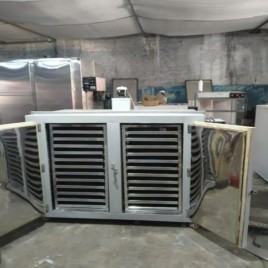
Mild Steel Industrial Drying Oven, Capacity(Kg): 600 kg
₹ 55,000
Get Best Price| I Deal In : New Only |
| Is It Optional Timer : available |
| Is It Rust Proof : Rust Proof |
| Material : Mild Steel |
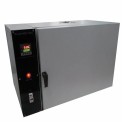

50-150 Degree Celsius Stainless Steel Thermostatic Hot Air Oven
₹ 68,000
Get Best Price| Chamber Volume : 65 Litre |
| Frequency Hertz : 50-60 Hz |
| Material : Stainless Steel |
| Number Of Doors : 1 |

Lansun 50-150 Degree Celsius SS Laboratory Oven
₹ 50,000
Get Best Price| Brand : Lansun |
| Material : Mild Steel |
| Power(W) : 2500 W |
| Weight : 110 Kg |


Hot Air Oven
₹ 17,000
Get Best Price| Brand: Hasthas Scientific Istruments |
| Air Circulation : axial fan |
| Brand : Hasthas Scientific Istruments |
| Capacity : 50 L |
| Controller Type : Digital |


100-200 deg. Celsius Hot Air Oven, Capacity: 0-100 Kg
₹ 10,00,000
Get Best Price| Brand : Kamran |
| Capacity : 0-100 Kg |
| Country of Origin : Made in India |
| Location : Pan India |

DDRI Hot Air Ovens, DDRI101
₹ 50,000
Get Best Price| 275 x 400 x 275 (11" x 16" x 11") : 2 |
| 300 x 300 x 300 (12" x 12" x 12" ) : 2 |
| 350 x 350 x 350 (14" x 14" x 14") : 2 |
| 400 x 400 x 400 (16" x 16" x 16") : 2 |

Hot Air Oven, For Industrial
₹ 50,000
Get Best Price| Brand : Bimal Overseas |
| Capacity : 10 Kilogram |
| Chamber Volume : 60 Litre |
| Country of Origin : Made in India |


Mild Steel Electric Hot Air Oven, For Industrial
₹ 50,000
Get Best Price| Body Material : Mild Steel |
| Brand : Neel Kanth |
| Country of Origin : Made in India |
| Display Type : Digital |


Pinkcity Technology 50 Degree C Laboratory Hot Air Oven, Model Name/Number: Pti - 2039-c
₹ 50,000
Get Best Price| No Of Chamber : One |
| No Of Trays : 2 |
| Temperature Range : 50 Degree C |
| Usage/Application : Laboratory |

Hot Air Oven
₹ 50,000
Get Best Price| Air Circulation : Forced Air Circulation |
| Chamber Volume : 100 Litre |
| Color : sky blue with white |
| Control Type : dgiital timer setup |


Mild Steel (Outer) Hot Air Oven, Size: 14*14*14 Inch
₹ 10,000
Get Best Price| Availability : In Stock |
| Capacity : 250 L |
| Display Type : Digital |
| Inner Chamber : Stainless Steel |


Hot Air Oven
₹ 75,000
Get Best Price| Brand: Accumax |
| Availability : In Stock |
| Brand : Accumax |
| Capacity : 45 L, 95 L, 224 L, 336 L |
| Electrical Supply : 220/230V AC, 50/60H |


Top Hot Air Oven Manufacturer and Supplier
Frequently Asked Questions about Hot Air Oven
What is the hot air function on the oven?
A fan and a heating element disperse the heat. This ensures the food cooks evenly. The oven's hot air function circulates heated air. This allows for consistent cooking. The equal distribution of heat lowers the cooking time, so hot air cooks faster than conventional baking. This results in uncooked patches and blackened areas. It works best when baking pastries, roasting meats, and crisping vegetables. Golden brown color is achieved with it, along with moisture retention near the food. Most ovens allow the adjustment of fan speed. At a lower speed, more control is given regarding heat distribution. Some models also provide steaming, which greatly helps the texture. With respect to energy, one saving grace of hot air baking is the lesser temperature, especially in contrast to regular baking. This translates into less electricity consumed for the same amount of cooking. This cooking method is particularly useful when working with several trays simultaneously. With the hot air function, heat travels evenly, so trays never need to be turned. The hot air function enhances the overall cooking process, giving reliable results with a minimum of effort. This has made hot air cooking popular in contemporary kitchens.
How to use a hot air oven in a laboratory?
Drying and sterilising are done in a lab hot air oven. Using dry heat, moisture evaporates, killing microbes. First, one should verify the oven's good running state and cleanliness. The oven should then be turned on and adjusted to the needed temperature—usually between 160°C and 180°C. Inside the oven, arrange sterilising supplies. One should use only metal tools or heat-resistant glassware. Ensure space between items. This is to allow free air circulation between the items. Ensure the door of the oven closes firmly. Set the timer according to the material and temperature profile. Do not open the door during the cycle; it will disturb the temperature. When the timer goes off, allow the oven to cool. Items must not be removed while hot. Use heat-resistant gloves to handle sterilised materials. Then label and store the sterilised materials. The hot air oven will be maintained regularly for safety and reliability. Accounting for safety measures while using and maintaining the hot air oven is important. All in all, the hot air oven has so far proven to be a reliable machine for sterilising and drying microbiology and research laboratories.
What is autoclave and hot air oven?
Both hot air ovens and autoclaves are sterilising tools able to eradicate dangerous bacteria found on lab tools. Every one of these sterilisers works through a distinct mode. An autoclave runs under pressurised steam. This falls most usually between 121°C and 134°C. Killing germs, viruses, and spores, this steam fills the chamber and penetrates the substance. It is most suited for sterilising surgical equipment, liquids, dressings, and media. Conversely, most of the time a hot air oven sterilises by dry heat at higher temperatures, between 160˚C and 180˚C. To kill germs, this depends on heated air circulation devoid of moisture. It is ideal for glassware, metal tools, and powders. Autoclaves are faster and more effective with moist articles. Hot air ovens are slow, but they sterilise items that cannot get wet better. The two devices also have some safety requirements. Items should be heat resistant and in proper arrangement within the steriliser. Before any use, the material must be cooled after sterilisation. Both methods bear importance in a laboratory and clinic. It would depend on the material and the degree of sterility required to choose between the two methods.
What is the principle of hot air oven?
Dry heat sterilisation is applied in hot air ovens. The increased temperature will assist the destruction of microorganisms. The heat transfer is done through convection. As a result, hot air circulates through a fan in the chamber. This provides uniform temperature distribution. The heat penetrates slowly into the materials. It moves from the outside to the inside. This guarantees an appropriate sterilising agent. Enzymes and proteins can be denatured by dry heat. It oxidises components of cells, enabling total sterility following agent exposure. The oven's regular running temperature falls between 160°C and 180°C. Temperature affects the sterilising time. It also relies on the kind of content. Different materials need different times. Higher temperatures need less time. Lower temperatures need more time. Dry heat works for items like glassware, metal instruments, and powders. Such items must be able to withstand high heat without damage. The main difference is the absence of moisture. Steam sterilisation uses moisture, but dry heat does not. The oven door must stay closed during use. This keeps temperature and airflow steady. After the cycle, materials should cool inside the oven. Removing them early can affect sterilisation. This method is safe and reliable. It is used in labs and hospitals. It sterilises tools and materials effectively.
What is the method of sterilization of hot air oven?
Sterilisation in a hot air oven occurs via dry heat circulating inside the closed chamber. For uniform heating, air circulation is maintained by a fan. This allows oxidative ways of destruction for bacteria, viruses, and spores. Sterilisation at 160 takes around two hours using 160–180 degree temperatures; sterilisation at 180 takes about half an hour. The kind of material utilised and the load's size will affect these timings. Materials subjected to sterilisation are expected to be heat resistant, so glassware, metallic instruments, and powders are good candidates. Plastics and rubber, on the other hand, cannot be sterilised by this method since they will melt. The oven is preheated to a high temperature. Items are placed after it heats up. There should be space between the items. This allows air to circulate properly. Once the set temperature is reached, the timer starts. Sterilisation time is counted from that point. The door of the oven has to remain closed during the entire cycle to avoid disturbance of heat and air circulation. After the completion of sterilisation, cooling is done slowly while allowing the articles to cool all the way. This is a quick, dependable, and safe approach. In laboratories and hospitals, the approach outlined here is usually applied to sterilise tools and supplies.
What control is used in a hot air oven?
A hot air oven has various controls that allow the accomplishment of successful sterilisation. The major control is the temperature controller. It lets one keep the required temperature. Currently set the temperature as indicated on a natural or digital display. Most ovens use a thermostat to regulate heat. The heater on-off is switched by it in order to enable the present temperature to be maintained. A timer is also used. It helps with controlling the duration of sterilisation. It shall be running as soon as the apparatus reaches its set temperature. Some of the ovens have safety controls. One of them will be over-temperature protection. It will shut the oven down when there is too much heat. Some models use an airflow control system. The hot air is then circulated using a fan. Advanced ovens might include programmable controls wherein users can set different temperature and time cycles. Indicators like lights or alarms will buzz or beep to alert the user at the end of the cycle. These controls ensure precision in the functioning of the oven while at the same time ensuring safe conditions within which sterilisation can occur within controlled temperature limits in both laboratory and medical settings.
What is the maximum temperature of a hot air oven?
Most lab ovens have a maximum temperature of 250°C. Some advanced models go beyond this limit. Maximum temperature depends on the oven type. Generally speaking, the range is 50°C to 300°C. Usually used in sterilisation is 250°C. This heat degree destroys spores and bacteria. Higher temperatures are for special uses. Temperature control is important for safety. This temperature can kill the bacteria, viruses, and spores; the materials kept inside such hot conditions should be capable of withstanding them. For this method, glassware, metallic instruments, and powders are considered. Plastic and rubber are no-nos in hot-air drying because they may melt or be ruined. The hot air isn't wet; it's dry heat as opposed to moist as an autoclave. Usually housed at the bottom, then hot air circulates through the chamber with the help of a fan. Control of temperature is done by a thermostat or digital controller, preventing the oven from rising above this ceiling. Safety measures would kick in to prevent overheating. Hot air ovens give reliable sterilization. They use high temperatures. They are used in labs. Hospitals use them too. Pharmaceutical industries also use them.
What are the parts of the hot air oven?
A hot air oven consists of several rather crucial parts. One finds metal in the exterior body. It helps the oven to be strong and shields it. Inside is the inner chamber, usually composed of stainless steel, used to store the sterilizable objects. There are shelves that hold trays or other instruments in the room. Surrounded by the heating element, the chamber produces the needed heat for sterilisation. Inside is also a fan. This is used to distribute the heated air inside the chamber such that the heating is consistent. Within too is a temperature sensor. This measures the temperature inside the oven. The control panel is mounted externally on the oven, which allows time and temperature settings. It has a rubber gasket along its inner surface. It seals the chamber perfectly. Insulation is placed between the outer and inner walls. It helps to preserve heat. All parts work together for effective and safe sterilisation.
What is the biological control for hot air oven?
Biological controls are performed in a hot air oven with test organisms. These organisms help in confirming that sterilisation was successful. The most favoured organism is usually Bacillus atrophaeus. The spores show a lot of resistance to heat, so they are well-suited for testing dry heat sterilisation. Spores are inoculated on a carrier, which is mainly paper strips or glass ampoules. These strips are placed inside the hot air oven for heat treatment. They are then subjected to a full sterilisation cycle. At the end of the run, the strips are carefully removed from the hot air oven and put in a growth medium. If no growth occurs, it is said to be a successful sterilisation, while the appearance of growth indicates sterilisation has also failed. This method checks whether the oven reaches the relevant temperature. This method also verifies the right exposure time. Biological indicators are far more reliable than chemical indicators. They test the oven's real ability to kill off microorganisms. Biological indicators should be used routinely. This guarantees laboratories and hospitals' safety and reliability. This also ensures sterilisation standards and guidelines are upheld.
What is PV in a hot air oven?
Process validation, abbreviated as PV, is the term employed by the hot air oven. Sterilisation being a vital component, PV establishes that the oven functions as expected. Another view on PV is the uniformity of the sterilisation process. It monitors temperature, time, and heat distribution. Validation is performed by taking multiple test cycles. Thermocouples are used in different positions inside the oven. They are very accurate in measuring temperature. Readings are recorded on the data logger. To prove uniform distribution of heat, any cold spots found would be during this process. Biological indicators may also form part of the assessment for process validation. They establish that microbial killing has happened to an acceptable degree. All other parameters must conform to sterilisation acceptance criteria. If it does meet the criteria, the process is validated. PV is usually done before routine use. It is repeated after major repairs. This ensures the oven works properly. It keeps the sterilisation process safe. It protects the items being sterilised. It helps maintain consistent performance. PV gives assurance for the oven's performance. It mostly becomes part of the documented processes and is subject to audit. The validation endorses regulatory compliance in laboratories and the pharmaceutical industry. It is one of the major pillars that control quality assurance systems.
What are the precautions for hot air oven?
Several precautions are to be taken with a hot air oven. Always preheat the oven before placing anything inside. Only use materials that can withstand high temperatures. Do not overload the chamber, as this is necessary to allow circulation through the chamber. Separate objects to guarantee unobstructed air passage between them. The oven should not be run with the door open since this produces temperature swings. During the whole sterilising procedure, the door has to stay tightly closed. Wear heat-resistant gloves when handling hot materials—do not put anything flammable or explosion-prone into the oven. Always check the temperature setting before using an oven. The oven must be periodically cleaned to avoid causing contamination. It is important to verify whether the sterilisation is actual by means of a thermometer or indicators. Calibration of the oven should always accompany this process. Allow items to cool down inside the oven after the cycle. Removing them too early may compromise sterilisation. Place the oven in a well-ventilated area. Steer clear of direct touch with heated components. Never leave the running oven unattended. Always heed manufacturer recommendations. One must do routine maintenance. These procedures guarantee efficient sterilisation and safety during every use.
What are the parts of a hot air oven?
The oven liner consists of numerous pretty relevant parts. The exterior is mostly mild steel or stainless steel. It provides support and insulation. The interior chamber has sterile things composed of stainless steel as well. Between the exterior and interior chamber, insulation is located in order to hold the temperature within and make energy efficiency better. Heating elements could be placed on the sides or on the bottom of the hot air oven. Either way, the heat produced is used for the purpose of sterilisation. The fan located inside the chamber promotes the even circulation of hot air. The internal temperature is maintained using a temperature controller, while the accuracy is ensured by using a thermostat. The door is insulated and seals the chamber tightly when in use. The temperature and timer are shown on a digital/analogue display. Air vents are provided for airflow and heat balance. Temperature settings generate a timer that is adjustable for setting the sterilisation duration. Some ovens have special safety thermostats that cut off power in the event of overheating. Each part comes together to ensure effective sterilisation. Components mark the hot air oven as safe and effective in any laboratory or clinical use.
Related Product Types
Fisher Clamp | Surgical Gloves | Surgical Cap | Heating Mantle | Water Distillation | Heat Deflection Temperature Tester | Burette Stand | Aseptic Cabinet | Electric Bunsen Burner | Camera Lucida | Rotamantles | Mccartney Bottle | ESCR Apparatus | Magnetic Stand | Evaporation Boat | Stainless Steel Sieves | Civil Lab Equipment | Laboratory Hoods | PH Testing Paper | Laboratory Spirit Lamp | Wire Gauze | Newtons Colour Disc | Feed Box For Spiral | Forensic Model | People Counting Machine | Screw Cutting Gauge | Reflective Sheet | Pharmacy Refrigerators | Ice Lined Refrigerators | Solar Driven Vaccine Refrigerators | Blood Bank Refrigerators | Shoe Cover Dispenser | Herbarium Press | Spectrometer | Laparoscopic Instruments | Solar System Model | Multi Vortex Mixer | Rectangular Laboratory Jack | Infrared Thermometer | Jar Test Apparatus | Finger Dexterity Test | Plastic Beaker | DNA Model | Nitrous Oxide Regulator | Ozone Test Chamber | Powder Sampler | Cavity Plate | Laboratory Tap | Hope Apparatus | Linear Expansion Apparatus | Slide Cabinets | Anti Vibrating Table | Vacuum Chambers | Gas Sampling Probe | Contaminated Oil Test Kit | Cryoprecipitate Bath | Laboratory Stool | Humidity Test Chamber | Hot Water Bath | Hot & Cold Chambers | Constant Temperature Water Bath | Temperature Calibration Bath | Refrigerated Water Bath | Centrifuge Machine | Low Temperature Bath | Heat Transfer Laboratory Equipment | Salt Spray Test Apparatus | Ageing Chamber | Laboratory Consumables | Salt Fog Chamber | Conditioning Chamber | Bacteriological Incubator | Double Distillation Unit | Serological Water Bath | Kjeldahl Distillation Assembly | Water Bath Shaker | Soxhlet Extraction Apparatus | Tube Roller Mixer | PCR Workstation | Laboratory Centrifuge | Investigation Kit | Laboratory Benches | Orbital Shakers | Fume Hoods | Humidity Chambers | Dry Box | Diagnostic Apparatus | Pensky Martens Apparatus | Laboratory Fitting | Smoothness Appearance Replicas | Martindale Consumable | Vacuum Testing Box | Insect Growth Chamber | Static Pass Box | Digital Overhead Stirrer | Ford Cup Viscometer | Brass Frame Sieves | Slide Staining Rack | Lever Apparatus | Mechanical Lab Equipment | Biological Indicator | Laboratory Stirrer | Laboratory Mini Centrifuge | Remi Laboratory Stirrer | Pathological Binocular Microscope | Olympus Laboratory Microscope | Pathological Laboratory Centrifuge | Laboratory Micro Centrifuge | Cooling Refrigerated Centrifuge | Refrigerated Colling Centrifuge | Automatic Level Instrument | Lactometer | Modular Cleanrooms | Vacuum Gauges | Hydrogenator | Manifold Gauge | Laboratory Bell Jars | Fumigation Chamber | Fluid Pressure Apparatus | Bernoullis Theorem Apparatus | Orifice Meter Apparatus | Forced Vortex Apparatus | Metacentric Height Apparatus | Plasma Thawing Bath | Corrosion Test Chamber | Seed Germinator | Glass Distillation Apparatus | Water Bath | Vdrl Shaker | Water Bath Testing Machine | Ultrasonic Bath(Sonicator) | Vacuum Pump | Incubator Universal | Muffle Furance-Rectangular | Laboratory Jaw Crusher | Humidity/Stability Chamber | Rotary Vaccum Evaporator | Digital pH Meter | Sieve Shaker | Refractrometer | Leak test Apparatus | Rotary Shaker | Analytical/Digital Balance | I.R Moisture Balance | Thermal Shock Chambers | Fume Hood For Chemical Application | Powder Dispensing/Sampling Booth | Antibiotic Zone Reader | Laminar Air Flow | Carbon Residue Apparatus | Lab Button Press | Laboratory Paper | PVC Ankle Joint | Human Anatomical Models | Pour Point Apparatus | Laboratory Mixers | Tergotometer | Wrist Action Shaker | Fluid Mechanics Lab | Medical Refrigerator/ Freezer Systems | Culture Laboratory | Seed Analysis Kit | Membrane Filter Holder | Hydraulic Test Stand | Digital Timer | Petri Dishes Rack | Microstructure Specimen Set | Micromanipulator
Related Categories
Diagnostic Equipment & Products | Nebulizers | Occupational Physiotherapy Aids | Respiratory Care | Support & Braces | Surgical Dressing | Walking Aid | Mortuary Chamber | Medical Disposables | Anaesthesia Equipment & Products | Autoclave & Sterilizers | Weighing Scales & Measuring Tapes | OT and Examination Lights | Medical Rubber Products | Hospital Holloware | Infant Care & Baby Care Equipments | Hospital Scrubs & Linens | Rehabilitation Products & Aids | Medical Imaging | OT Equipments | Hospital Equipment Product | Laboratory Chemicals | Measuring Equipments & Instruments | Surgical & ICU Equipments | Hospital and Medical Furniture | Cleanroom Equipment | Hospital and Diagnosis Instrument | Glass Bottle for Laboratory | Medical Surgery & Treatment Centres | Medical Consultancy Services

