

Home » Oil Mill & Oil Extraction Machinery » Oil Distillation Plant
Oil Distillation Plant
(319 products available)An oil distillation plant is an industrial building – it separates crude oil into different hydrocarbons, which people call fractions. This separation happens because the fractions boil at different temperatures. The process starts when workers treat crude oil; they desalt it to take out salts and sand along with other unwanted materials – these materials can damage the distillation machines. After desalting, workers heat the crude oil – this improves how it flows and prepares it for the next steps. After workers treat the crude oil, they put it into a furnace. The furnace heats the oil to temperatures from 350°C to 400°C. Most of the hydrocarbons turn into a gas. That mix of gas then goes into a tall distillation column. Some people call this a fractionating tower. The mix moves up through trays or packing material inside the column. The temperature slowly gets cooler from the bottom to the top. As the gases go up, they cool. They turn into liquid at different levels; this separates the lighter parts, such as gases and naphtha as well as gasoline, at the top. Heavier products, like kerosene and diesel in addition to residual fuel oil, collect lower down. After separation, the fractions cool. Workers store them before sending them for more refining or to sell them. Oil distillation plants are necessary for making steady, good fuels and petrochemical products. The plants separate hydrocarbons well – they also follow strict industry rules for how pure fuels are and how well they work. Discover a wide selection of oil distillation plants at AAJJO – shop now for the best deals! Read more
Oil Distillation Plant Products, Price, Specifications & Features


₹ 5,00,000

₹ 30,00,000

₹ 30,00,000

500 Kgs Batch Distillation Plant, Automation Grade: Semi-Automatic, 4KWH
₹ 1,20,00,000
Get Best Price| Automation Grade : Semi-Automatic |
| Capacity : 500 KGS BATCH |
| Delivery Time : 12 WEEKS |
| Design Type : Standard |


Batch Semi-Automatic Oil Distillation Plants, 3 TPD
₹ 3,40,000
Get Best Price| Availability : In Stock |
| Body material : SS304 |
| Condenser type : Shell and tube |
| End product : Base oil |


₹ 3,20,000

₹ 4,50,000

Oil Distillation Plants, Capacity: 10 L
₹ 2,70,00,000
Get Best Price| Body Material : SS |
| Capacity : 10 L |
| Country of Origin : Made in India |
| Material Body : SS |
Share Your Requirements
For a Quick response, Please fill up the details below.
Related Videos


Essential Oil Distillation Machine, Capacity: 2000 L Onwards
₹ 2,80,000
Get Best Price| Availability : In Stock |
| Capacity : 2000 L onwards |
| Material : Mild Steel / Stainless Steel 304 316 |
| Power Source : Wood, Steam |


Essential Oil Distillation Plant, Capacity: 50 TPD
₹ 1,00,00,000
Get Best Price| Automation Grade : Automatic |
| Capacity : 50 TPD |
| Country of Origin : Made in India |
| Power Consumption : 40 HP PER EXPELLER |

Oil Distillation Plants, Capacity: Various
₹ 1,00,00,000
Get Best Price| Capacity : Various |
| Production Capacity : 1 to 15 TPD |
| Shipment Volume : 1 |
| Usage : To filter oil |


Botanical Extraction Plant
₹ 1,00,00,000
Get Best Price| Capacity : Various |
| Country of Origin : Made in India |
| Diesel Consumption : Varies as per capacity & necessity |
| Dimension : Depend on capacity |
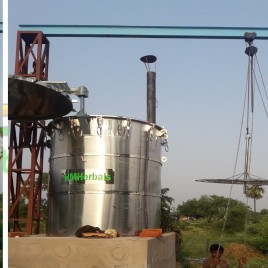
Distillation Plant For Essential Oils, Capacity: 1 ton
₹ 8,90,000
Get Best Price| Automation Grade : Semi-Automatic |
| Capacity : 1 ton |
| Frequency : 50 Hz |
| Power Consumption : Wood, Biomass |

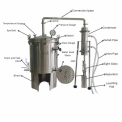
₹ 1,78,800


Oil Distillation Plants
₹ 1,00,00,000
Get Best Price| Automation Grade : Semi Automatic |
| Brand : Andavar |
| Country of Origin : Made in India |
| Delivery Time : 15Days |

₹ 1,85,00,050

ESSENTIAL OIL DISTILLATION PROCESS, For Pharma And Cosmetic, Capacity: 20 TPD
₹ 45,00,00,000
Get Best Price| Capacity : 20 TPD |
| Country of Origin : Made in India |
| Delivery Time : 180 DAYS |
| Design : Customized |


₹ 2,00,00,000

₹ 2,00,00,000

₹ 30,00,00,000

REAL IONS MAKE Geranium Oil Distillation Plant, Capacity: 100 Kg
₹ 1,00,00,000
Get Best Price| Automation Grade : Semi-Automatic |
| Capacity : 100 Kg |
| Country of Origin : Made in India |
| Delivery Time : As per PO |

Continuous Renewable diesel production system 50liter per hour Veera 50C
₹ 11,00,000
Get Best Price| Availability : In Stock |
| Catalyst : Permanent and Reusable |
| Country of Origin : Made in India |
| Electricity : 25 kw |


Batch ESB-RDM200 - 200L Used Oil Distillation Plant, Light diesel, 200LPD
₹ 8,90,000
Get Best Price| Brand: Enersol Biopower |
| Frequency : 50 Hz |
| Reactor Thickness : 5 mm |
| Structure Form : Vertical (Easy cleaning & maintenance) |
| Usage/Application : Replace Diesel,Kerosene,LPG |

Stainless Steel 500kg SS304 Distillation Plant, Capacity: 500 liter
₹ 1,25,00,000
Get Best Price| Automation Grade : Semi-Automatic |
| Capacity : 500 liter |
| Color : Silver |
| Grade : 304 |


SS 100L Steam Distillation Unit
₹ 1,75,00,000
Get Best Price| Capacity (L) : 70L |
| Color : Silver |
| Material : SS |
| Type : Semi Automatic |

Geranium Oil Distillation Plant, Capacity: 10 Tpd To 1000 Tpd
₹ 1,80,00,000
Get Best Price| Capacity : 10 TPD to 1000 Tpd |
| Country of Origin : Made in India |
| Delivery Time : 6 Months to 1 Year |
| Design : Customized |


₹ 1,80,00,000

Top Oil Distillation Plant Manufacturer and Supplier
Frequently Asked Questions about Oil Distillation Plant
How to distill oil from plants?
People take oil from plants through steam distillation. This method often removes essential oils. A person collects plant parts, like leaves, flowers, or roots. He puts them into a distillation container - he then adds water to the container, or a steam maker sends steam through the plants. The water gets hot or steam goes up - this helps the scented oils leave the plant. The steam and oil vapor move together into a cooler. The cooler changes them back into liquid. That liquid then goes into a separator. The oil separates from the water in the separator because they have different weights. You can gather the essential oil from the top or bottom; this depends on whether it is lighter or heavier than water. The process is gentle - it helps the plant's natural qualities stay whole. It works well for getting oils from herbs, flowers along with plants with a scent. This fits your interest in plant oil methods and how well they work.
How does a oil distillation plant work?
An oil distillation plant parts crude oil or other oil mixtures - it sorts the oil based on boiling points. The process begins with warming the oil. Workers sometimes desalt it to get rid of dirt and to help it move. The oil heats in a furnace. It reaches hot temperatures, and most of it becomes vapor. Workers put this hot vapor into a tall column or tower. The vapor moves up through many trays or through packing material. As the vapor goes up, it cools slowly. Different compounds become liquid at different heights. This happens because of their boiling points. Lighter items, such as gases plus gasoline, turn into liquid near the top. Heavier items, like diesel and lubricants, gather lower down. Each part removes at different heights in the column. The heavy leftovers often go for more processing. For example, it might go to vacuum distillation to get more products - this way of working sorts oil into useful fuels and chemicals.
How do you extract cooking oil from plants?
To obtain cooking oil from plants, a person must extract oil from seeds, nuts, or fruits where it lies. Pressing is the common method for this task. Workers clean the plant material and sometimes roast it to develop its flavor; they crush the seeds or nuts - load them into an oil expeller or press. A machine squeezes out oil. People often use this method to get sunflower, sesame, or groundnut oil - it works for small production and large production. People get oil another way with a chemical liquid. Factories mainly use this method. Workers put the plant material into a chemical liquid, and the oil dissolves in it. They take the oil from the liquid. After pressing or using the chemical liquid, workers filter the crude oil to take out solid bits; they may also clean the oil to improve its color, taste along with how long it stays good. Cleaning steps can include removing gummy stuff, making it less acidic, lightening its color as well as taking away bad smells - these actions make the oil safe, clear in addition to good for cooking. That information addresses your interest in good ways to pull out substances from herbs and plants.
What is the cost of crude oil distillation plant?
The cost of a crude oil distillation plant comes from its capacity, its level of automation, and the particular features it provides. For a small to a medium sized essential oil or a crude oil distillation plant in India, prices begin near ₹1,00,000 for basic or mini units; they can reach ₹28,00,000 or more for plants that hold 100 tons each day. A standard 100 TPD (ton per day) crude oil distillation plant, for instance, costs between ₹28,00,000 and ₹75,00,000. That price changes based on the company plus the included technology. Plants that process specific oils, like sandalwood or curry leaves, often have different prices. They sometimes range from ₹9,00,000 to ₹16,00,000 per unit. Industrial crude oil refineries for petroleum can cost much more. Their price often reaches several crores to tens of crores of rupees. The last price changes because of automation, the quality of materials, and support after a sale.
How much does a waste oil distillation machine cost?
A waste oil distillation machine in India has a price that relies mostly on its size and how much it works by itself. Small machines, which process fifty liters at a time or around two hundred liters daily, cost between ₹2,70,000 plus ₹3,00,000 each - these machines often operate partly by themselves and fit small companies or new recycling firms. Developed models with more processing ability sell for more money. For example, those that handle many tons daily cost more. Their prices start at ₹6,00,000 and go up to several lakhs or even crores for factory sized tools. The price changes with attributes - these attributes include self operation, the type of material along with help after the sale. Some machines have a design for particular jobs. One machine turns waste oil into diesel - it can have better catalysts or touch screen controls. This helps it work better and become easier to run. Before you pick a waste oil distillation machine, think about how much you need to produce. Also consider the space you have - this information relates to your interest in factory oil removal and recycling methods.
What is an oil distiller?
An oil distiller is a machine or system that separates, purifies along with concentrates oils from raw materials - these materials include plants, seeds, or waste oil. The process heats the raw material. This action turns the oil and other volatile substances into vapor. The vapor travels through a tube into a condenser. In the condenser, the vapor cools and changes back into a liquid. The machine collects this liquid. The oil separates from water or other impurities because of density differences. Oil distillers are common in industries such as cosmetics, pharmaceuticals, food as well as fuel production; they are necessary to get essential oils from plants. They also refine vegetable oils for cooking or recycle waste oil into usable products. The main parts of an oil distiller usually include a heating chamber, a condenser in addition to a collection vessel. The machine can be simple for small use or large and automated for factory production - this design suits the interest in industrial oil extraction processes.
What is essential oil distillation?
The extraction of scented and condensed oils from plants, such as herbs, flowers, or leaves, relies on the distillation of essential oils. For this process, a still holds the plant matter, which then meets steam or hot water. The water heats, or the steam goes through the plant, and this releases the plant's volatile aromatic parts - these parts change into a gas. This gas, with the essential oil, moves into a cooler. It cools plus turns back into a liquid. The liquid goes into a separator. The essential oil parts from the water there because of different weights. Most essential oils stay at the top, but some sink to the bottom. The collected essential oil then finds use in perfumes, cosmetics, aromatherapy along with natural medicines - this process is careful and works well, so it stands as the usual way to get pure essential oils from plants.
Do you need a distillation unit for essential oils?
To get essential oils from plants, you need a distillation unit. This machine takes aromatic oils from plant parts such as leaves, flowers, or seeds. Steam distillation is the usual way to do this. Steam moves through the plant material and releases the oils. The oils then travel with the steam to a condenser. Inside the condenser, the steam cools and turns into liquid. The essential oil parts from the water since it is lighter or heavier. The process needs a boiler, a place for the plant material, a condenser along with a vessel for collection. Distillation units are available in many sizes, from small lab equipment to big industrial setups. They all follow the same main rule for getting pure essential oils. Without a distillation unit, you cannot get essential oils from most plant materials in a good or safe way - this method fits your interest in taking substances from plants and in industrial work.
How to isolate essential oils by hydrodistillation?
To get essential oils from plants through hydrodistillation, prepare the plant parts. You use leaves, flowers, or roots. Clean them - cut or crush them. This helps oil appear. Place the plant material into a pot for distilling, and then put in enough water so that it covers the material. Close the pot and heat it to boil the water. When the water gets hot, the plant cells break open - this lets the essential oils go into the steam. The steam goes up, plus it takes the oil with it into a condenser. In the condenser, the mixture cools - it then changes back into liquid. That liquid has both water and essential oil. It flows into a separator. The essential oil separates from the water here because it is either lighter or heavier than water. You collect the oil. The remaining water is hydrosol, and it contains plant parts. People put this water in beauty products or use it as a mild fragrance. Hydrodistillation provides a simple plus inexpensive method to acquire essential oils from many plants.
What are the different types of essential oil extraction methods?
To get oils from plants, people use different ways, and each way fits certain plants and uses. Steam distillation is a common way. With this, steam moves through plant matter. The steam lets the oils go. The oils turn into liquid plus people gather them. Hydrodistillation is like this, but it puts boiling water right on the plant. This way is simpler and faster, particularly when steam is not around. Solvent extraction is another way. People often use this for gentle flowers such as jasmine or tuberose. A solvent takes the oils from the plant. The oils separate from the solvent. Cold pressing mostly applies to citrus peels. A machine pushes out the oil. Other ways include enfleurage, which uses fat to take in the scent from flowers. With maceration, plant material soaks in oil until the oil absorbs the scent. New ways, like CO2 extraction, use carbon dioxide under pressure to get oils without heat. Workers pick each method based on the kind of plant and the type of oil they want - this choice lines up with your interest in getting plant material out also with factory processes.
What are the different types of distillation methods?
Various distillation processes separate liquids or pull out substances. Each process fits a certain need. Simple distillation is the most basic. A person heats a mixture. The vapor collects and cools to form a pure liquid. This process works well when the boiling points of the parts are far apart.Fractional distillation uses a fractionating column to separate liquids with boiling points that are closer. People often use it in oil refineries and laboratories.Steam distillation is common for taking essential oils from plants. Steam moves through the plant material. The vapor condenses plus separates.For substances that break apart when hot, people use vacuum distillation - this process lowers the boiling point by reducing pressure.Destructive distillation heats materials such as wood or coal without air. That breaks them into useful products.A person selects a method based on the materials and the product or purity they want; this matches a person's interest in taking things from herbs and distilling essential oils.
What are the methods used for obtaining essential oils?
People use different ways to get oils from plants. Each way works well with a certain kind of plant and the oil a person wants. With steam distillation, steam moves through plant material. This lets out the oils that evaporate. The oils become liquid again, and people collect them - this method is the most common. Hydrodistillation is like steam distillation. But it puts boiling water directly on the plant. That makes it a good choice for plant materials that steam pressure can harm. Cold pressing, which some people call expression, usually takes oil from citrus fruits. A machine presses the peel to extract the oil. Solvent extraction uses food grade solvents to dissolve oils from plants that are delicate or warm. The product that comes from this is an absolute. Old ways also include maceration. Plant material sits in oil or fat in this process. Enfleurage uses fat to absorb the smell from flowers. Newer ways, like supercritical CO2 extraction, use carbon dioxide under pressure. This process takes out the oil gently and well. People pick each method based on the plant type plus what they want to do with the oil - this matches your interest in herbal extraction and industrial processes.
Related Product Types
Oil Production Plant | Automatic Cold Press Oil Machine | Oil Expeller Spare Parts | Edible Oil Filter Machine | Mustard Oil Expeller | Mini Oil Mill | Automatic Oil Mill Plant | Malodor Neutralizer | Mini Oil Making Machine | Domestic Cold Press Oil Machine | Cotton Seed Oil Extraction Machine | Bolt Oil Extraction Machine | Bolt Oil Expeller Machine | Wooden Cold Pressed Oil Machine | Cold Press Oil Machine | Edible Oil Refinery Plant | Oil Expellers | Hydraulic Oil Filtration Machine | Soybean Oil Mill Machine | Oil Milling Plant | Oil Centrifuging Machine | Vacuum Dehydration Machine | Oil Neutralizer | Fatty Acid Plant | Soya Lecithin Plant | Oil Extraction Machine | Oil Burner Pump
Related Categories
Industrial Belts & V Belts | Water Treatment & Purification Plant | Liquid Packaging Machinery | Pumps, Pumping Machines & Spares | Printing Machinery & Equipment | Wrapping & Banding Machines | Moulding Machine | Conveyor Systems & Components | Industrial Mixing Machine | Industrial Coolers, Blowers & Fans | Industrial Valves & Valve Fittings | Dryers & Evaporators | Process Tanks & Chemical Reactors | Fast Food & Beverages Machinery | Mechanical Parts & Spares | Pollution Control Devices & Machines | Filter Assemblies and Spare Parts | Pharmaceutical Machinery & Equipment | PVC, LDPE, HDPE & Plastic Sheets | Brakes & Braking Systems | Strapping & Sealing Machines | Woodworking Tools & Machines | Packaging Machines & Goods | Machines & Equipments | Testing & Measuring Equipments | Chemical Plants & Machinery | Plastic Work & Processing Machines | Filters & Filtration Systems | Paper Work & Making Machine | Industrial Mixers & Homogenizers | Die Casting Mould & Moulding Tools | Chemicals, Dyes & Allied Products | Footwear Machinery | Separators, Strainers & Purifiers | Hand & Machine Tools | Crusher, Shredder & Presses | Fruit & Vegetable Processing Machine | Storage Tanks, Drums & Containers | Lab Instrument | Bakery & Dairy Machinery | Rubber, Rubber Processing Machinery | Industrial Chemicals | Material Handling Machines & Systems | Milling & Grinding Tools | Cutting Machines & Equipment | Bar, Neodymium & Permanent Magnets | Hydraulic & Pneumatic Machines | Soap & Sanitizer Dispenser | Machine & Precision Tools | Extraction Plants and Extruders | Protective Packing Materials | Industrial & Engineering Goods | Air Compressors, Accessories & Parts | Drilling Bits, Collets and Chucks | CNC Machines & Lathe Machine | PVC, FRP, HDPE & Other Plastic Pipes | Surface Coating & Paint Equipment | Drilling & Boring Equipment | Wire Drawing & Cabling Machines | Filling Machines & Plants | Chemical Reactors and Process Tanks | Casting, Moulding & Forging Machines | Industrial Air Conditioner & Devices | Industrial Furnaces & Ovens | Gearbox, Axle, Sprocket & Gear Parts | Oxygen & Nitrogen Gas Plants | Meat & Seafood Processing Equipments | Bending & Metalwork Machines | Weight Bowl & Weighting Scale | Musical Equipment & Accessories | Incinerator | Laser Marking & engraving Machine / System | Sewing,Knitting & Embroidery Machine | Welding Equipments & Machinery | Apparel & Textile Machinery | Boilers & Boiler Parts | Used Machinery & Tools | Binding and Pressing Machines | Closing & Sealing Machines | Jewellery Making Tools & Machines | Cutting Tools & Milling Cutter | Hydraulic & Pneumatic Cylinders | Packaging Caps & Seals

