

Home » Farming Tools, Equipment & Machines » Seed Dryer Machine
Seed Dryer Machine
(38 products available)A seed dryer machine is an important agricultural equipment designed to dry seeds in an efficient and uniform manner up to the optimal moisture content for storage and planting. This is a very accurate and reliable piece of equipment, ensuring the preservation of seed quality and germination rates. The key components are a strong heating system, an adjustable airflow mechanism, and an intuitive control panel for easy operation. This machine has several chambers or trays which can dry out different seed types without contamination. It uses advanced technology that guarantees uniform and equal drying to avoid growth of mold and damage to seeds. The design is user-friendly and low maintenance, constructed to last longer. It allows seeds of different sizes and types and can be versatile to different agricultural requirements. Get the best quality and reliable Seed Dryer Machines, functionally efficient and durable, only on Aajjo. Read more
Seed Dryer Machine Products, Price, Specifications & Features

4 HP Mild Steel Dal Dryer
₹ 1,80,000
Get Best Price| Brand: STEAMTECH |
| Capacity : 2 ton per hour |
| Electricity Connection : 3 HP |
| Material : Mild Steel |
| Model : 4 Hp Mild Steel Dal Dryer |


₹ 1,75,000

Stainless Steel Semi Automatic Laboratory Model Paddy Seed and Grain Dryer, Single Phase
₹ 80,000
Get Best Price| Availability : In Stock |
| Capacity : upto 500 kg/hr |
| Electricity Connection : Single Phase |
| Material of Construction(Contact) : SS 304 |


Automatic seasam seed Dryer Plant
₹ 5,00,000
Get Best Price| Electricity Connection : Single Phase |
| Material : SS 304 |
| Max Temperature : 120 Degree Celsius |
| Model : Automatic seasam seed Dryer Plant |


Cumin Seeds Grain Dryer Machine For Industrial, Capacity: Up To 50kg
₹ 1,75,000
Get Best Price| Capacity : Up to 50kg |
| Usage/Application : Industrial |


Share Your Requirements
For a Quick response, Please fill up the details below.
Related Videos
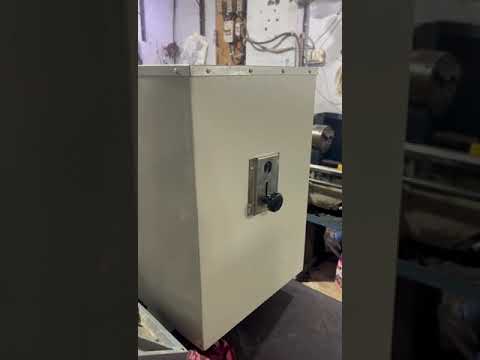


Seed Dryer Machine, Manual, 200 kg/hr
₹ 6,95,000
Get Best Price| Capacity : 200 kg/hr |
| Country of Origin : Made in India |
| Grade : Manual |
| Type Of Machines : seed dryer |

Grain Moong Soyabean Urad Chickpea Groundnut Dryer Machine, For Industrial, Capacity: 3 Ton
₹ 13,99,000
Get Best Price| Automation Grade : auto |
| Capacity : 3 ton |
| Connected Load : 25kw |
| Delivery Time : 50 days max |
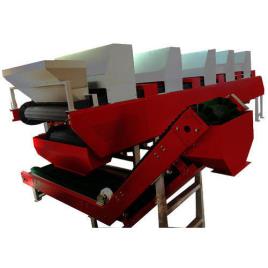
4TPH Seed Drying Machine - Field Crop
₹ 1,99,999
Get Best Price| Automatic Grade : Automatic |
| Capacity : 4 TPH |
| Frequency : 50Hz |
| Max Temperature : 150 degree C |


FOOD SEEDS ROTARY DRYER MACHINE
₹ 1,50,000
Get Best Price| Brand: ARF |
| Automation Grade : Semi Automatic |
| Availability : In Stock |
| Body Material : SS304 |
| Brand : ARF |


Uvtech Seed Testing Dryer Cabinet Type
₹ 85,400
Get Best Price| Availability : In Stock |
| Country of Origin : Made in India |


Automatic Seed Dryer Machine, For Industrial
₹ 2,00,000
Get Best Price| Country of Origin : Made in India |
| Grade : Automatic |
| Material : SS |
| Recommended Order Quantity : 1 |

Hot air seed dryer nta-as
₹ 2,90,000
Get Best Price| Capacity : : 34 cu ft. |
| Model : Hot air seed dryer nta-as |
| No of trays : : Two Operating |
| Temperature : : Ambient to 50° C |

Seed Dryer Machine, For Industrial, Capacity: 12 Tray
₹ 80,000
Get Best Price| Brand : KMS |
| Capacity : 12 tray |
| Country of Origin : Made in India |
| Frequency : 50 Hz |

Dryer . .
₹ 95,000
Get Best Price| Automation Grade : Automatic |
| Brand : IFB |
| Capacity : as per buyer requirement |
| Diameter : 55 m |

10 HP Dal Dryer Machine, 500 Kg/hr
₹ 5,50,000
Get Best Price| Capacity : 500 Kg/hr |
| Electricity Connection : Three Phase |
| Material of Construction : Mild Steel |
| Motor Power : 10 HP |


Seed Dryer Machine, Automatic, 200 kg/hr
₹ 1,50,000
Get Best Price| Capacity : 200 kg/hr |
| Grade : Automatic |
| Material : SS |
| Power Source : Electric |

2 TPH Fully Automatic Seed Drying Machine for Vegetables, For Industrial
₹ 6,00,000
Get Best Price| Automation Grade : Fully Automatic |
| Brand : Umiya Fabrication |
| Capacity : 2 ton per hour |
| Country of Origin : Made in India |


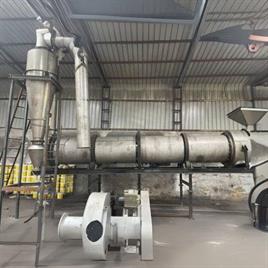
Sesame Seed Dryer Machines
₹ 11,00,000
Get Best Price| Capacity : As per requirement |
| Material : Mild Steel |
| Model : Sesame Seed Dryer Machines |
| Type Of Machines : Seed Grader |

Top Seed Dryer Machine Manufacturer and Supplier
Frequently Asked Questions about Seed Dryer Machine
What is the use of seed dryer machine?
A seed-drying machine releases extra moisture from seeds once they have been selected. Tall, damp material seeds can rapidly develop shape, lose their ability to grow, or end up impaired in capacity; therefore, adequate drying is really essential. A seed dryer dries seeds to a safe level of moisture, therefore preserving their quality, increasing their shelf life, and maintaining their capacity to thrive upon planting. The machine ensures break-even and mild drying by way of a controlled air stream whereby temperature, stickiness, and wind stream may be altered. This affects both under- and over-drying, both of which may damage the seeds. Seed dryer machines are generally associated with drying a few plant seeds, including rice, wheat, maize, and soybeans, in both the pharmaceutical and agricultural segments as well as in horticulture. They run in scale, little units for questions about labs and gigantic mechanical models for commercial seed preparation. Using a seed dryer preserves time and effort compared to traditional sun drying and allows you to dry seeds even in unsuitable conditions. Generally speaking, a seed-drying machine keeps seed quality, maintains a strategic distance from deteriorating, and guarantees seeds are ready for capacity, transit, or other handling.
How to make a seed dryer?
Making a basic seed dryer calls for a holder or box fit to contain the seeds and let travel through them. Prepare a pierced plate or work box or chamber beforehand so you will barely show the seeds. Position a low-wattage light or a small radiator behind the plate, but keep the temperature reasonable to prevent burning the seeds. The temperature should be in a perfect world, not more than 10°C above the general discussion. Add a tiny fan, on the off-chance that at all practicable, to help distribute the warm air around the seeds thus rapidly accelerating the drying action and guarantees indeed drying. Make sure the box has a vent or small opening so wet air may escape without any question. If you're looking for a low-cost solution, putting dried silica gel or charcoal under the seeds will help you absorb wetness. A plastic box loaded with seeds in cloth packs positioned on a work over the drying configuration will satisfy small-scale drying. Track the seeds routinely; stop drying when they reach the intended dryness. Once dry, keep the seeds in fixed holders to stop them from soaking once again in moisture.
What are the types of seed drying?
Two indispensable forms of seed drying are mechanical and characteristic dryers. Characteristic drying, sometimes called physical or sun drying, is the only and most seasoned technique. This method involves carefully scattering seeds over a clean surface and allowing them to dry under the sun's orienting warmth and liveliness. This is a fundamental strategy that requires neither one nor the other fuel nor tools, even if it can be drowsy, sporadic, and affected by climate. Also under danger are neat, fowl seeds and bug crawlies. Mechanical or manufactured drying—that is, mechanical drying—uses gear to speed the drying process and provide exceptional consistency. Often used limited talk dryers shove either warmed or common discuss through the seeds to discard dampness. Mechanical drying can be accomplished with either cluster dryers—where a defined quantity of seed is dried at a time—or continuous stream dryers—where seeds travel through the dryer in a dependable stream. While some dryers use heated discs, others seem to operate with desiccants or infrared radiation. Large amounts of seeds and commercial operations would find mechanical drying appropriate since it is speedier, more dependable, and less reliant on climate. Both approaches search to bring seed wetness down to reasonable levels for capability and planting.
What temperature should a seed dryer be?
Perfect germination and seed quality protection depend on careful temperature control of a seed dryer. Generally speaking, most seeds require a prompted drying temperature between 35°C and 43°C. For rice, wheat, soybeans, and like seeds—for instance—dry them at not over 43°C. Using a lower temperature, say between 32°C and 38°C, is ideal in case the seeds have a high moisture content and are expected to expect damage. For seeds with less moisture, a temperature more like 43°C can be used securely. High temperatures can also cause seeds to lose their capacity for growth, development, or resistance against chemical damage. Usually not more than 41°C, the best safe temperature for delicate or high-oil seeds is even lower. Talking generally, a safe strategy is to dry seeds at a temperature not more than 10°C over the whole cover. Drying seeds either fast or at very high temperatures should be kept strategically apart, as this will compromise their quality. Keeping seeds firm and ready for capacity or planting depends on controlling and following the temperature during the drying process.
What temperature kills seeds?
If you expose seeds to high temperatures for extended periods, they will eventually die. Most seeds will regularly die if warmed for numerous hours to 50°C or over. For instance, numerous weed seeds lose their capacity to grow after a few hours at 50°C. All the seeds explored pass on inside three hours when the temperature rises to 60°C. Whereas a few seeds are more delicate and others more heat-tolerant, if exposure lasts long enough, most seeds find temperatures over 50°C to be harmful. Indeed, for as little as 15 minutes, greatly elevated temperatures between 85°C and 105°C cause the germination capacity of seeds to be devastated. Whereas certain touchy seeds may begin to pass on on the off chance that they are kept up at 46°C for numerous hours, most seeds ordinarily don't endure temperatures underneath 42°C, indeed, even after long presentation. Generally, the type of seed and length of presentation decide the temperature that slaughters seeds; temperatures over 50°C are as a rule lethal if maintained for many hours; exceptionally high temperatures over 85°C can quickly slaughter seeds.
What are the methods of seed drying?
Every one of the several techniques of seed drying is appropriate for different scales and uses. The most common method is either normal or sun drying—where seeds are sparsely arranged on immaculate surfaces and permitted to dry under sunlight. Though it is modest, depending on the temperature, and can reveal seeds to insects, birds, and clean, usually a basic method devoid of direction or fuel? Another often used method is shade drying, whereby seeds are dried under cover to protect them from damage from solid daylight, particularly in circumstances of high moisture material. Another essential approach, mechanical or forced drying, uses gear to speed and control the drying handle. Limited talk drying blows air—either at normal temperature or slightly heated—through the seeds to more rapidly and fairly release wetness. Warm-air drying includes raising the air temperature—usually little more than 10°C over the ambient temperature—to speed drying without damaging the seeds. Among the most advanced techniques are infrared or vacuum drying, which uses specialized machinery to effectively remove moisture, and drying with desiccants—chemicals that absorb moisture from the air enclosing the seeds. Every technique searches to reduce seed dampness to a safe degree for capacity, so protecting seed quality and germination capability.
What is the maximum temperature for seed drying?
The kind of seed and the degree of starting moisture determine the highest temperature allowed for seed drying. For the most often used trim seeds—counting rice, wheat, corn, soybeans, and oats—the prompted greatest temperature is about 43°C (110°F). Should the seed moisture content be higher, the drying temperature should be lowered to prevent damage to the seeds. For occasion, seeds with 18–30% moisture should be dried at usually 32°C (90°F), while seeds with 10–18% dampness can be dried at up to 42°C (100°F). Drying seeds either fast or at higher temperatures could extend fractures, reduce germination, and damage important compounds within the seeds. Some seeds, notably peanuts, are much more delicate and should not be dried over 32°C (90°F). Furthermore, varying with moisture substance for rice seeds, the best constraint for drying temperature changes to 45°C for seeds with 20% dampness, 42°C for 25%, and 38°C for 30%. Most seeds require maintaining the drying temperature under 43°C for the most of their growing capacity and quality. Starting the drying process, keep changing the temperature depending on the type of seed and its degree of wetness.
What is the principle of seed drying?
Removing extra moisture from seeds to a safe level allows them to be stored without losing their quality or capacity to sprout, so guiding the theory of seed drying. By means of the differential in moisture content between the seed and the surrounding air, seed drying proceeds. Moisture flows from the seed to the air in the form of vapor when the surrounding air drier than the seed itself. This process keeps on until the seed and the air find equilibrium moisture content—that is, where the seed neither gains nor loses moisture. Usually, seed drying consists in two phases. The drying air removes the surface moisture on the seed first rather rapidly. Then, moisture from within the seed gradually moves to the surface and is likewise eliminated. Several elements influence the rate of drying of seeds: initial moisture content of the seeds, air temperature, humidity, airflow, and depth of distribution of the seeds. Higher moisture seeds are kept under lower drying temperatures to avoid damage. While still allowing the seed to exist and be able to germinate, the aim is to lower its moisture level such that mold, bacteria, and insects cannot damage it. Good seed drying guarantees that seeds stay viable and healthy throughout storage.
Why do you need a seed dryer?
A seed dryer is needed since seeds often contain as too much moisture after collect, which could cause certain problems. Tall moisture seeds will either develop form, perish, or be smashed by crawling insects right away. This lowers the total value of the seeds and increases their difficulties growing into powerful plants. A seed dryer lets one rapidly and safely get rid of useless moisture. Drying seeds to the proper level increases their lifespan of use and helps them to be protected from damage. This implies that seeds can be maintained without losing their quality for a few months or perhaps for a long period. And a seed dryer saves ranchers time and effort. A seed dryer dries seeds faster than storing them for conventional sun drying, which depends on a suitable temperature and can take a long period. This will provide help indeed under cloud cover or during storms. This helps farmers to properly guard their seeds and sow them at the appropriate minute. Moreover, dried seeds have increased germination possibilities, implying more efficient growth of more plants. Generally, a seed dryer is absolutely essential to maintain seeds safe, increase edit improvement, and raise crop yield.
What is the capacity of 66/2 seed dryer machine?
Talking generally, the capacity of a 66/2 seed dryer is one bunch or more during a specified period of time for seed drying. Though the available data does not precisely represent the exact capacity for this particular show, the appearance that comes about does not clearly reflect. Generally speaking, seed dryer machines move in estimate and capacity depending on their design and use. Though smaller units may have a capacity ranging from 35 to 150 kg per clump, some commercial seed dryers may handle anywhere from 1 ton to a few tons of seeds daily. Apart from influencing the drying rate and add-to-capacity, the type of seed, moisture material, and the wind stream and temperature control systems of the machine affect Should you be referring to a specific brand or show known as "66/2," you would be better off referencing the manufacturer's printed material or contacting the provider for accurate information. Generally speaking, knowing the capacity guarantees the seeds are dried similarly and securely for capacity or thereafter preparation and influences clients' arrangement of their seed-drying activities successfully.
What is an air seeder machine?
Air seeder machines are modern agricultural devices used precisely and fast over large areas to plant seeds. It uses pressurized air passing via tubes to equally distribute seeds from a central storage tank into the ground. The apparatus boasts tubes carrying the seeds to the ground, a framework of fans creating wind streams, and a seed cart carrying the seeds. As the machine covers the field, seeds are metered out in controlled quantities and blown through tubes to openers, therefore producing little trenches in the ground. Some air seeders can also apply fertilizer simultaneously, another to the seeds, for perfect trim improvement. This method guarantees break-even with respect to seed distribution and appropriate profundity, so promoting uniform growth of crops and greater abdication. Occasionally it calls for air seeders while planting vegetables, counting soybeans and lentils; other times it calls for wheat, grain, and oats. They especially benefit expansive ranches since they reduce time, cut work, and allow one pass of seed planting without starting with ground plowing. Therefore, air seeders are a necessary instrument for successful, practical, and viable farming.
What are the benefits of seed drying?
For ranchers as well as growers, seed drying has several intriguing aspects. The main benefit is that it eliminates extra moisture from seeds, thereby preventing the emergence of microscopic creatures, a form that would destroy them or limit their capacity to develop. Drying seeds at a reasonable moisture level increases their shelf life, therefore enabling long-term capacity without suffering of quality or practicality. This affects spare money since allowing seeds to be stored for the next planting season reduces the need for new modern seeds purchased each year. Drying also increases the germination rate since damp seeds may come up short to sprout or break down below ground level. More grounded and more active, properly dried seeds produce more favorable plants and higher yields. Early harvesting made possible by seed drying makes a difference in regions being cleared sooner and used more vibrantly, so optimizing arrival and labor. Simplifying seed sharing and capacity building also helps in safeguarding legacy or unusual forms. All things considered, seed drying is a basic but vital handle that guarantees seeds stay practical, sound, and ready for successful capacity and planting.
Related Product Types
Groundnut Digger | Fertilizer Plants | Biomass Plant | Cotton Seed Dryer | Grain Dryer | Blood collection tube machine | Isabgol Processing Plant | Riper Light Duty With Cylinder | Aspee Power Sprayer | Organic Waste Converter | Maize Planter | Agricultural Ridger | Hydroponic Tray | Agricultural Implement | Cow Dung Mixture Machine | Cow Dung Pot Making Machine | Automatic Sprayer | Agricultural Sprayer Component | Pit Digging Machine | Fertilizer Machinery | Tea Withering Net | Agricultural Shredder | Seed Coating Machine | Fertilizer Spreader | Rasp Bars | Lower Link Pin | Flail Mower | Greenhouse Film | Hydroponic Trays | Venturi Injector | Mulch Mats | Venturi Tubes | Agricultural Foot Sprayer | Greenhouse Accessories | Seed Treater Machine | Rice Cutting Machine | Power Reaper | Automatic Weed Harvester | Seed Sorting Machine | Rotary Slasher | Cotton Seed Delinting Machine | Seed Blower | Bio Fertilizer Plant | Cutter Bars | Disc Plough | Happy Seeder | Rice Seeder | Power Sprayer | Agricultural Tanks | Bran finisher | Agricultural Sprayer Pump | Wheel Hoe Weeder | Treatment Drum | Bund Maker | Beehive Box | Beehive Box Stand | Honey Extractor | Fertilizer Granule Making Machine | Disinfection Tunnel | Post Hole Diggers | Sugarcane Stubble Shaver | Agricultural Cutting Machine | Drum Seeder | Manual Cow Dung Log Making Machine | Motorized Cutter | Shrub Master | Land Leveler | Round Straw Baler | Ridge Plastering Machine | Seed Dressing Drum | Seed Sowing Machine | HTP Power Sprayer | Mulching Paper | Agro Shade Net | Weed Control Mat | Winnowing Fan | Coconut Tree Climber | Hand Sprayer Bottle | Agricultural Equipment | Hand Rotary Duster | Stainless Steel Sprayer | Manure Scraper

