

Home » Welding Equipments & Machinery » Ultrasonic Horn
Ultrasonic Horn
(29 products available)Ultrasonic horn amplify and focus ultrasonic vibrations from transducers for industrial applications. They are usually cut from titanium because titanium carries sound well and does not crack under repeated stress. A typical horn vibrates back and forth twenty thousand times each second but also its tapering shape makes the tip move farther than the base so the energy is squeezed into a small spot. In plastics work the tip is pressed against two thermoplastic parts - the rapid rubbing at the contact faces melts the plastic and welds the parts together. When the horn is dipped in liquid the same rapid motion tears the liquid apart as well as forms clouds of tiny bubbles - each bubble collapses with a local flash that reaches five thousand kelvin and one thousand atmospheres breaking fat globules in milk blending oils into water or ripping cell walls open. The same tool will cut brittle materials, shake solder into tiny joints or knock dirt off metal surfaces. Car dashboards, medical filters besides IV sets are assembled at fifteen to forty thousand cycles per second - fruit juice is homogenised without heat - vaccines are mixed into nano scale droplets - nanomaterials, biodiesel, broken cells or spent battery metals are processed in the same way. Laboratory units stir, extract and remove trapped gas. Engineers choose slotted, composite, full wave or custom shapes, each tuned to one frequency also they profile the titanium so the horn survives millions of cycles while it passes every vibration onward. The result is faster production, less scrap and tighter control. For the best Ultrasonic horns that are efficient, reliable, functional, and durable, simply visit Aajjo. Read more
Ultrasonic Horn Products, Price, Specifications & Features

Ultrasonic Horn
₹ 15,000
Get Best Price| Size/Dimension : 53 mm (D) |
| Tip Size : 6 mm |
| Usage : Bag Making Machine |
| Warranty : 6 months |


70mm Ultrasonic Welding Round Horn
₹ 15,000
Get Best Price| Material : MS |
| Meterial : Al7075 Aluminum Alloy |
| Recommended Order Quantity : 1 |
| Type : Round |

Ultrasonic Round Horn
₹ 70,000
Get Best Price| Packaging Type : Standard |
| Size : 50mm |
| Usage/Application : Vibration Sensor |
| Voltage : 220 V |
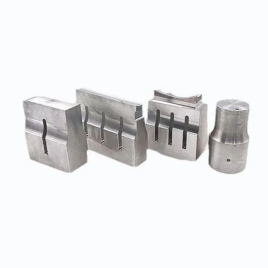
Stainless Steel Ultrasonic Welding Horn And Fixture, 220V
₹ 2,50,000
Get Best Price| Automation Grade : Automatic |
| Availability : In Stock |
| Color : Silver |
| Features : Rust Proof |

Share Your Requirements
For a Quick response, Please fill up the details below.
Related Videos

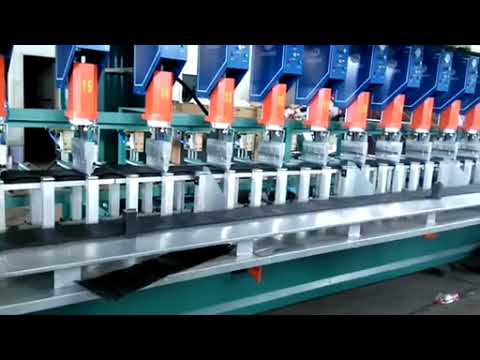

Ultrasonic Horn For Face Mask Machine
₹ 25,000
Get Best Price| Accuracy : 98 % |
| Finish : Polished |
| Material : SS |
| Model : Ultrasonic Horn For Face Mask Machine |


Stainless Steel Ultrasonic Horns And Fixtures
₹ 21,000
Get Best Price| Automation Grade : Semi-Automatic |
| Availability : In Stock |
| Color : Silver |
| Frequency : 15-40Khz |


Aluminium Ultrasonic Welding Horn, 15kHz
₹ 20,000
Get Best Price| Automation Grade : Manual |
| Brand : SJP |
| Frequency : 20kHz |
| Material : Aluminium |

FACE MASK MACHINE REPAIRING
₹ 15,000
Get Best Price| Country of Origin : Made in India |
| I Deal In : New Only |
| Location : Pan India |
| Payment Mode : Online |

₹ 15,000


₹ 15,000

15 kHz Aluminium Ultrasonic Geocell Horns
₹ 27,000
Get Best Price| Automation Grade : Automatic |
| Business Type : Manufacturer, Supplier |
| Color : Red |
| Country of Origin : Made in India |


₹ 15,000


Ultrasonic Round Horn
₹ 80,000
Get Best Price| Automation Grade : Manual |
| Business Type : Manufacturer, Supplier |
| Color : Orange |
| Material : Brass |

Top Ultrasonic Horn Manufacturer and Supplier
Frequently Asked Questions about Ultrasonic Horn
How does an ultrasonic horn work?
Ultrasonic horns amplify and focus vibrations from piezoelectric transducers in ultrasonic systems.. The transducer itself produces a faint mechanical pulse at 20 000 - 40 000 cycles per second when an electric signal squeezes its crystals. A short titanium rod, the horn, bolts flat to the transducer at a point that does not move. The rod is cut so its own natural bounce matches the transducer rate - its length equals half a sound wave inside the metal. The rod tapers toward the far end - the far tip is lighter and therefore moves faster than the heavy end that is bolted on. In this way a small quiver at the base becomes a large hammer like stroke at the tip. That stroke meets a workpiece or a liquid in a tight spot. When the workpiece is plastic or metal, the rapid rub heats the joint until it melts plus welds. When the tip dips into liquid, each stroke sends out pressure waves that rip the liquid into tiny bubbles - the bubbles collapse and for a split second reach 5000 K and 1000 atm, enough to break one liquid into another and form fine emulsions. By shaping the rod so its internal stiffness matches the load, almost all the power leaves through the tip but also almost none bounces back to the transducer.
How to design an ultrasonic horn?
Ultrasonic horn design aims to enlarge vibration amplitude and to let the transducer plus the load share energy without reflection. Begin - picking a metal that lets sound travel fast and resists cracking - titanium is common. Fix the working frequency, for example 20 kHz. Fix the input but also output diameters and set the horn length to one half wave in that metal so it rings in step with the transducer. Pick a shape. A stepped cylinder gives a large gain but raises stress. A straight taper is easy to machine. An exponential taper spreads stress evenly. A Bezier curve gives freedom for computer optimisation. Model the horn in finite element software like ANSYS. Inspect the predicted vibration pattern, stress field and gain. Feed the control point co-ordinates to a genetic algorithm as well as let it search for the shape that delivers the highest tip amplitude - values seventy per cent above a plain taper are reachable. Place the flange where the computed motion is zero so the holder does not damp the horn. Check that no other resonance lies closer than five per cent of the target frequency. Machine the part on a CNC centre. Measure its actual resonance with a sweep generator and a laser vibrometer. Measure the tip motion under a microscope. Those steps secure high efficiency, long life or a well defined energy beam.
How to tune an ultrasonic horn?
Ultrasonic horns must be tuned to the exact frequency of the transducer, usually between 15 kHz and 40 kHz - that the system vibrates in resonance and transfers energy efficiently. A shop begins with a blank horn that is left 0.250 - 0.500 inch longer than the finished size - the extra metal lowers the first natural frequency. The operator then removes metal from the working face on a lathe or grinder. Each 0.001 inch (about 0.025 mm) that comes off raises the frequency roughly 160 Hz for a 20 kHz horn. After every cut the horn is checked with a TRZ® Analyzer or similar instrument. On stepped horns the tuner can instead move the step closer to or farther from the face or open the balancing slots a little, to shift the frequency without cutting the overall length - this is common when a used horn is reconditioned. Throughout the process the shop confirms that the axial mode is the one that responds and that it sits well away from the next nearest mode - if two modes lie too close the horn will fail in service. A change of 1 mm in length moves the frequency about 150 Hz - the operator measures again after each small adjustment. A 20 kHz system is considered tuned when the natural frequency falls between 19.959 kHz and 20.050 kHz. Finite-element software is used before metal is cut to predict the final length, which reduces the number of trial-and-error cycles. When the frequency lands in the window the horn is mounted on the transducer and run under load - the last tests check that the amplitude is correct and that stress remains within safe limits.
What are the applications of Ultrasonic Horns?
Ultrasonic horns take the faint high frequency vibration produced by a transducer, amplify it and concentrate it into a small area so the energy can be pushed into a solid or a liquid plus the work can be done with precision. Many plants run the horns at 15 - 40 kHz to weld thermoplastic parts for cars, medical instruments, household goods and electronic cases - the horn rubs the joint until it melts and the parts fuse without added filler and the same method seals textiles and non woven sheets. When the tip is dipped in liquid the rapid vibration generates cavitation bubbles - as the bubbles collapse they tear the liquid apart but also homogenise fruit juice, mill pharmaceuticals besides CBD into nano emulsions, separate nanoparticle clumps and break open cells. The same cavitation strips dissolved gas from the liquid, pulls oils or alkaloids out of plant material, helps grow vaccine cultures as well as drives chemical reactions that normally need heat and catalysts. Horns also cut, solder, clean or drill plastic or metal and they serve special jobs like shredding the active coating from spent lithium ion batteries also speeding the reaction that turns vegetable oil into biodiesel. A barbell horn, a thick centre coupled design, keeps the full amplitude while the bath is scaled up to industrial size.
What are the different types of ultrasonic horns?
Ultrasonic horns are grouped by the shape of their cross section, by how their outer form runs along the axis, by the way they vibrate and by how they are built. Rod horns have a round cross-section - block horns have a rectangular one plus are used when the medium is solid. Along the length, a stepped horn changes its area suddenly and gives the highest amplification but the stress is high. A conical horn widens in a straight line but also gives simple amplification. Exponential and catenoidal horns widen in smooth curves. A constant stress horn is shaped so that the stress is nearly the same everywhere as well as fatigue is low. Hourglass horns squeeze the energy into a narrow waist - horseshoe horns spread it over a wide face. Many horns vibrate back and forth along their axis - some twist, some bend or some combine twisting with axial motion. The part that is held can be round or rectangular. A plain horn is made from one piece - a composite horn has short, specially shaped parts inserted between the main cylindrical sections. For welding there are tapered horns, flat face horns, booster horns, slotted horns, nodal horns and barbell horns - the last type is used when the liquid carries high power.
What makes a horn louder?
Ultrasonic horns enlarge the swing of the vibration so that more sound energy leaves the tip - in everyday terms the tip becomes “louder.” A stepped horn gives the largest boost - up to four times or slightly more - because its area suddenly shrinks from a wide base to a narrow tip squeezing the motion into a smaller cross section. The gain equals the square root of the area ratio - a 16-to-1 area ratio therefore gives a gain of 4 when the profile is shaped to waste as little energy as possible. A straight taper (conical horn) raises the amplitude about two to three times and spreads the stress evenly along the length. Horns whose diameter changes exponentially or follows a catenary curve spread the stress still more uniformly. A Bezier profile, tuned by a genetic algorithm, reaches a gain 1.73 times that of a conical horn while keeping the stress low. Materials that carry sound quickly, like titanium, let more of the energy reach the tip. Each horn is cut to half the wavelength of the sound in the metal so that the whole piece vibrates in step and the tip moves at its fastest. Finite-element checks confirm that nowhere does the stress exceed the fatigue limit - the horn survives when the gain is pushed to its maximum. Together those measures raise the acoustic power until it meets the needs of heavy duty tasks.
What is the frequency of ultrasonic horn?
Ultrasonic horns vibrate at the same rate as the transducer that drives them, usually between 15 and 40 thousand cycles per second. Fifteen to twenty thousand cycles per second give the horn a long, strong stroke - they are chosen when the job needs brute force. Thirty to forty thousand cycles per second move the horn only a short distance - they are used when the part is small and the work must be precise. In factories that weld plastic, most horns work at twenty thousand cycles per second because this rate delivers enough energy for everyday joints. Horns that work at fifteen thousand cycles per second are kept for thick, stubborn parts. Thirty thousand cycles per second offers a middle ground. Forty thousand cycles per second is reserved for tiny, delicate welds in cramped spaces. Power-ultrasound processors for other tasks run from twenty up to ninety thousand cycles per second plus special designs reach one hundred to three hundred and fifty thousand. A horn is useful only if its natural vibration almost exactly matches the transducer frequency. For a horn meant to run at twenty thousand cycles per second, the true value must lie between nineteen point eight and twenty point two - the builder checks this during tuning. The length of the metal sets the rate - a bar one hundred but also twenty-eight millimetres long rings at twenty thousand cycles per second, while a bar half that length rings at forty thousand. If the rate drops below about eighteen thousand cycles per second, the sound becomes audible and the operator hears a shrill tone.
Is a 150 dB horn loud?
A 150 dB ultrasonic horn is extremely loud. It is far louder than everyday sounds and is classed as dangerously loud in factories. For comparison, 120 dB is already painful, 140 dD causes instant harm and 150 dB carries enough force to treat hard materials. Horns that work between 15 kHz plus 40 kHz send out fast vibrations rather than sounds you can hear but the power they release can still push nearby sound pressure above 100 dB and up to 120 dB. When the horn is driven hard, for example with a tip that moves 150 µm at 18 kHz, the pressure can spike to about 150 dB. Those levels let liquids cavitate and let plastics weld but anyone nearby must wear ear protection because the device also gives off lower tones that fall inside the audible range. Small piezo speakers used in animal repellers reach 100 dB at 20 kHz, whereas factory horns under load go much higher while they mix or cut material. Staying near the sound for long periods will destroy hearing - OSHA therefore restricts 90 dBA noise to eight hours per shift. The high reading on the sound meter proves the horn is doing its job - guards or booths are fitted around it to protect workers.
Related Product Types
Welding Machine | Flash Butt Welders | Spot Projection Welders | Multi Spot Welding Machines | Brazing Machine | Welding Machine Rental | Electrode Holder | Anti Spatter Spray | Welding Goggle | Welding Blowpipe | Contact Tip | Welding Accessories | Plastic Welding Equipment | Welding Water Cooler | Electrofusion Welding Machine | Welding SPM | Seam Welding Machine | CNC Laser Welding Machine | Slag Remover | Welding Machine Parts | Flashback Arrestor | Micro Plasma Welding Machines | Regulator Type Welding Machine | Welding Flux | Welding Kit | Welding Mirror | Welding Consumables | Integrated Transformer Gun | Welding Nozzle | Rack Tube Welding Machine | Ultrasonic Plastic Welding Machine | Ultrasonic Metal Welding Machine | Ultrasonic Wire Harness Welding Machine | Ultrasonic Welder | Battery Cell Welding Machine | Arc Welding Machines | Laser Cladding Machine | Welding Holder | Gas Blow Torch | Robotic Welding System | Spin Welding Machine | Argon Regulator | Gas Welding Kit | Saw Welding Machine | Exothermic Welding System | Aluminum Welding Machine | Plasma Welding Machine | Weld Cleaning Machine | Fiber Laser Welding Machine | Welding Simulator | Intercell Welding Machine | Double Head Welding Machine | Welding Lug | DC TIG Welding Machine | Air Cooled Welding Machine | Welding Rectifier Machine | Portable Welding Machine | Hand Operated Spot Welding Machine | Arc Gouging Machine | Automatic Cage Welding Machine | Letter Welding Machine | Welding Carriage | HDPE Pipe Jointing Machine | PPR Pipe Welding Machine | Induction Brazing Machine | Spot Welding Gun | Wire Feeders | Welding Fixtures | Inverter ARC Welding Machine | Welding Machine PCB Boards | UPVC Welding Machine | PVC Welding Machine | High Frequency Welder | Spotting Machine | Welding Controller | Welding Robots | Transformer Arc Welding Machine | MIG Welding Machine | TIG Welding Machine | Plastic Welding Machine | Spot Welding Machine | Railway Thermite Welding Machine | Friction Welding Machine | Oil Cooled Welding Machine | Butt Welding Machine | H Beam Welding Machine | CNC Seam Welding Machine | HDPE Pipe Welding Machine | Hdpe Pipe Jointing Heater | Welding Table | Welding Helmet | Resistance Welding Machine | MMA Welding Machine | Fan Guard Welding Machine | Seamless Welding Machine | Vibration Welding Machine | Welding Tool | Welding Rotator | Robotic Welding Cell | Anti Seize Paste | Welding Glass | Gas Welding Tank | Welding Positioner | Welding Manipulator | Conventional Rotator | MIG Welding Torch | TIG Welding Torch | Welding Clamp | Stud Welding Machine
Related Categories
Industrial Belts & V Belts | Water Treatment & Purification Plant | Liquid Packaging Machinery | Pumps, Pumping Machines & Spares | Printing Machinery & Equipment | Wrapping & Banding Machines | Moulding Machine | Conveyor Systems & Components | Industrial Mixing Machine | Industrial Coolers, Blowers & Fans | Industrial Valves & Valve Fittings | Dryers & Evaporators | Process Tanks & Chemical Reactors | Fast Food & Beverages Machinery | Mechanical Parts & Spares | Pollution Control Devices & Machines | Filter Assemblies and Spare Parts | Oil Mill & Oil Extraction Machinery | Pharmaceutical Machinery & Equipment | PVC, LDPE, HDPE & Plastic Sheets | Brakes & Braking Systems | Strapping & Sealing Machines | Woodworking Tools & Machines | Packaging Machines & Goods | Machines & Equipments | Testing & Measuring Equipments | Chemical Plants & Machinery | Plastic Work & Processing Machines | Filters & Filtration Systems | Paper Work & Making Machine | Industrial Mixers & Homogenizers | Die Casting Mould & Moulding Tools | Chemicals, Dyes & Allied Products | Footwear Machinery | Separators, Strainers & Purifiers | Hand & Machine Tools | Crusher, Shredder & Presses | Fruit & Vegetable Processing Machine | Storage Tanks, Drums & Containers | Lab Instrument | Bakery & Dairy Machinery | Rubber, Rubber Processing Machinery | Industrial Chemicals | Material Handling Machines & Systems | Milling & Grinding Tools | Cutting Machines & Equipment | Bar, Neodymium & Permanent Magnets | Hydraulic & Pneumatic Machines | Soap & Sanitizer Dispenser | Machine & Precision Tools | Extraction Plants and Extruders | Protective Packing Materials | Industrial & Engineering Goods | Air Compressors, Accessories & Parts | Drilling Bits, Collets and Chucks | CNC Machines & Lathe Machine | PVC, FRP, HDPE & Other Plastic Pipes | Surface Coating & Paint Equipment | Drilling & Boring Equipment | Wire Drawing & Cabling Machines | Filling Machines & Plants | Chemical Reactors and Process Tanks | Casting, Moulding & Forging Machines | Industrial Air Conditioner & Devices | Industrial Furnaces & Ovens | Gearbox, Axle, Sprocket & Gear Parts | Oxygen & Nitrogen Gas Plants | Meat & Seafood Processing Equipments | Bending & Metalwork Machines | Weight Bowl & Weighting Scale | Musical Equipment & Accessories | Incinerator | Laser Marking & engraving Machine / System | Sewing,Knitting & Embroidery Machine | Apparel & Textile Machinery | Boilers & Boiler Parts | Used Machinery & Tools | Binding and Pressing Machines | Closing & Sealing Machines | Jewellery Making Tools & Machines | Cutting Tools & Milling Cutter | Hydraulic & Pneumatic Cylinders | Packaging Caps & Seals

