

Home » Welding Equipments & Machinery » Ultrasonic Plastic Welding Machine
Ultrasonic Plastic Welding Machine
(303 products available)The Ultrasonic Plastic Welding Machine is a versatile and efficient tool for joining plastic components seamlessly. This state-of-the-art machine uses ultrasonic vibrations to create strong and durable welds without the need for additional adhesives. With its high precision and reliability, this machine is ideal for various industries, including automotive, medical, and electronics.Experience the power of advanced technology with the Ultrasonic Plastic Welding Machine. Engineered for precision and performance, this machine delivers consistent and reliable results every time. Whether you are assembling small components or large parts, this machine offers a cost-effective solution for all your welding needs. Say goodbye to messy adhesives and hello to seamless welds with this state-of-the-art equipment.Improve efficiency and productivity with the Ultrasonic Plastic Welding Machine. This cutting-edge technology ensures a fast and reliable welding process, resulting in high-quality and durable plastic joints. With its user-friendly interface and customizable settings, this machine is perfect for a wide range of applications. From automotive to medical devices, this machine offers a versatile solution for all your welding projects. Say goodbye to traditional welding methods and embrace the future of plastic welding with this innovative machine. Read more
Ultrasonic Plastic Welding Machine Products, Price, Specifications & Features

Automatic Ultrasonic Plastic Welding Machine – 15 kHz, 2600 W
₹ 2,50,000
Get Best Price| Automation Grade : Automatic |
| Availability : In Stock |
| Business Type : Manufacturer & Supplier |
| I Deal In : New Only |


36 KHz Ultrasonic Plastic Welding Machine
₹ 2,80,000
Get Best Price| Frequency : 36 kHz |
| modal : 36 KHz Ultrasonic Plastic Welding Machine |
| Oscillation System : Auto-stimulating |
| Output Time : 0.01-99 Sec |


₹ 2,85,000

₹ 3,00,000

₹ 2,85,000

240 Volts Single Phase Ultrasonic Welding Machines
₹ 6,10,000
Get Best Price| Capacity : 3000 KN |
| Frequency : 50 Hz |
| Phase : Single phase |
| Power : 2000 Watts |


Ultrasonic Plastic Welding Machine – Three Phase, Stainless Steel
₹ 1,15,000
Get Best Price| Availability : In Stock |
| MODEL : Ultrasonic Plastic Welding Machine – Three Phase, Stainless Steel |
| Operation Type : Welding |
| Output Current : 280 A |


Share Your Requirements
For a Quick response, Please fill up the details below.
Related Videos
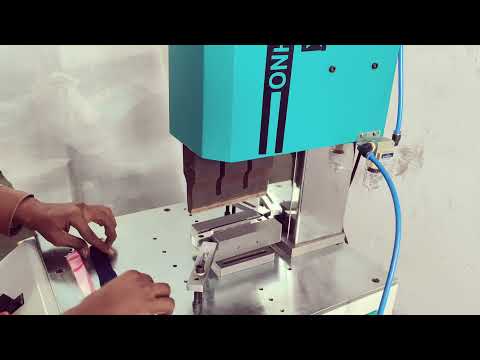
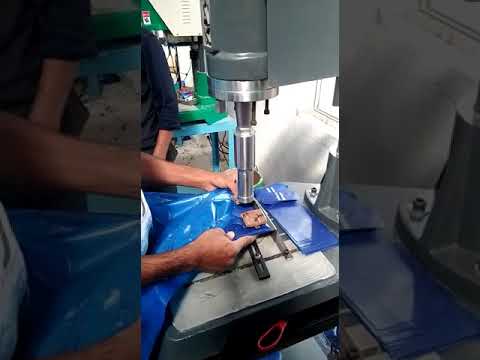

Ultrasonic Plastic Welding Machine For Large Plastic Filters
₹ 4,50,000
Get Best Price| Automation Grade : Semi Automatic |
| Availability : In Stock |
| Control Type : Analog |
| Frequency : 15 KHz |


Sheetal Enterprises Auto Ultrasonic Power Adapter Welding Machine (15KHZ), Automatic Grade: Semi-Automatic
₹ 5,50,000
Get Best Price| Automatic Grade : Semi-Automatic |
| Brand : Sheetal Enterprises |
| Capacity (products per hours) : Depend On Product |
| Output Current (Ampere) : 200-300 Ampere |


20Khz Ultrasonic Plastic Welding Machine
₹ 1,70,000 1,90,000 11.00% Off
Get Best Price| Frequency : 20Khz |
| Material : ms |
| MODEL : JSBUPW-02 |
| Rated Power : 2000w |


₹ 1,90,000

₹ 1,90,000

₹ 1,90,000

Ultrasonic Plastic Welding Machine
₹ 1,95,000
Get Best Price| Frequency : 15 KHz |
| modal : Ultrasonic Plastic Welding Machine |
| Phase : Single |
| Power : 2600 |


20 kHz Industrial Ultrasonic Plastic Welder
₹ 2,80,000
Get Best Price| Automation Grade : Manual |
| Color : Blue |
| Country of Origin : Made in India |
| Frequency : 20 Khz |


Aluminium Single head Manual Welding Machine
₹ 1,00,000
Get Best Price| Automation Grade : Manual |
| Availability : In Stock |
| Material : Aluminium |
| Output Current : 0-100 A |


Ultrasonic Plastic Welding Machine
₹ 3,00,000
Get Best Price| Frequency : 50 Hz |
| modal : Ultrasonic Plastic Welding Machine |
| Power Source : Electronic |
| Voltage : 420 V |

15 kHz 3200 Watt Semi Automatic Ultrasonic Plastic Welding Machine (Time Mode)
₹ 4,85,000
Get Best Price| Automation Grade : Semi Automatic |
| Availability : In Stock |
| Control Type : Analog |
| Operating Voltage : 220 V |


Auto Tuning Ultrasonic Plastic Welding Machine
₹ 3,00,000
Get Best Price| modal : Auto Tuning Ultrasonic Plastic Welding Machine |
| Phase : Single Phase |
| Power : 1500 watt to 4200 watt |
| Voltage : 220 V |


₹ 3,75,000


Ultrasonic PTMT Water Tap Welding Machine
₹ 2,50,000
Get Best Price| Availability : In Stock |
| Country of Origin : Made in India |
| Frequency : 15KHz |
| Material : PTMT |



RF - W1 Ultrasonic Fabric Welding Machine
₹ 15,00,000
Get Best Price| Body material : Mild Steel |
| Driven Type : Electric |
| Model Number : RF - W1 |
| Operating Voltage : 220 V |

₹ 1,00,000

35k1200w Mask Machines Ultrasonic Welding Machines
₹ 1,00,000
Get Best Price| Automation Grade : Semi-Automatic |
| Country of Origin : Made in India |
| Frequency : 35k1200w |
| I Deal In : New Only |

Ultrasonic Plastic Welding Machine
₹ 1,70,000
Get Best Price| Output Current : 200 A |
| Usage/Application : For Plastic Welding |
| Voltage : 220V |
| Weight : 150 Kg |


1000W Power Adapter Manual Ultrasonic Welding Machine
₹ 2,25,000
Get Best Price| Automation Grade : Manual |
| Availability : In Stock |
| Capacity : 8-10 PCS PER MINUTE |
| Country of Origin : Made in India |

₹ 3,50,000

₹ 2,25,000

₹ 1,80,000

2600WATT Single Ultrasonic plastic welding machine for plastic impeller welding
₹ 2,00,000
Get Best Price| Operation Type : Plastic welding |
| Phase : 1 phase |
| Power Source : 2600 |
| Usage/Application : Plastic Welding |


Plastic Battery Welding Machine 130-150mm
₹ 1,95,000
Get Best Price| Automation Grade : Semi-Automatic |
| Capacity : 3-.30sec |
| Driven Type : semi automatic |
| Frequency : 15-60KHZ |

₹ 1,40,000


₹ 1,82,000

50 Hz Mild Steel Ultrasonic N95 Elastic Pasting Machine, For Industrial, Automation Grade: Manual
₹ 1,00,000
Get Best Price| Frequency : 50 Hz |
| Material : Mild Steel |
| Power : 300 W |
| Usage/Application : Industrial |

Automatic Ultrasonic Plastic Welders
₹ 2,95,000
Get Best Price| Automatic Grade : Automatic |
| Availability : In Stock |
| Capacity (products per hours) : 500-600 |
| Frenquency : : 20KHZ |

₹ 4,70,000


₹ 2,30,000

Ultrasonic Spot Welder for Handle Attachment
₹ 1,00,000
Get Best Price| Availability : In Stock |
| Suitable For Welding Rod : <1mm, 1-2mm, 2-3mm, 3-4mm |
Top Ultrasonic Plastic Welding Machine Manufacturer and Supplier
Frequently Asked Questions about Ultrasonic Plastic Welding Machine
Which ultrasonic plastic welding machine should I buy?
When you buy an ultrasonic plastic welder, choose the machine by how thick the plastic is, how big the part is and what frequency you need: 15 kHz for large or deep joints, 20 kHz for small, accurate joints. Power matters too. Check that the mains supply stays at 220 V single phase - look for safety items like a two hand start button and for servo drives that let the head return to the same position every cycle. Before you commit, run test welds on the actual plastic - ABS, PP or whatever you plan to use.
What is the best ultrasonic plastic welding method?
No one ultrasonic plastic welding method suits every job. What works best depends on the size of the part, the plastic, the shape and how many units you plan to build. Standard continuous ultrasonic welding fixes a 20 kHz horn in one place. It is the first choice when you must join large numbers of small or medium rigid parts made from ABS, PC or nylon. The joint forms in less than one second, needs no filler rod plus produces no smoke - the seam is both strong and neat. Linear ultrasonic welding moves the horn along a straight path. It gives even energy over long seams and is common on automotive body panels. Torsional welding vibrates the horn in a circle - because the tool does not scrub the surface, it leaves almost no mark on thin walls but also is preferred for electronic housings. Spot welding squeezes the film between the horn and an anvil - only the point under the tip melts - it is used to seal small areas on packaging film. When you compare ultrasonic welding with vibration or hot plate methods, it is faster as well as more accurate for parts that must fit precisely. The trade off is that the plastic and the joint design - usually an energy director - must suit the process. Build a prototype or test it - adjust amplitude, force and time until the weld repeats reliably.
How to choose ultrasonic welding machine for custom applications?
To pick an ultrasonic welder for a custom job, start - writing down the exact part size, the plastic you will use, the shape of the joint and how many parts you plan to run each shift. Choose the frequency from the part size - a 15 kHz unit handles big parts with joints up to 300 mm. A 20 kHz unit suits medium-sized parts. A 40 kHz unit gives a soft touch for tiny or delicate parts. Match the power to the plastic - a crystalline plastic like nylon needs the upper end of the 1500 W to 4200 W range. An amorphous plastic like ABS needs less. Check that the two halves of the joint are chemically alike or the weld will fail. Buy a machine with servo or pneumatic drive and closed-loop feedback. The loop must watch the amplitude (10 µm to 100 µm), the weld time, plus the hold pressure so every cycle repeats the previous one. Order a horn and booster sized for the energy director on the part. The director should stand 0.2 mm to 0.5 mm high with a 45° to 60° point. Fit a two hand start switch so the operator cannot trap a hand. Run a short production of sample parts - adjust amplitude, time and pressure until the joint reaches the target strength then move to full production.
How do you calculate ultrasonic welding?
Ultrasonic welding settings are found by trial - engineers run a planned set of tests changing only the amplitude, the pressure, the energy and the time until the joint reaches the required strength. The energy equals power multiplied by time - power is force times speed plus for plastics it usually falls between 1500 W and 4200 W. Begin with amplitude between 50 µm but also 100 µm and choose the value that suits the melting temperature of the material - crystalline grades need the higher end. Set the clamp pressure so it lets the vibration reach the joint - when amplitude is high the pressure must be low. Keep the weld time below one second - often the press stops at a fixed plunge depth rather than at a fixed time. After the tests, read the contour maps that programs like Minitab draw - one map shows that 10 000 Ws to 15 000 Ws delivered at 85 % to 90 % amplitude gives copper-to-plastic joints a pull strength above 4200 N. Prove the settings with sample parts - measure how far the horn travels (1.9 mm to 30 mm), check how much the parts collapse then break the joints and record the force. A servo drive with position as well as force feedback repeats the same motion every cycle.
How to check ultrasonic welding?
Ultrasonic welding quality is checked - watching the process and by tests that either damage or do not damage the joint. While the machine welds, it keeps amplitude, energy (normally 10 - 50 J), peak power, time (under one second) and collapse distance (0.1 - 1 mm) inside set limits - feeding measured values straight back into the controls. Tests that do not harm the joint include ultrasonic flaw detection (A-scan) to find voids, cracks or delaminations - acoustic vibration analysis that compares the new waveform with a stored reference; plus torque or pull tests that prove the joint will hold (for example, it must survive more than 20 Nm). Visual inspection looks for flash, surface marks or misalignment. Tests that destroy the joint include tensile and shear tests carried out to ASTM D638, cross section microscopy that measures how deep the plastic has fused and leak tests that check whether the seal is hermetic. Statistical process control combined with design of experiments sets the control limits. The line inspects every part so any defect is caught at once - the target is fewer than one failure in a hundred parts. Before full production, prototype trials are run to fix the settings.
What are the four main parts of an ultrasonic welder?
An ultrasonic welder has four main parts - the generator, the transducer, the booster and the horn. The generator takes normal mains power at 50 or 60 Hz plus turns it into high frequency electrical energy at 15 - 40 kHz, usually delivering between 1500 and 4200 watts. The transducer turns that electrical energy into mechanical vibration - using piezoelectric ceramics that lengthen but also shorten quickly when voltage is applied. The booster increases the size of the vibration, often doubling or tripling it and channels the energy - it works as a mechanical link between the transducer and the horn. The horn passes the concentrated vibration straight to the joint between the plastic parts - its tip is cut to fit the shape of features like energy directors - the plastic melts as well as fuses exactly where needed while the press holds the parts together at 0.5 - 2 bar. Those four parts are bolted into one vibrating stack and the stack is fixed to a press that supplies the clamp force.
What frequency is used in ultrasonic welding?
Ultrasonic welding usually runs from 15 kHz to 70 kHz. Twenty kilohertz is the workhorse for everyday plastics. Fifteen kilohertz handles big parts or walls up to ten millimetres thick - it swings one hundred to one hundred and fifty micrometres so the energy reaches deep inside automotive tanks plus similar assemblies. Between twenty and thirty kilohertz the welder balances output but also control - fifty to one hundred micrometres of tip travel joins medium sized items like electronic housings and gives reliable seams in ABS, PP or nylon. Thirty-five kilohertz and above treat small, thin parts or delicate staking jobs - the tip moves only twenty five to fifty micrometres - nearby surfaces stay almost unmarked. The operator picks the frequency after checking part size, material type as well as joint shape then locks the generator within fifty to one hundred hertz of the exact resonance point for best efficiency.
What is the collapse distance for ultrasonic welding?
Collapse distance in ultrasonic welding is the exact distance the horn moves downward from the instant it first touches the plastic part until it reaches the intended weld depth, a range that usually lies between 0.1 mm and 1.0 mm. The horn descends until that preset distance has been traveled - only then does the machine stop. Because the motion is tracked by linear encoders that resolve 0.001 mm (2.5 µm), the press ignores both time plus energy fluctuations and simply drives until the programmed collapse has occurred. In this way the equipment absorbs small part-to-part thickness variations and delivers joints of uniform strength. When the joint design uses an energy director - a tiny ridge 0.25 mm to 0.5 mm tall with side walls angled at 45° - 60° - the collapse value is set equal to or a little above, the ridge height; 60 % to 80 % of the ridge height is common. Shear-joint designs call for a smaller collapse, normally 0.2 mm to 0.5 mm. If the horn travels farther than the full ridge height (more than 100 %), molten plastic can squirt out but also create flash or even burn through the wall. If the travel is less than half the ridge height (under 50 %), the interface does not melt completely and the joint stays cold as well as weak. Modern servo driven welders watch the collapse value in real time and automatically reject any part whose final collapse falls outside a window of ±0.05 mm.
How to check welding quality?
Welding quality is judged by three routes - looking at the joint checking it without harming it and breaking pieces of it. During the visual stage the inspector searches the surface for cracks, pores, undercut edges or places that failed to fuse. Straightedges plus gauges check alignment and burn marks are noted. Non-destructive tests follow - ultrasonic testing sends a high frequency beam through the weld - echoes on an A-scan reveal internal voids, trapped slag or lack of fusion. Radiographic testing exposes the joint to X-rays and the film shows cavities as dark spots. Magnetic particle testing dusts iron particles on ferromagnetic steel - they cling to any surface crack. Dye penetrant testing swabs a coloured fluid on non porous metals - after the excess is wiped off, the fluid that remains in a flaw seeps back out but also marks the spot. Destructive tests sacrifice small pieces - tensile and shear tests measure strength against ASTM loads. Guided-bend tests show whether the joint can bend without cracking. A polished cross-section is etched with acid so the fusion line as well as any defects stand out under the microscope. While the arc runs, meters record voltage, current and travel speed so the next bead matches the last. Codes like AWS D1.1 list the limits - critical flaws are not allowed.
Related Product Types
Welding Machine | Flash Butt Welders | Spot Projection Welders | Multi Spot Welding Machines | Brazing Machine | Welding Machine Rental | Electrode Holder | Anti Spatter Spray | Welding Goggle | Welding Blowpipe | Contact Tip | Welding Accessories | Plastic Welding Equipment | Welding Water Cooler | Electrofusion Welding Machine | Welding SPM | Seam Welding Machine | CNC Laser Welding Machine | Slag Remover | Welding Machine Parts | Flashback Arrestor | Micro Plasma Welding Machines | Regulator Type Welding Machine | Welding Flux | Welding Kit | Welding Mirror | Welding Consumables | Integrated Transformer Gun | Welding Nozzle | Rack Tube Welding Machine | Ultrasonic Metal Welding Machine | Ultrasonic Wire Harness Welding Machine | Ultrasonic Welder | Battery Cell Welding Machine | Arc Welding Machines | Laser Cladding Machine | Welding Holder | Ultrasonic Horn | Gas Blow Torch | Robotic Welding System | Spin Welding Machine | Argon Regulator | Gas Welding Kit | Saw Welding Machine | Exothermic Welding System | Aluminum Welding Machine | Plasma Welding Machine | Weld Cleaning Machine | Fiber Laser Welding Machine | Welding Simulator | Intercell Welding Machine | Double Head Welding Machine | Welding Lug | DC TIG Welding Machine | Air Cooled Welding Machine | Welding Rectifier Machine | Portable Welding Machine | Hand Operated Spot Welding Machine | Arc Gouging Machine | Automatic Cage Welding Machine | Letter Welding Machine | Welding Carriage | HDPE Pipe Jointing Machine | PPR Pipe Welding Machine | Induction Brazing Machine | Spot Welding Gun | Wire Feeders | Welding Fixtures | Inverter ARC Welding Machine | Welding Machine PCB Boards | UPVC Welding Machine | PVC Welding Machine | High Frequency Welder | Spotting Machine | Welding Controller | Welding Robots | Transformer Arc Welding Machine | MIG Welding Machine | TIG Welding Machine | Plastic Welding Machine | Spot Welding Machine | Railway Thermite Welding Machine | Friction Welding Machine | Oil Cooled Welding Machine | Butt Welding Machine | H Beam Welding Machine | CNC Seam Welding Machine | HDPE Pipe Welding Machine | Hdpe Pipe Jointing Heater | Welding Table | Welding Helmet | Resistance Welding Machine | MMA Welding Machine | Fan Guard Welding Machine | Seamless Welding Machine | Vibration Welding Machine | Welding Tool | Welding Rotator | Robotic Welding Cell | Anti Seize Paste | Welding Glass | Gas Welding Tank | Welding Positioner | Welding Manipulator | Conventional Rotator | MIG Welding Torch | TIG Welding Torch | Welding Clamp | Stud Welding Machine
Related Categories
Industrial Belts & V Belts | Water Treatment & Purification Plant | Liquid Packaging Machinery | Pumps, Pumping Machines & Spares | Printing Machinery & Equipment | Wrapping & Banding Machines | Moulding Machine | Conveyor Systems & Components | Industrial Mixing Machine | Industrial Coolers, Blowers & Fans | Industrial Valves & Valve Fittings | Dryers & Evaporators | Process Tanks & Chemical Reactors | Fast Food & Beverages Machinery | Mechanical Parts & Spares | Pollution Control Devices & Machines | Filter Assemblies and Spare Parts | Oil Mill & Oil Extraction Machinery | Pharmaceutical Machinery & Equipment | PVC, LDPE, HDPE & Plastic Sheets | Brakes & Braking Systems | Strapping & Sealing Machines | Woodworking Tools & Machines | Packaging Machines & Goods | Machines & Equipments | Testing & Measuring Equipments | Chemical Plants & Machinery | Plastic Work & Processing Machines | Filters & Filtration Systems | Paper Work & Making Machine | Industrial Mixers & Homogenizers | Die Casting Mould & Moulding Tools | Chemicals, Dyes & Allied Products | Footwear Machinery | Separators, Strainers & Purifiers | Hand & Machine Tools | Crusher, Shredder & Presses | Fruit & Vegetable Processing Machine | Storage Tanks, Drums & Containers | Lab Instrument | Bakery & Dairy Machinery | Rubber, Rubber Processing Machinery | Industrial Chemicals | Material Handling Machines & Systems | Milling & Grinding Tools | Cutting Machines & Equipment | Bar, Neodymium & Permanent Magnets | Hydraulic & Pneumatic Machines | Soap & Sanitizer Dispenser | Machine & Precision Tools | Extraction Plants and Extruders | Protective Packing Materials | Industrial & Engineering Goods | Air Compressors, Accessories & Parts | Drilling Bits, Collets and Chucks | CNC Machines & Lathe Machine | PVC, FRP, HDPE & Other Plastic Pipes | Surface Coating & Paint Equipment | Drilling & Boring Equipment | Wire Drawing & Cabling Machines | Filling Machines & Plants | Chemical Reactors and Process Tanks | Casting, Moulding & Forging Machines | Industrial Air Conditioner & Devices | Industrial Furnaces & Ovens | Gearbox, Axle, Sprocket & Gear Parts | Oxygen & Nitrogen Gas Plants | Meat & Seafood Processing Equipments | Bending & Metalwork Machines | Weight Bowl & Weighting Scale | Musical Equipment & Accessories | Incinerator | Laser Marking & engraving Machine / System | Sewing,Knitting & Embroidery Machine | Apparel & Textile Machinery | Boilers & Boiler Parts | Used Machinery & Tools | Binding and Pressing Machines | Closing & Sealing Machines | Jewellery Making Tools & Machines | Cutting Tools & Milling Cutter | Hydraulic & Pneumatic Cylinders | Packaging Caps & Seals

