

Home » Welding Equipments & Machinery » Stud Welding Machine
Stud Welding Machine
(43 products available)A stud welding machine is a specialized machine that uses an electric arc and pressure to quickly and firmly join metal fasteners like studs, pins, or specially made nuts to another metal part. For this method, a circle is drawn between the end of the clamp and the piece being worked on, melting both sides. The bolt is then pushed into the wet area. This creates a strong fusion joint that doesn't need any filler or drilling of holes. Stud welding machines come in two main types: drawn arc and capacitor discharge. Drawn arc machines work best with larger materials and bigger diameter studs, while capacitor discharge machines work best with thinner materials and smaller studs. The steps in the welding process happen very quickly, sometimes in milliseconds. This makes the welds look good and leaves no marks on the back of the piece that was joined. Lots of different industries use this technology to make things like cars, ships, and electronics. It's quick, strong, and can connect many types of metal bolts to many types of base materials. Discover all the amazing deals on stud welding machine with AAJJO Read more
Stud Welding Machine Products, Price, Specifications & Features
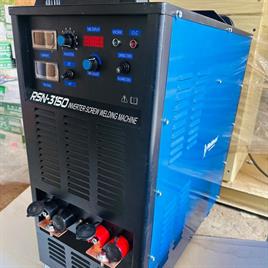
Stud Welding Machine
₹ 4,25,000 4,50,000 6.00% Off
Get Best Price| Brand: Weldman |
| Capacity : 31MM |
| Material : MS,SS,ALUMINUM |
| Model : WELDMAN RSN 3150 |
| Welding Type : STUD |


₹ 3,45,000


DRAWN ARC STUD WELDING MACHINE, Model Name/Number: RSN2500, Model: RSN 2500
₹ 5,50,000
Get Best Price| Model Name/Number : ARC 270GE |
| MODEL : MMA 400G |
| Model : RSN 2500 |
| Recommended Order Quantity : 10 |


Drawn Arc Stud Welding Machine 2500 Amps, For Industrial
₹ 3,50,000
Get Best Price| Delivery Time : 7 Days |
| Ground Cable : 10 meter |
| Maximum KVA Rating : 150 |
| Recommended Order Quantity : 01 Set |


Indore, Madhya Pradesh
Share Your Requirements
For a Quick response, Please fill up the details below.
Related Videos
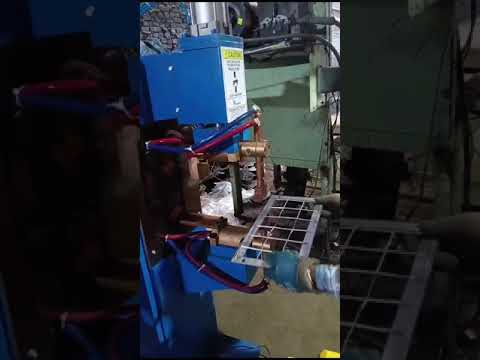
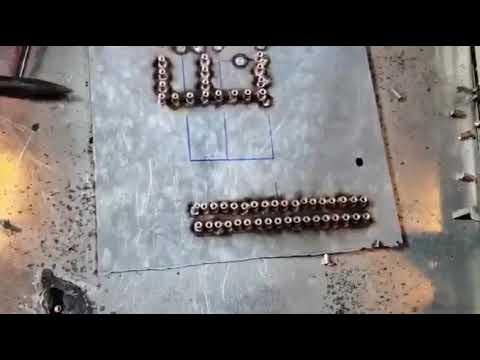

Stud Welding Machine, For Industrial
₹ 11,500
Get Best Price| Country of Origin : Made in India |
| Delivery Time : same day |
| Packaging Details : hevy dutty machine |
| Recommended Order Quantity : 1 |


Stud Welding Works
₹ 20,000
Get Best Price| Payment Mode : Online/Offline |
| Recommended Order Quantity : 2000 Square Meter |
| Service Location : Pan India |
| Service Mode : Offline |

Bois Stud Welding Machine, Automation Grade: Automatic
₹ 4,00,000
Get Best Price| Automation Grade : Automatic |
| Brand : Bois |
| Phase : 3 |
| Recommended Order Quantity : 1 |

₹ 4,00,000


Stud Welding Machine
₹ 80,000
Get Best Price| Aluminium Wounds : 27.5 |
| Approx Weight : 260 kg |
| Dimension : 410mm |
| Electrode : 2 |

Stud Welding Machine
₹ 4,88,800
Get Best Price| Country of Origin : Made in India |
| Net Weight : 80 KG |
| Recommended Order Quantity : 1 |


Stud Welding Machine, For Industrial
₹ 60,000
Get Best Price| Brand : Epic |
| Country of Origin : Made in India |
| Model : Stud Welding Machine |
| Usage/Application : Industrial |
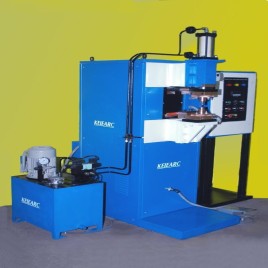
50 Hz 3 Phase Mild Steel Capacitor Discharge Welding Machine, Automation Grade: Automatic, Electric
₹ 2,50,000
Get Best Price| Automation Grade : Automatic |
| Frequency : 50 Hz |
| Item Name : Capacitor Discharge Welding Machine |
| Material : Mild Steel |

Poswal Stud Welding Machine, For Industrial
₹ 55,000
Get Best Price| Automation Grade : Fully Automatic |
| Brand : Poswal |
| Country of Origin : Made in India |
| Electrode Diameter : 2.5-3.2 |

Artech Model: CD-1000 Stud Welding Machine, For Industrial
₹ 1,05,000
Get Best Price| Automatic Grade : Semi-Automatic |
| Automation Grade : Automatic |
| Automation Grade : Fully Automatic |
| Automation Grade : Semi-Automatic |


JCD12 Drawn Arc Stud Welding Machine, For Residential
₹ 65,000
Get Best Price| Brand : Ambition |
| Duty Cycle : 60% |
| Efficiency : 85% |
| Frequency : 50Hz |


Top Stud Welding Machine Manufacturer and Supplier
Frequently Asked Questions about Stud Welding Machine
What is a stud welding machine?
With stud welding tools, fast and safe attaching metal studs or clasps to a metal surface is possible. The device produces an electric circular section right between the stud and the metal base. A tiny pool of liquid metal results from the spherical component melting the surfaces and filling the stud. The metal cools and settles into a solid, unchangeable weld after the stud is in this pool. This procedure asks for no assisted filling material. Despite the numerous kinds of stud welding machines, circular segment stud welding machines and capacitor discharge stud welding machines are the most often utilized ones. Whereas capacitor discharge welding employs stored electrical energy discharged in a somewhat brief burst, circular segment stud welding creates the circular segment utilizing a steady electric current. Often connected with many other sectors, including construction, automotive, shipbuilding, and manufacturing, stud welding is fast, practical, and able to produce robust welds.
How to stud welding?
Stud welding is the technique in which heat from an electric circle segment connects a metal stud or clasp to another metal surface. First of all, a strong weld depends on a clean surface; make without any doubt the work range is clear of paint, rust, or flotsam and jetsam. Set the stud inside the welding weapon to be securely against the workpiece. When the trigger is squeezed, an electromagnetic bend forms between the stud and the metal surface, destroying both the tip of the stud and a small section of the base metal. At that stage the stud is driven into liquid metal and cools to create a strong bond. Sometimes a ceramic ferrule is used around the weld point to trap heat and guard against weld defilement. Fair a fraction of a time regularly; the entire preparation is rather fast and helps to preserve a strategic distance from mutilation or damage to the overall fabric. After welding, the ceramic ferrule is evacuated, following which a firm, clean weld results. Watch security guidelines, counting on donning defensive equipment and ensuring constant adjustment of the welding machine to avoid mishaps or wounds among the operation.
Where is stud welding used?
Stud welding finds excellent utility in many different fields since it offers consistent, quick, strong connections without drilling or additional fasteners. In the automotive section, stud welding is basic for securely fastening debilitate frames, warm shields, control directing brackets, coverings, and electrical cables to the vehicle body and outline. It is also being used by auto body work to correct marks and interface several pieces. Solid joints are required in security and toughness, so stud welding is employed generally in building construction to interface steel pillars, columns, and boards as well as in bridge development, underground offices, and throughway construction. Applied in industry and manufacturing, stud welding mixes sheet metal, equipment, machinery, and electrical components, including printed circuit boards, switches, and enclosures. The technique is very useful in food processing equipment manufacture, where smooth surfaces and cleanliness are vital, for joining insulation, panels, and structural components to ships and shipyards.Stud welding is a flexible solution applied in solar panel mounts, wind turbines, medical equipment, furniture, and general machinery assembly for numerous attaching purposes.
What material is used for stud welding?
Depending on the function and welding procedure, stud welding makes use of distinct materials for the base metal and the studs. Mostly used materials are mild steel and stainless steel, fit for both Drew bend and capacitor release stud welding. The strong, fast-to-weld characteristics of these steels are making them somewhat famous. Sometimes the job requiring erosion resistance calls for stainless steel. Another crucial component is aluminum, especially when welding aluminum studs to aluminum bases, as this blend ensures a strong bond and changes the dubious issues with dissimilar metals. Although brass is not as strong as steel, its simplicity of handling and resistance to erosion make it rather popular in welding for capacitor release studs and cleared for use. By all means, copper finds only use due to its better conductivity and erosion-resistant properties, even if it is pricier and less readily obtained than steel or aluminum. The fabric to be used depends on the strength, erosion resistance, and compatibility between the stud and the base metal of the project. Using suitable materials guarantees whether a solid, consistent weld and shirking of problems of cracking or weak joints is obtained.
What is the minimum thickness for stud welding?
Mostly the least thickness for stud welding is determined by the distance across the stud and the essential quality for the association. Most circular segment stud welding projects should have the base metal at least one-third of the width of the stud. This guarantees a strong welded union and complete base metal bolster for the stud, so avoiding any running danger of letdown. Usually using a 12 mm breadth stud, the foundation plate should be at least 4 mm thick. Not necessarily should maximum quality be demanded; the base metal can be as slender as one-fifth of the width of the stud; this length is usually as appropriate for non-critical use. Furthermore, there are particular least thickness guidelines for certain stud widths. For a 3/16 inch (4.8 mm) stud, the steel plate should be at least 0.036 inch (0.91 mm) thick; for a 1/2 inch (12.7 mm), it should be at least 0.120 inch thick. Using an as well lean plate helps one to avoid weak welds or mutilation of the basic metal. Makere to make a strong and dependable stud weld by using these illuminating tools constantly.
What are the applications of stud welding?
Many companies use stud welding since it generates tried-and-true fast connections without using extra locks or drilling gaps. Stud welding is essential in the automotive sector for attaching depleting frameworks, warm shields, control regulating components, covers, electrical wire directing, and actually airbags, so enabling the security and efficiency of vehicles going forward. Building uses stud welding to safely secure steel bars, columns, boards, and bridge components as well as subterranean utilities like water lines and sewer channels, so providing robust and sturdy developments. Fabricating and mechanical divisions use stud welding for the collection of sheet metal, tools, gear, and electrical components, counting printed circuit sheets, switches, and walled-in areas. It also finds use in consumer goods, furniture, and machinery using a strong, clean clasp. Stud welding transforms easily cleaned surfaces in the divisions of food handling and catering, so enabling sterile get-togethers of hardware. Other jobs involve building ships—where it aids in board and separator attachment—and indeed improving things using tools for cultivation, heating and ventilation frameworks, and shipbuilding. Many earning jobs in a few companies choose stud welding for its adaptability and speed.
What is the symbol of stud weld?
The sign of stud welding is a circle with a cross (X) inside. Since stud welding is carried out as it were on the bolt side of the joint, this picture is constantly encountered under the reference line on building designs. The bolt exposes the surface on which the stud will be soldered. While the dividing or pitch between studs is communicated to the appropriate, the estimate of the stud—including its diameter—shows itself to the cleaned out of the sign. Underneath the picture are often checks of studs in bracket style. Should the studs be in a one-of-a-kind design, the layout will combine additional elements according to their locations. This picture clarifies for engineers and welders where and how many studs must be welded, besides their estimation and division. Though the stud weld image is similar to the spot weld image, its simplicity and direct acceptance originate from the cross inside the circle. This standard graphic guarantees clear communication, and changes help avoid mistakes in manufacturing and development.
What is the name of the stud welding process?
The particular technique applied determines the several names assigned for the stud welding operation. Three basic forms of stud welding are capacitor release (CD), drawn bend, and brief cycle stud welding. By way of a brief vitality burst from charged capacitors, capacitor release stud welding bonds littler distances across studs to lean metal sheets. Thicker foundation materials and more space between studs draw A solid and under-control weld is produced by circular segment stud welding liquid metal using a ceramic ferrule. Perfect for medium-thickness materials and studs, short cycle stud welding is a form of circular segment welding incorporating elements of CD and drawn bend techniques. The chosen technique is influenced by the stud measurement, base fabric thickness, and planning quality of the weld as well as other factors. These stud welding techniques are generally related to fabricating, development, vehicles, and other divisions for their speed, quality, and consistency. Though the precise technique is shown as Capacitor Release, Drawn Bend, or Brief Cycle stud welding, the by and large used name for these operations is merely "stud welding."
What voltage is needed for stud welding?
The intended voltage for stud welding depends on the type of welding technique and the size of the stud. Depending on the size and material of the stud, single-phase 110V or 230V power supplies usually let the equipment for capacitor discharge (CD) stud welding run at welding voltages between roughly 25 and 200 volts. Drawn bent stud welding equipment runs on a three-phase 230V to 460V supply more often than not calling for more control. Mostly, drawn bend techniques use a welding voltage between 35 and 200 volts. The particular voltage level for every weld is selected depending on the width and fabric of the stud as well as the base metal thickness to guarantee a strong and consistent weld. Crucially, one should follow the advice of the hardware designer and vary the voltage based on the use. A good weld depends on the right voltage, which also affects expected weak joints or workpiece damage. Starting the welding operation some time ago, keep an eye on the specialized delicate aspects for your specific stud welding equipment and application constantly.
What PPE is required for stud welding?
Stud welding requires a few forms of individual assurance gear (PPE) to protect the administrator from hazards, including sparkles, heat, and hazardous radiation. Flying flashes and security of the eyes from UV and infrared radiation depend on a welding protective hat with the proper channel focus point. Assembly welding security standards call for the protective cap to cover the ears, neck, and forehead. Separated from the protective cap, side shields on security glasses or goggles should be worn beneath it for added eye assurance, notably from flying particles and poisons. Flame-resistant gloves are what determine the security of the hands and wrists from burns and hot metal. The administrator should also be outfitted in flame-resistant apparel, including a long-sleeved coat or overskirt and trousers covering all unprotected flesh to stop burns from sparkles and splashes. The outfit needs to be free of grease since these catch fire right away. Generally not basic in well-ventilated environments, respiratory security should be worn in case ventilation is absent or the materials being welded emit dangerous vapors. Depending on the working environment, a tough head protector and security boots with steel toes are also necessary. Appropriate PPE determines both damage expectation and safe stud welding.
Who invented stud welding?
Stud welding was first developed by American designer Edward "Ted" Nelson at Vallejo, California's Female Horse Island shipyard. Early on in World War II, he developed the plan to expedite shipbuilding by separating the steel development from the securing of metal jolts and studs. Particularly helpful for dispatch decks and other major advancements, Ted Nelson's design makes use of a handy circular segment welding weapon allowing a stud to be fast and immovably welded to a metal surface. English shipyards had been using comparative welding techniques as early as 1918, but Nelson's work comes about within the development of the contemporary circular segment stud welding procedure and the tools that made large mechanical application possible. His ideas immediately found use in other areas counting development and vehicle make, greatly improving the accuracy of transportation building. Currently acknowledged as the father of commercial stud welding, Ted Nelson's invention is still a key element of contemporary metalworking and fabrication.
What is the difference between spot welding and stud welding?
The least thickness needed for stud welding will depend on the welding technique and the distance across the stud. Whichever the stud distance across, for brief cycle stud welding, the establishing fabric should be at least 1.5 mm thick. In drawn circular segment stud welding, the base metal should have at least a thickness approximately one third of the stud's distance across. Should you be welding a 12 mm breadth stud, the base plate has to be at least 4 mm thick by chance. This admonition guarantees that, under welding, the base metal does not burn through or twist under the strength of the weld. Using a thinner foundation fabric than advised could damage or weaken the workpiece or frail joints. Generally not typical when quality is critical, the base fabric can be as slender as one-fifth of the stud breadth for some situations where total latch quality is not necessary. Always monitor the specific requirements for your task and adhere to the producer's recommendations to ensure a robust and consistent weld. Appropriate base thickness determines the quality and durability of the given great dependability.
Related Product Types
Welding Machine | Flash Butt Welders | Spot Projection Welders | Multi Spot Welding Machines | Brazing Machine | Welding Machine Rental | Electrode Holder | Anti Spatter Spray | Welding Goggle | Welding Blowpipe | Contact Tip | Welding Accessories | Plastic Welding Equipment | Welding Water Cooler | Electrofusion Welding Machine | Welding SPM | Seam Welding Machine | CNC Laser Welding Machine | Slag Remover | Welding Machine Parts | Flashback Arrestor | Micro Plasma Welding Machines | Regulator Type Welding Machine | Welding Flux | Welding Kit | Welding Mirror | Welding Consumables | Integrated Transformer Gun | Welding Nozzle | Rack Tube Welding Machine | Ultrasonic Plastic Welding Machine | Ultrasonic Metal Welding Machine | Ultrasonic Wire Harness Welding Machine | Ultrasonic Welder | Battery Cell Welding Machine | Arc Welding Machines | Laser Cladding Machine | Welding Holder | Ultrasonic Horn | Gas Blow Torch | Robotic Welding System | Spin Welding Machine | Argon Regulator | Gas Welding Kit | Saw Welding Machine | Exothermic Welding System | Aluminum Welding Machine | Plasma Welding Machine | Weld Cleaning Machine | Fiber Laser Welding Machine | Welding Simulator | Intercell Welding Machine | Double Head Welding Machine | Welding Lug | DC TIG Welding Machine | Air Cooled Welding Machine | Welding Rectifier Machine | Portable Welding Machine | Hand Operated Spot Welding Machine | Arc Gouging Machine | Automatic Cage Welding Machine | Letter Welding Machine | Welding Carriage | HDPE Pipe Jointing Machine | PPR Pipe Welding Machine | Induction Brazing Machine | Spot Welding Gun | Wire Feeders | Welding Fixtures | Inverter ARC Welding Machine | Welding Machine PCB Boards | UPVC Welding Machine | PVC Welding Machine | High Frequency Welder | Spotting Machine | Welding Controller | Welding Robots | Transformer Arc Welding Machine | MIG Welding Machine | TIG Welding Machine | Plastic Welding Machine | Spot Welding Machine | Railway Thermite Welding Machine | Friction Welding Machine | Oil Cooled Welding Machine | Butt Welding Machine | H Beam Welding Machine | CNC Seam Welding Machine | HDPE Pipe Welding Machine | Hdpe Pipe Jointing Heater | Welding Table | Welding Helmet | Resistance Welding Machine | MMA Welding Machine | Fan Guard Welding Machine | Seamless Welding Machine | Vibration Welding Machine | Welding Tool | Welding Rotator | Robotic Welding Cell | Anti Seize Paste | Welding Glass | Gas Welding Tank | Welding Positioner | Welding Manipulator | Conventional Rotator | MIG Welding Torch | TIG Welding Torch | Welding Clamp
Related Categories
Industrial Belts & V Belts | Water Treatment & Purification Plant | Liquid Packaging Machinery | Pumps, Pumping Machines & Spares | Printing Machinery & Equipment | Wrapping & Banding Machines | Moulding Machine | Conveyor Systems & Components | Industrial Mixing Machine | Industrial Coolers, Blowers & Fans | Industrial Valves & Valve Fittings | Dryers & Evaporators | Process Tanks & Chemical Reactors | Fast Food & Beverages Machinery | Mechanical Parts & Spares | Pollution Control Devices & Machines | Filter Assemblies and Spare Parts | Oil Mill & Oil Extraction Machinery | Pharmaceutical Machinery & Equipment | PVC, LDPE, HDPE & Plastic Sheets | Brakes & Braking Systems | Strapping & Sealing Machines | Woodworking Tools & Machines | Packaging Machines & Goods | Machines & Equipments | Testing & Measuring Equipments | Chemical Plants & Machinery | Plastic Work & Processing Machines | Filters & Filtration Systems | Paper Work & Making Machine | Industrial Mixers & Homogenizers | Die Casting Mould & Moulding Tools | Chemicals, Dyes & Allied Products | Footwear Machinery | Separators, Strainers & Purifiers | Hand & Machine Tools | Crusher, Shredder & Presses | Fruit & Vegetable Processing Machine | Storage Tanks, Drums & Containers | Lab Instrument | Bakery & Dairy Machinery | Rubber, Rubber Processing Machinery | Industrial Chemicals | Material Handling Machines & Systems | Milling & Grinding Tools | Cutting Machines & Equipment | Bar, Neodymium & Permanent Magnets | Hydraulic & Pneumatic Machines | Soap & Sanitizer Dispenser | Machine & Precision Tools | Extraction Plants and Extruders | Protective Packing Materials | Industrial & Engineering Goods | Air Compressors, Accessories & Parts | Drilling Bits, Collets and Chucks | CNC Machines & Lathe Machine | PVC, FRP, HDPE & Other Plastic Pipes | Surface Coating & Paint Equipment | Drilling & Boring Equipment | Wire Drawing & Cabling Machines | Filling Machines & Plants | Chemical Reactors and Process Tanks | Casting, Moulding & Forging Machines | Industrial Air Conditioner & Devices | Industrial Furnaces & Ovens | Gearbox, Axle, Sprocket & Gear Parts | Oxygen & Nitrogen Gas Plants | Meat & Seafood Processing Equipments | Bending & Metalwork Machines | Weight Bowl & Weighting Scale | Musical Equipment & Accessories | Incinerator | Laser Marking & engraving Machine / System | Sewing,Knitting & Embroidery Machine | Apparel & Textile Machinery | Boilers & Boiler Parts | Used Machinery & Tools | Binding and Pressing Machines | Closing & Sealing Machines | Jewellery Making Tools & Machines | Cutting Tools & Milling Cutter | Hydraulic & Pneumatic Cylinders | Packaging Caps & Seals

