

Home » Bakery Machinery » Proofer
Proofer
(50 products available)A proofer is a commercial piece of equipment that maintains the ideal conditions for controlled baking fermentation so the dough develops to the ideal volume and texture every time. The proofer maximizes proofing with temperature and humidity control, delivering enhanced bakery products with consistent volume, softness, and flavor. The proofer is built to be efficient during baking. The proofer assists bakers by reducing mixing prep time while increasing the consistency of baked products. The proofer gives bakers control of the proofing environment by applying adjustable temperature and humidity settings during the proofing stage of all dough types. Having multiple sizes of compact/countertop proofers through to units large enough for use in the industry, Proofer has capabilities to cater to demands across levels of bakery. Energy-saving systems are aimed at reducing power usage while guaranteeing a repeatable proofing performance. The proofer can be perfect for any enterprise, from artisan sourdoughs to premixed bakery items, to achieve efficiencies in the baking process. The proofer is designed to last. It features a tough, low-maintenance structure, and system controls are user-friendly to implement simple setup and operation. Regardless of baking for retail or own use, the proofer guarantees a consistent fermentation process and professionalism in results. Discover newer and better Proofer machines here at Aajjo. Read more
Proofer Products, Price, Specifications & Features


Proofer 16 Tray
₹ 48,450
Get Best Price| Material : Stainless Steel |
| Model : EPO16 |
| Power(Kw) : 2.6 KW |
| Usage/Application : Commercial |


₹ 45,050

₹ 66,300
Share Your Requirements
For a Quick response, Please fill up the details below.
Related Videos
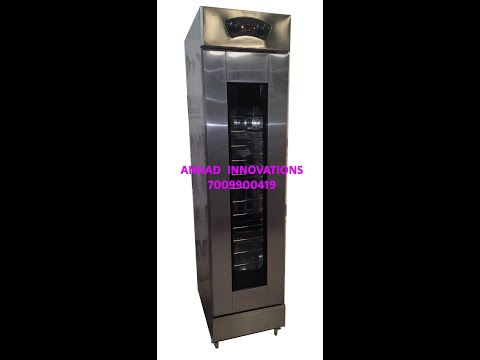

Electric bread proofer chamber
₹ 28,500 /Bag
Get Best Price| Brand: Ssck |
| Despatch time after releasing the order : 5 |
| Model : WG-13C |
| Power(Kw) : 2.6kw |
| Road Permit Or Way Form : Online |


TOASTMASTER CELFROST FJ-15 _ Electric Proofer 15 Tray
₹ 71,000
Get Best Price| Brand: Celfrost |
| Despatch time after releasing the order : Tier 1 Cities: 2-3 days, Tier 2 Cities: 4-5 days |
| Model : FJ-15 |
| Power(Kw) : 2.2 KW |
| Road Permit Or Way Form : N/A |


uttam nagar, Delhi

Dough Proofer
₹ 1,35,000
Get Best Price| Machine Body Material : Stainless Steel |
| Material : Stainless Steel |
| Model : Dough Proofer |
| Power Source : Electric |


Shree Balaji Kitchen Equipments
Lucknow, Uttar Pradesh


₹ 5,30,145

₹ 6,26,010

₹ 1,66,845

Proofer Machine, FFE-PR 16
₹ 35,000
Get Best Price| Brand : Falcon |
| Dimension : 500 x 700 x 1970mm |
| Model : FFE-PR 16 |
| Model : Proofer Machine, FFE-PR 16 |


₹ 80,000


Restolane Single Door (16 tray) : RPS-16T
₹ 48,000 67,200 29.00% Off
Get Best Price| Model : Single Door (16 tray) : RPS-16T |


₹ 55,000


Single Trolley Proofer
₹ 3,00,000
Get Best Price| Application/Usage : Bakery, Hotels & Restaurant, Food Processing Industry |
| Machine Body Material : Stainless Steel |
| Model : Single Trolley Proofer |
| Operation Mode : Semi-Automatic |
Ghaziabad, Uttar Pradesh

₹ 4,00,000

₹ 3,50,000

Proofer machine
₹ 25,000 27,500 9.00% Off
Get Best Price| Despatch time after releasing the order : Yes |
| Model : 403D |
| Power(Kw) : 2.56 |
| Road Permit Or Way Form : Yes |


16 tray proofer machine for bakery
₹ 22,000 25,000 12.00% Off
Get Best Price| Despatch time after releasing the order : 2 |
| Model : PMAI |
| Power(Kw) : .01 |
| tray size 16 by 24 inches : Total 16 trays |

Dough Proofer Cabinet
₹ 25,000
Get Best Price| Brand : KIC |
| Capacity : 220V |
| Color : Stainless Steel |
| Material SS : 610x762x1828mm |


Roti Proofer
₹ 30,000
Get Best Price| Despatch time after releasing the order : extra |
| Model : Roti Proofer |
| Power(Kw) : lpg |


Sinmag Retarder Proofer DC-2R2 with Fixed Shelves
₹ 4,86,000
Get Best Price| Capacity (number of racks) : 2 |
| Machine Body Material : Stainless Steel |
| Model : DC-2R2 |
| Model : Sinmag Retarder Proofer DC-2R2 with Fixed Shelves |

₹ 8,10,000

₹ 1,50,000

₹ 3,78,000


₹ 3,05,500

₹ 21,450

₹ 34,450
Top Proofer Manufacturer and Supplier
Frequently Asked Questions about Proofer
What is a proofer used for?
In bread and cake baking, a proofer is a unit of specialized equipment utilized to offer the perfect conditions for the mixture to rise. It is suggested to provide the basics for yeast fermentation and dough development: controlled temperatures and stickiness levels. Often referred to as sealing, this allows the batter some time to cool and fix its surface, flavor, and structure. Maintaining consistent conditions helps a proofer enable pastry experts to produce consistent results in their final products. Commercial kitchens use proofers, but domestic bread chefs can also benefit from them to enhance the quality of their bread. They save time by accelerating the sealing preparation and ensuring a consistent rise of every batch of batter. This manifests in moved-forward item quality with a light and vaporous surface and evolved taste. Basically, anyone trying to quickly and consistently produce premium hot items may find a proofer really essential.
What is the price of 6 tray proofer?
The brand, dealer, and features of a 6-tray proofer will influence its price. For instance, six-tray automatic commercial proofers are priced at ₹27,500. With a standard plan, this product is made of stainless steel. This product is suited for pastry shops, inns, and restaurants that deal with food. This electrically operated machine controls moisture and temperature to provide perfect dough sealing conditions. Another product found in the exhibit costs ₹18,500, which would be suitable for smaller-sized companies or individuals looking for an affordable elective. These proofers are generally used by offices to regulate temperature and humidity levels according to various cooking needs. Pricing could also be based on other factors such as measure, strength, and management of usage. Usually between two to three days, shipping time is more often than not; for safe delivery, thermocol or hardwood bundling is used. Buyers should consider products in line with their particular requirements and choose the best one for their pastry kitchen or dietary basis.
How many degrees is a proofer?
Depending on its use and the sort of mixture it is sealing, a proofer usually ranges from 70°F to 120°F (21°C to 49°C). Between 78°F and 82°F (25°C and 28°C), a desired temperature for sealing the normal bread batter allows most yeast maturing without resulting in overly dry or rashly made batter. Higher temperatures—between 95°F and 100°F (35°C and 38°C)—usually correspond with sweet yeast combinations or rich products with higher butter content. On the lower end, some formulations or delayed maturation forms can be connected to temperatures roughly 70°F (21°C). Another key idea in proofers is stickiness, usually kept between 60 and 85% depending on the mix. Proofers with temperature and humidity control let pastry masters adjust parameters, consenting to different formulations so that the outcome is always the same. Some advanced proofers reach 195°F (90°C) for additional usage like mild fries or yogurt refining. Since proofers warm the food holders instead of heating the discs inside them, controlling the batter temperature during sealing is successful.
What is proofing temperature?
The closing temperature is the range of temperatures that let the blend rise rightfully during the setup procedure. The best range for yeast activity is between 25°C and 30°C (77°F and 86°F), hence for most bread the temperature should be within this range. Yeast develops the carbohydrates in the player into carbon dioxide gas, which causes the player to rise and spread. We keep this temperature constant to improve the surface, structure, and flavor of the mix. A few recipes call for higher temperatures to seal, say between 30°C and 35°C (86°F and 95°F), especially for sweet or butter-based mixtures. Between 20°C and 25°C (68°F and 77°F), sourdough bread and other rising slowly varieties taste best. The type of bread and how fast you need it to seal will determine the exact temperature needed. Mugginess is also very important; it should fall between 60% and 85% to stop the mixture from drying out or crystallizing. Accurate control of the temperature and stickiness will help and clearly show that cooking produces always the same results. One could finish fixing in a fixing box, in an unusual proofer designed for regulated settings, or at room temperature.
What is proofing material?
Sealing materials are any questions or gadgets utilized, whereas sealing is preparing to help or encourage the rise of the batter. Common proofing materials include wicker baskets or bannetons, which support the shaped dough as it rises. Wicker containers are ordinarily made of rattan, cane, or comparable materials and can come lined with a cloth to keep them from staining. A couch, a cloth that holds long shapes of mixture, like baguettes, may also be a sealing medium. For directing the environment, bread cooks might utilize a sealing box or proofer, which maintains uniform temperature and stickiness conditions idealized for yeast maturation. As an elective, domestic dough punchers can use easy setups such as covering batter in plastic wrap or a clammy towel to preserve mugginess and warmth. In commercial situations, batter retarders are employed to impede aging by decreasing the temperature, empowering strides in flavor development. All these devices and materials are aimed at forming beyond any doubt that the mixture rises equally and creates its surface and flavor satisfactorily, sometimes recently heating. The pastry specialists' needs and the bread they are creating determine which sealing fabric to use.
What are the sizes of proofer?
From little ones for home usage to industrial-sized equipment for competent kitchens, proofers come in a range of sizes to suit the needs of different bread makers. Designed for domestic use, household proofers including the Brød & Taylor Collapsing Proofer measure around 38 cm × 31.75 cm while in use. These suit modest batches, like two big loaves or mixing basins and are portable. Medium proofers used in pastry shops allow a range of plates or platters. Sometimes medium proofers can hold up to six plates, giving enough room for direct manufacturing and keeping exact temperature and humidity control. Designed for high-volume commercial operations, large proofers fit few full-size sheet containers. For example, with a rack spacing of roughly 3.5 inches, the inside dimensions of mechanical units can allow up to nine full-size containers. Usually taller and bigger, these proofers measure more than 36 inches in width and 77 inches in height. The degree of heating and available space determines the proofer measures chosen. Small types are used in domestic bread cookers; commercial kitchens use larger units to effectively manage more quantities.
How do you clean a proofer?
You have to clean it to maintain the proofer in good shape and guarantee that your products come out perfect. First of all, disable the proofer for security needs. If any evacuate plates or racks; wash them in warm cleansing water. Use a soft wipe or cloth to clean them so surfaces remain scratch-free. To further clean the proofer, then, wipe its inside with a clammy cloth. Use only mild cleaners or solid chemicals; they will destroy the wrap-up or leave residues that would seem to alter the taste of your concoction. Should you have dried-on batter or ongoing stains, you can create adhesive using baking soda and water. Over the recolor, apply the glue; let it stand for a little; then, wipe it off. After cleaning, blow dry or wipe the proofer with a fresh towel to prevent an excessive accumulation of moisture. Regular cleaning increases the lifetime of the proofer and allows it to be running at best efficiency. After every use, cleaning the proofer is wise to eliminate any last bits of yeast or microscopic organisms so they won't affect next mixture clusters. This will help you to maintain the condition of your proofer and guarantee that your heated goods always turn out perfectly.
Can you proof dough in stainless steel?
Indeed, you can work on a stainless steel countertop or in stainless steel dishes using the confirmation batter. Still, use care not to let the batter stick to the metal. Although it won't add undesired components to your batter as stainless steel is non-reactive, it can be dangerous if the mixture rises uniformly. To make the batter in stainless steel, softly grease the surface or material paper to prevent sticking. This method will let the mixture rise readily without adhesiveness to the metal. Covering the batter with plastic wrap or a moist cloth will also help to maintain the mixture moist, therefore improving the proofing process. Because stainless steel sealing plates or holders are durable and easy to clean, commercial pastry kitchens make extensive use of them. Maintaining quality and consistency in hot products depends on mixes rising, thus they provide a sterile and clean approach to let them do so. If you avoid adhering and acquire the correct stickiness, stainless steel is an amazing sealing agent.
What is the preventive maintenance of a proofer?
On a proofer, preventive maintenance follows common sense to keep it vibrant and for a longer period. Every day you have to clean the equipment using either warm water or a manufacturer-authorized mild detergent. As they will strip the cabinet and nullify the warranty, avoid weight washing and abrasive materials. Should the unit sustain significant damage, clear stains and debris with a non-abrasive emulsion cleaner; then, wash it under warm water. Maintenance entails removing and cleaning the water skillet at the bottom of the proofer month after month. Empty the water used for sealing to prevent the stagnation water from producing bacteria. Always have a fully filled water dish to provide ideal moisture levels. To predict calcium deposits or flotsam and jetsam on their performance, check and wash parts including water-level tests, fill spouts, and fans. Regularly check the entranceway seals to make sure they are malleable and seal rather reasonably well, therefore stopping warmth and moisture from leaving. In models with electronic controls to help in preventing transient circuits off, avoid pouring water straight over electronic faces. Prevent flour or other waste from overflowing mechanical components such as indoor regulators to help avoid trapping them. Frequent application of these techniques will prolong the life of your proofer and render it fit for a longer term.
What is the difference between a proofer and an oven?
A proofer and an oven have distinctive capacities within the heating prepare. A proofer is used to supply the perfect conditions for the batter to rise earlier to prepare. It gives controlled temperature and stickiness, more often than not between 75°F and 85°F, with around 85% mugginess. This gives yeast aging conditions for the batter to rise and form its surface, flavor, and structure. Proofers don't heat or cook the mixture, but as it were, plan it for heating in an oven. The oven then again heats the mixture after sealing. It has much higher temperatures, ordinarily extending from 350°F to 450°F, depending on the formula. Broiler cooks the batter and changes it over to wrapped-up bread or baked goods by shaping a crust and solidifying the structure. Restricted to proofers, broilers don't have tall mugginess levels but can include steam infusion for outside development. Some modern units coordinated proofers and broilers into one machine, alluded to as proofer stoves. These decrease space and make the workflow easier by allowing bakers to proof and bake inside one unit. Whereas a proofer is concerned with heating batter to be prepared, a broiler wraps up the work by warming it to get it to be the last item.
What is the humidity in a proofer?
A proofer precisely controls its stickiness to provide the best possible conditions for the mixture to rise. Proofers ordinarily keep relative mugginess levels between 80% and 90%. The tall mugginess keeps the mixture from drying out and creating a hull that might anticipate it growing. For most bread batter, the relative mugginess ought to be around 85%, although a few pastry shops will shoot for up to 90% on certain recipes. It is imperative to keep mugginess in check since it helps in yeast maturation, which empowers the mixture to rise equitably and accomplish its surface and flavor.When the moisture content is low, the surface of the mixture will become dry, resulting in poor sealing. Conversely, excessive stickiness (over 98%) will cause condensation within the proofer, stripping off the climate as well as dampness and risking compromising the batter. Progressed frameworks inside cutting-edge proofers control stickiness through the expansion of steam or the administration of wind current. These methods keep the conditions constant all during the sealing process. To keep exact stickiness levels and prevent sealing issues, regular maintenance of equipment including water containers and sensors is essential. The production of premium prepared goods depends on control of stickiness.
How long does a proofer take?
The definition of a proofer for batter confirmation varies depending on the type of mixture, the temperature, and the degree of mugginess. By and large, sealing in a proofer for most yeast-raised batters takes 40 to 70 minutes. For improved or sweet mixtures, it may take a little more time since they have a more prominent concentration of fat and sugars. The duration may also vary based on the specific formula and the estimated number of dough pieces. A proofer is uncommonly built to create an ideal condition with controlled temperature (regularly between 95°F and 110°F) and stickiness (between 80% and 90%) to enliven and optimize rising. This is typically done to ensure the mixture ages well, allowing the yeast to produce gases that cause the batter to rise. Some formulas call for more expanded sealing times, especially when making artisan or sourdough bread, which tend to be slower aging forms. On these occasions, sealing can take numerous hours or even longer. More up-to-date proofers can moreover have flexible settings to permit different sealing times and temperatures inside and out. In all, utilizing a proofer minimizes sealing time incredibly when compared with room-temperature proofs, whereas ensuring uniformity comes about. The precise time required ought to continuously accommodate the rules of the formula for ideal outcomes.
Related Product Types
Doughnut Maker Machine | Bread Molding Machine | Electric Deck Ovens | Proofing Cabinet | Oven Temperature Controller | Oven Blower | Waffle Irons & Cone Bakers | Firestone Pizza Ovens | Rusk Making Machine | Pizza Cone Machine | Convection Ovens | Commercial Microwave Ovens | Combi Ovens | Manual Cotton Candy Machine | Deck Oven Blower | Ice Cream Mixing Machine | Chocolate Melting Machine | Electric Oven | Pizza Oven | Rotary Rack Oven | Dough Mixer | Industrial Ovens | Cotton Candy Machine | Biscuit / Rusk Making Machine | Crepe Maker | Wood Fired Oven | Cookie/Biscuit Making Machinery | Inter Proofer | Halwa Making Machine
Related Categories
Cabinets | Roller | Dinnerware Sets | Catering Equipments | Cutting Machines | Barbecue-Equipments | Chapati Machine | Dishwash | Kitchen Exhaust/Ventilation Systems | Pans | Peeling Machine | Rack/Trollies | Display and Service Counters | Sink | Spoon Sets | Burners & Cooktop | Hand Blender | Tandoor | Griller | Tea & Coffee Machine | Cookware and Cooking Utensils | Mixer Grinder | Sealing Machine | Dough Mixer | Steaming Cart | Food Warmer | Blender | Pulverizer | Food Processing Plants & Machinery | Toaster | Fryer | Slicer | Juice Dispenser / Juice Extractor | Commercial Kitchen Products | Vending Machines & Dispensers | Kitchen Tables | Sweet Making Machine | Enclosures & Cabinets | Storage Lockers | Food Storage Boxes & Containers | Meat Processing Equipment | Food Processing Equipments | Food Grains & Nut Processing Machine

